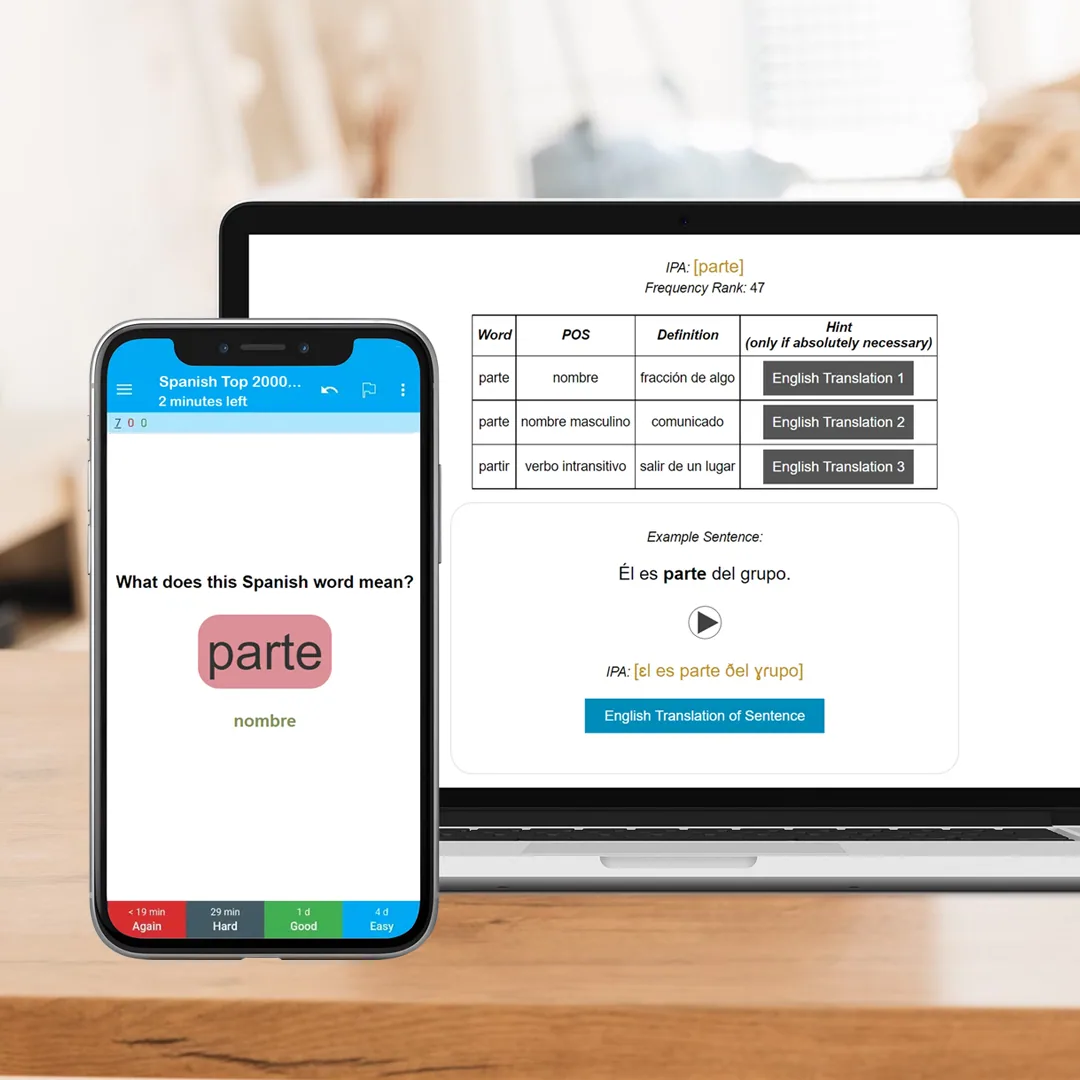
How to Use Anki for German: The 2 Habits That Decide Whether You Speak
Updated
Short answer: progress with Anki for German comes from two habits: recall out loud before you flip, with der/die/das every time, and reposition your highest-value verbs to the front, not from more cards.
Anki is a highly effective tool for learning a new language, and it is often used by students as a digital platform for creating and studying German flashcards. But how to use Anki for German fluency?
While flashcards may not be the primary method of choice for every language learner, their effectiveness for memorizing difficult words and vocabulary cannot be denied. They are also an excellent way to establish a consistent learning routine and set achievable goals.
Although Anki may seem complicated at first, it is actually quite intuitive once you have a good understanding of the basics. In this article, we’ll go through the basics to learn how to use Anki for German.
Benefits of Using Digital German Flashcards
Flashcards are a highly effective tool for learning a new language, and they continue to be a popular choice among German learners.
While paper flashcards have been used for years, digital flashcards offer a number of additional benefits, such as the ability to include pictures, audio, example phrases, and other interactive features.
By using a tool like Anki, you can easily access your German flashcards on your phone, making them more convenient and portable.
In addition to the convenience and interactivity of digital flashcards, using Anki to study German can also be easily integrated into your language learning routine.
Flashcards are an excellent way to learn how to use Anki for German through actively recalling information and committing it to memory efficiently. It is a tried-and-true method that can be a valuable addition to your German learning strategy.
What is Anki and how does it help you learn German?
Many language learners wonder how to use Anki for German, as it’s a popular tool for improving vocabulary and retention. Anki is a popular flashcard-based learning app and software that can be used to learn a variety of subjects, including learning a new language like German. Anki allows users to create and study from digital flashcards that contain information that they want to learn, such as vocabulary words, grammar rules, and other language-specific content.
Anki uses a spaced repetition algorithm to present digital flashcards to the user at regular intervals, with the frequency of review increasing as the user demonstrates mastery of the German material. Understanding the spaced repetition algorithm is crucial when learning how to use Anki for German, as it optimizes memory retention.
Anki can be used to help language learners memorize new vocabulary, practice grammar concepts, and improve their overall comprehension and speaking skills in German. The app is available for various platforms, including desktop computers, mobile devices, and web browsers, making it convenient and accessible for language learners.
Anki can be a very helpful tool for learning German for a number of reasons. Here are some ways in which Anki can support your German journey:
1. Vocabulary acquisition
Anki opens up a world of possibilities for expanding your German vocabulary. With this versatile tool, you can craft dynamic flashcards featuring German words, their English translations, illustrative example sentences, accompanying audio clips, and even visual aids like images.
This comprehensive approach to vocabulary acquisition not only enhances your ability to remember new words but also deepens your comprehension by providing context and pronunciation practice.
Regularly revisiting these flashcards strengthens your word retention, ensuring that your German vocabulary grows and sticks in your memory, helping you communicate more effectively and understand the language more comprehensively.
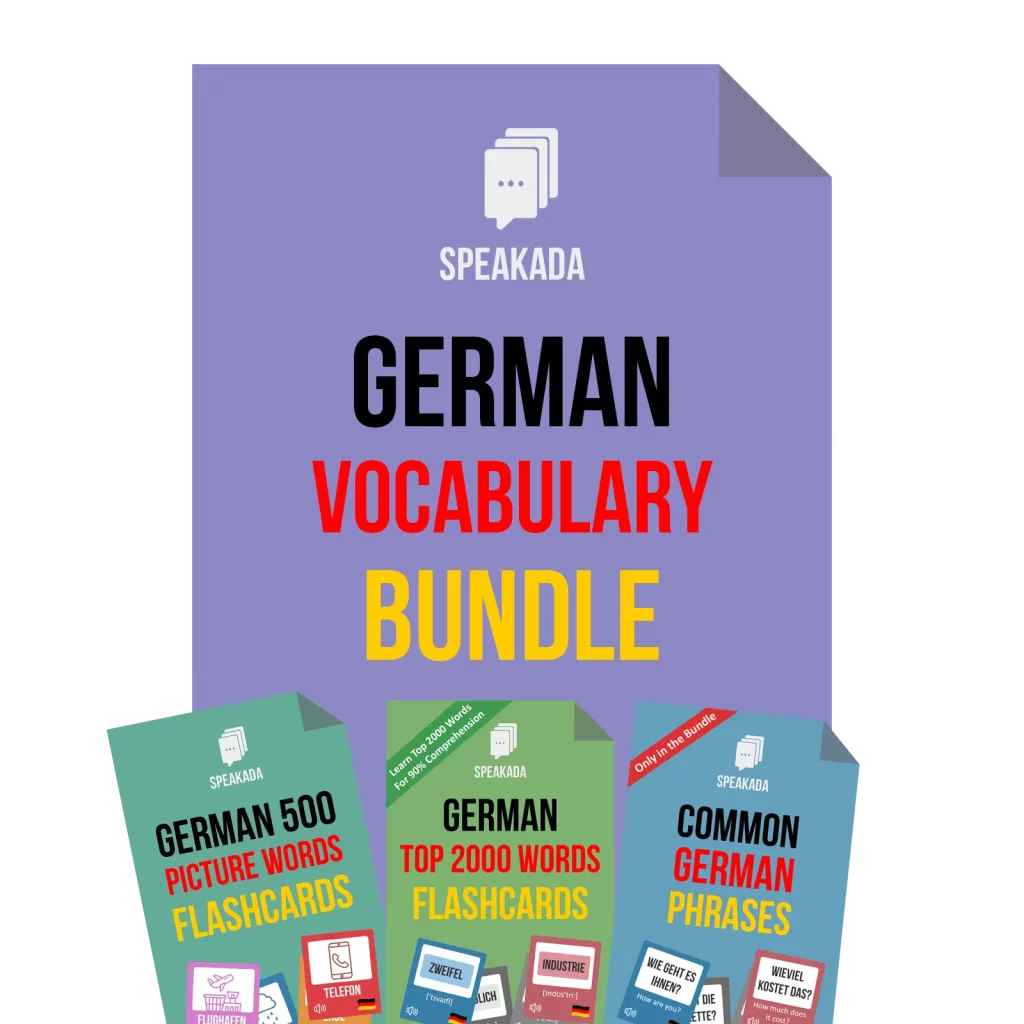
German Vocabulary Bundle
90% of everyday German comes from just 2,000 words - these 3 decks cover them in frequency order: 500 Picture Words, Top 2,000 Words with full sentences, and Common Phrases.
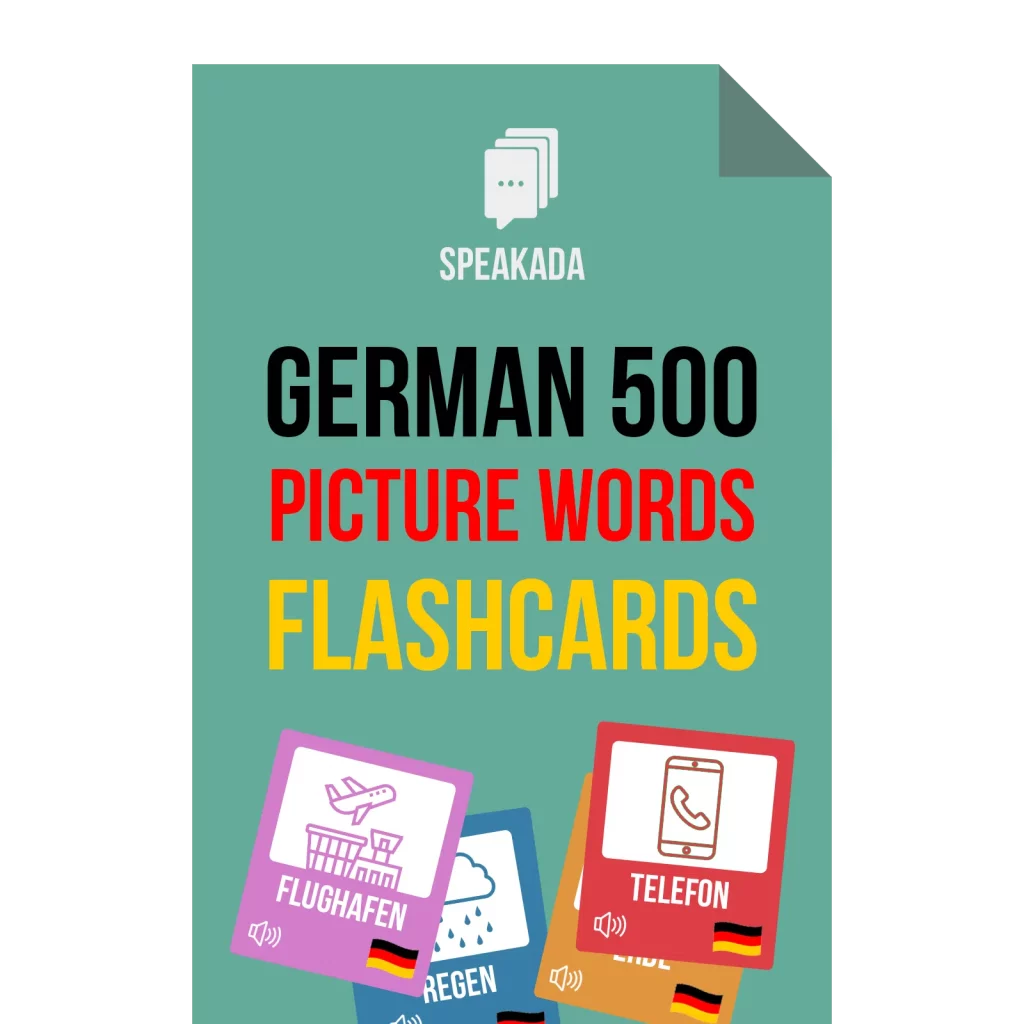
German 500 Picture Words Flashcards
Learn 500 of the most common German words through images, not English translations. Includes high-quality audio, IPA, and gender color-coding for all three genders.
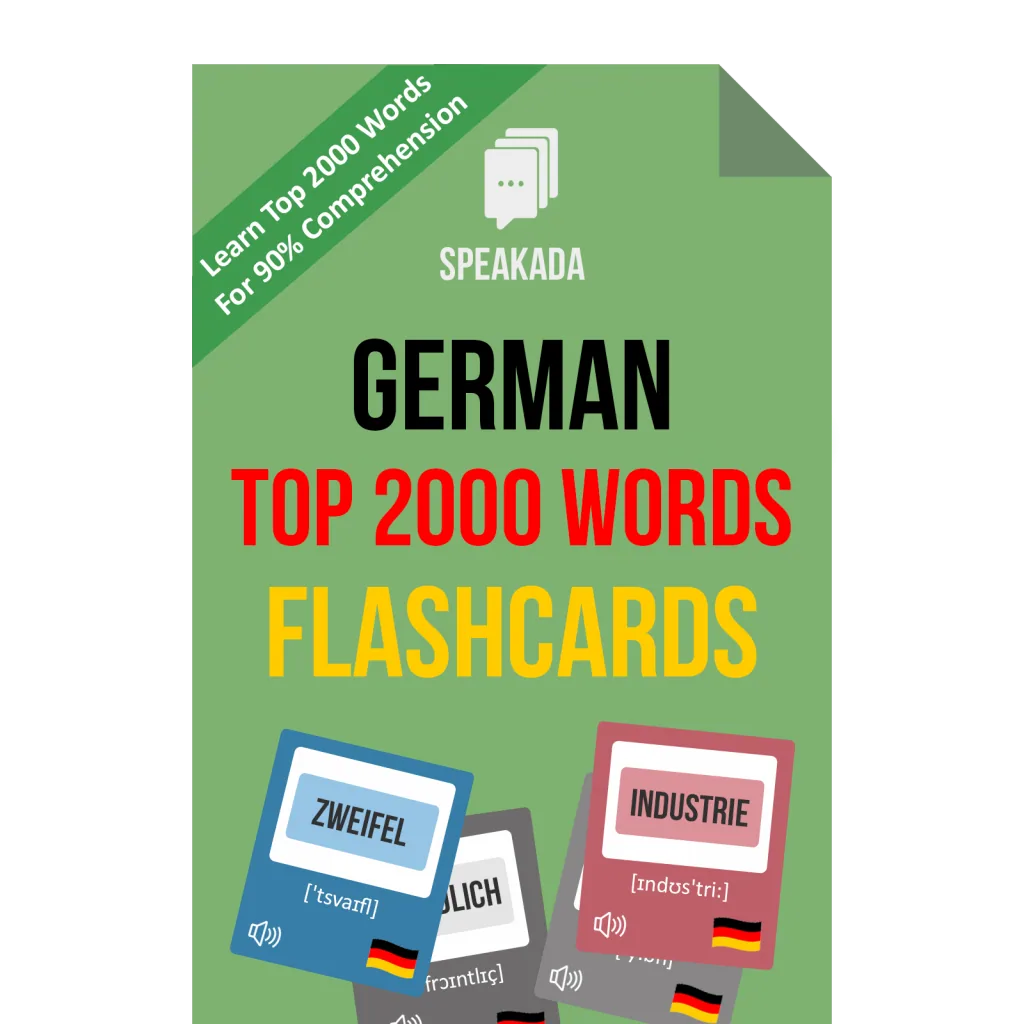
German Top 2000 Words Flashcards
Learn the 2000 most common German words with sentence-based Anki flashcards. Reach ~90% comprehension of any German text, with high-quality audio, IPA, and all three gender colors.
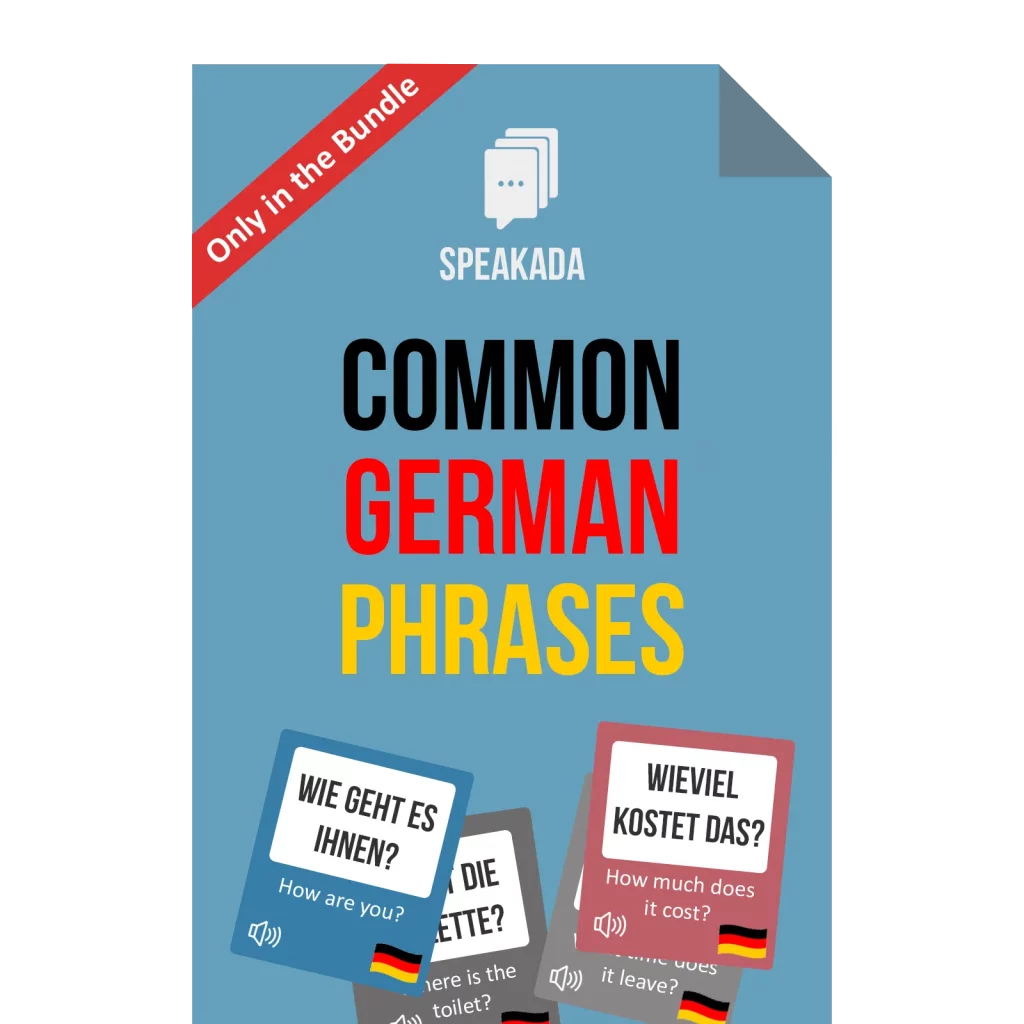
German Common Phrases Flashcards
Practical German expressions for everyday conversation, travel, and professional situations. The third deck in the German Vocabulary Bundle.
2. Grammar practice
Anki proves to be an excellent companion for mastering German grammar, too.
You can create targeted flashcards with sentences and phrases in German that emphasize specific grammar rules. These flashcards can help you practice everything from verb conjugation to subject-verb agreement and more intricate grammar concepts.
3. Pronunciation and speaking skills
Anki is an invaluable tool for improving your German pronunciation and speaking skills. With the ability to integrate audio into your flashcards, you can listen to and mimic native German pronunciation, aiding in accent reduction and fluency.
You can also practice shadowing and self-assessment, comparing your pronunciation to native speakers. Anki’s flexibility extends to recording your own voice for real-time improvement and creating speaking prompts that encourage thinking and responding in German.
Regular use of Anki in this regard enhances your conversational abilities and boosts confidence.
German Pronunciation Bundle
German sounds - umlauts, the ü, the soft CH - have no English equivalent and won't come naturally without targeted practice. Three decks build the correct German sound model: alphabet, IPA phonemes, and minimal pairs.
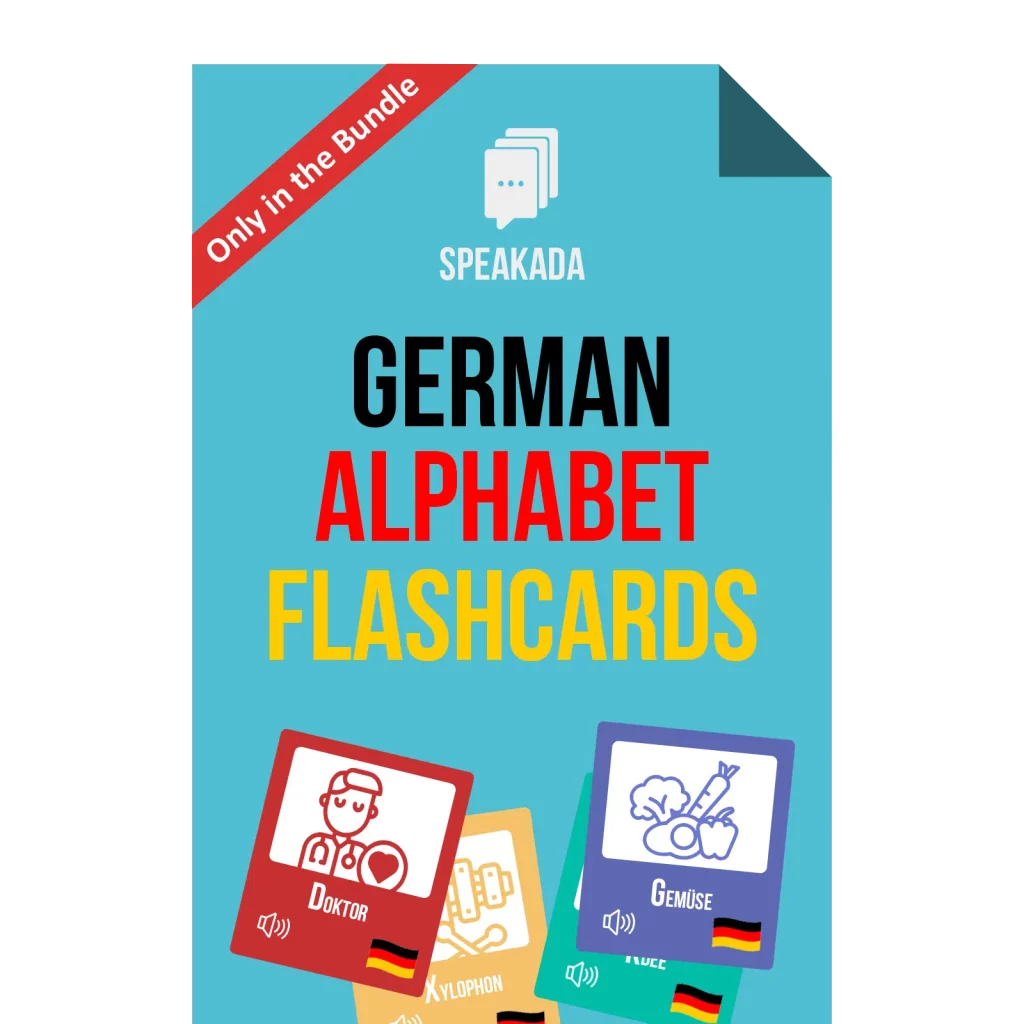
German Alphabet Flashcards
Learn the German alphabet with high-quality audio - including umlauts (ä, ö, ü) and ß. Build the phonetic foundation for accurate German pronunciation.
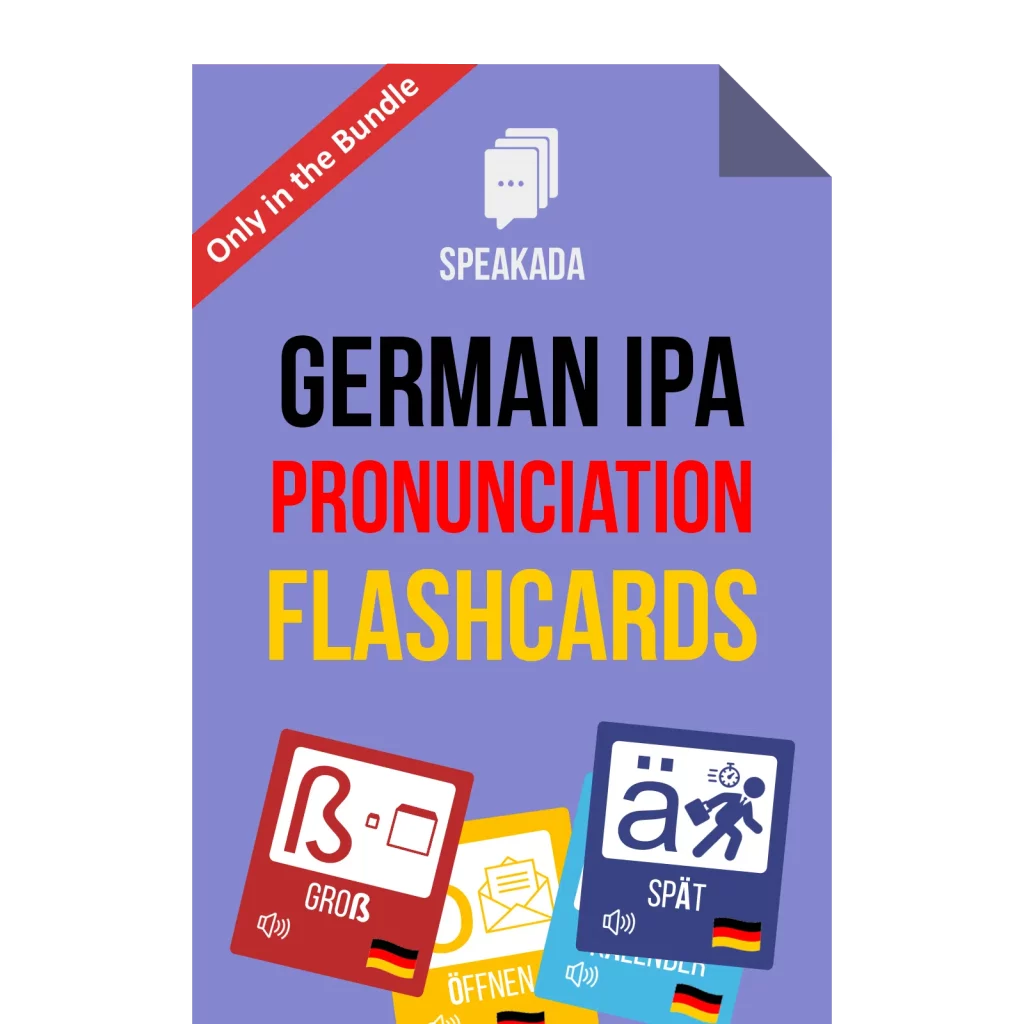
German IPA Flashcards
Master German pronunciation using the International Phonetic Alphabet. Once you know IPA, you can self-correct your German accent anywhere - no tutor required.
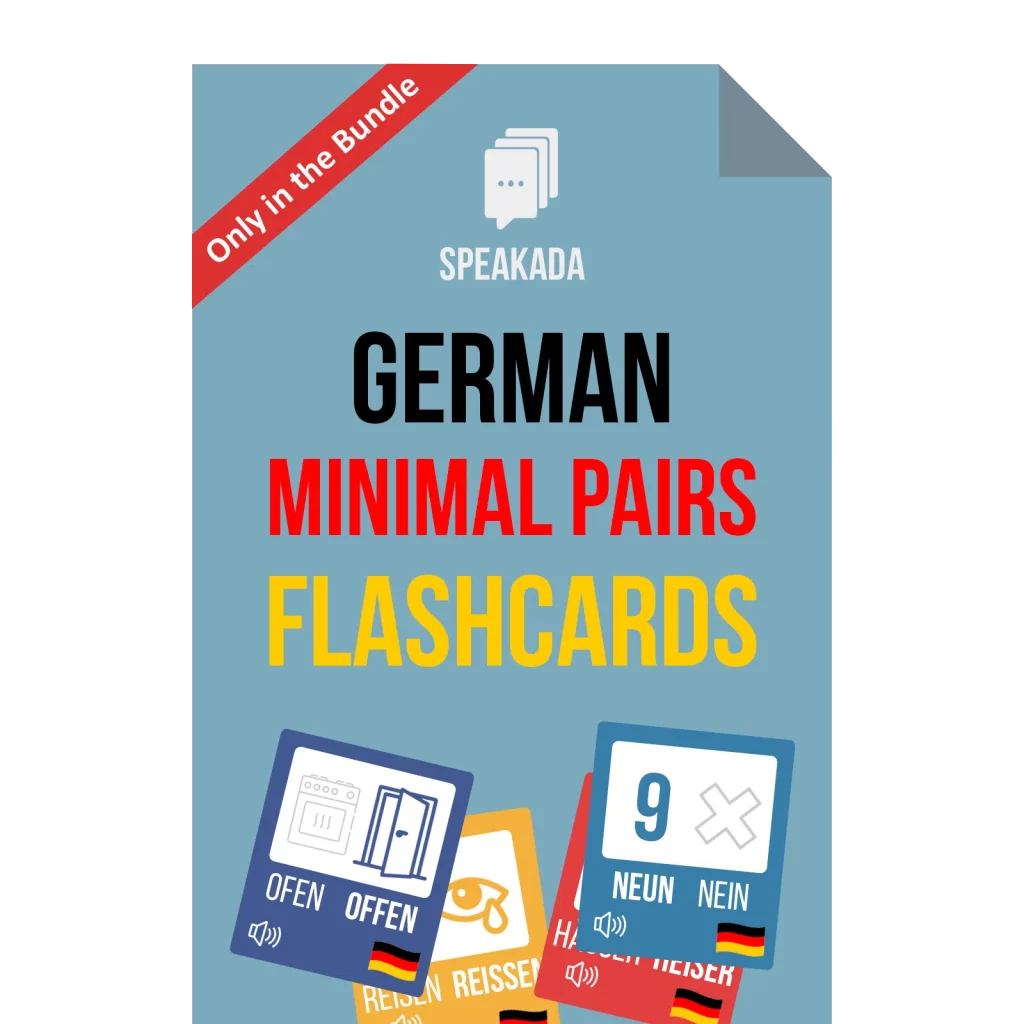
German Minimal Pairs Flashcards
Train your ear with German word pairs that differ by one sound. Essential for mastering German vowel and consonant distinctions that trip up English speakers.
4. Customization and flexibility
Anki is a highly customizable and flexible tool that allows you to tailor your learning experience to your specific needs and goals.
You can create and organize flashcards based on your personal learning style, and you can access the app on a variety of platforms and devices, making it convenient to study whenever and wherever you have time.
Overall, Anki can be a very useful tool for learning German and improving your language skills. By creating and reviewing flashcards on a regular basis, you can acquire new vocabulary, practice grammar concepts, and improve your pronunciation and speaking skills in German.
How to Use Anki for German
1. Install Anki
To install Anki on a desktop or laptop computer, you will need to follow these steps:
-
Go to the Anki website (https://apps.ankiweb.net/) and click on the ‘Download’ button.
-
Select the appropriate version of Anki for your operating system (e.g. Windows, Mac, Linux).
-
Once the download is complete, open the downloaded file to begin the installation process.
-
Follow the on-screen instructions to complete the installation. This may involve clicking ‘Next’ or ‘Install’ a few times, and agreeing to the terms and conditions.
-
Once the installation is complete, you will be taken to the main Anki screen where you can start creating and studying flashcards.
To install Anki on a mobile Android or iOS device, you will need to follow these steps:
- Download & Install AnkiDroid or AnkiMobile:
For Android devices, download AnkiDroid from the Google Play Store.
-
For iOS devices, get AnkiMobile from the App Store.
-
Alternatively, access both apps from the official Anki website at https://apps.ankiweb.net/.
-
Launch AnkiDroid or AnkiMobile:
After the download is complete, open the AnkiDroid or AnkiMobile app.
- Main Anki Screen:
You’ll arrive at the main Anki screen, where you can view, create, and review your flashcards.
2. Create your flashcards
Once you have Anki installed, you can begin creating your German flashcards. Creating flashcards is the first step in understanding how to use Anki for German effectively. You have 2 options: (1) you can make your own Anki flashcards, or (2) you can use pre-made Anki decks that save you time.
1) Making your own Anki flashcards
To create your own decks in Anki, you will need to follow these steps:
-
Open Anki and click on the ‘Create Deck’ button.
-
Enter the name that you want for your new deck.
-
Click ‘OK’.
-
Now you can add new flashcards to that deck.
To add new cards to your deck in Anki, click on the ‘Add’ button.
This will bring up a new card creation window. From here, you can enter details for the front and back of the card, as well as any additional information or media that you want to include.
Once you are finished, click on the ‘Add’ button to save the card to your deck. This button may be shown as a check mark on mobile devices.
Once you have created your flashcard, it will be added to your deck and will be available for review when you study.
Here is a very basic example of the content you can add to an Anki flashcard to learn the German word for ‘mother’:
Front: mutter
Back: mother
2) Using Pre-Made German Anki Decks
To import a pre-made deck into Anki, you will need to follow these steps:
-
Download the deck file you want to import. Make sure it is in the .apkg file format.
-
Open Anki. Then, find and click the ‘Import’ button.
-
Navigate to the location of the deck file you downloaded and select it.
-
Click ‘Open’ to import the deck into Anki.
-
The imported deck will now be added to your collection of decks in Anki.
Keep in mind that you should only import decks from trusted sources, as importing decks from untrusted sources may result in errors or cause problems with your Anki app or software.
Our team at Speakada have produced effective ready-to-use Anki decks for learning German. If you want to save time and effort, then consider our Speakada German Anki decks so that you can get started studying right away. Learn more about our German Anki decks to help you with German Pronunciation and German Vocabulary.
3. Review and study your Anki German flashcards
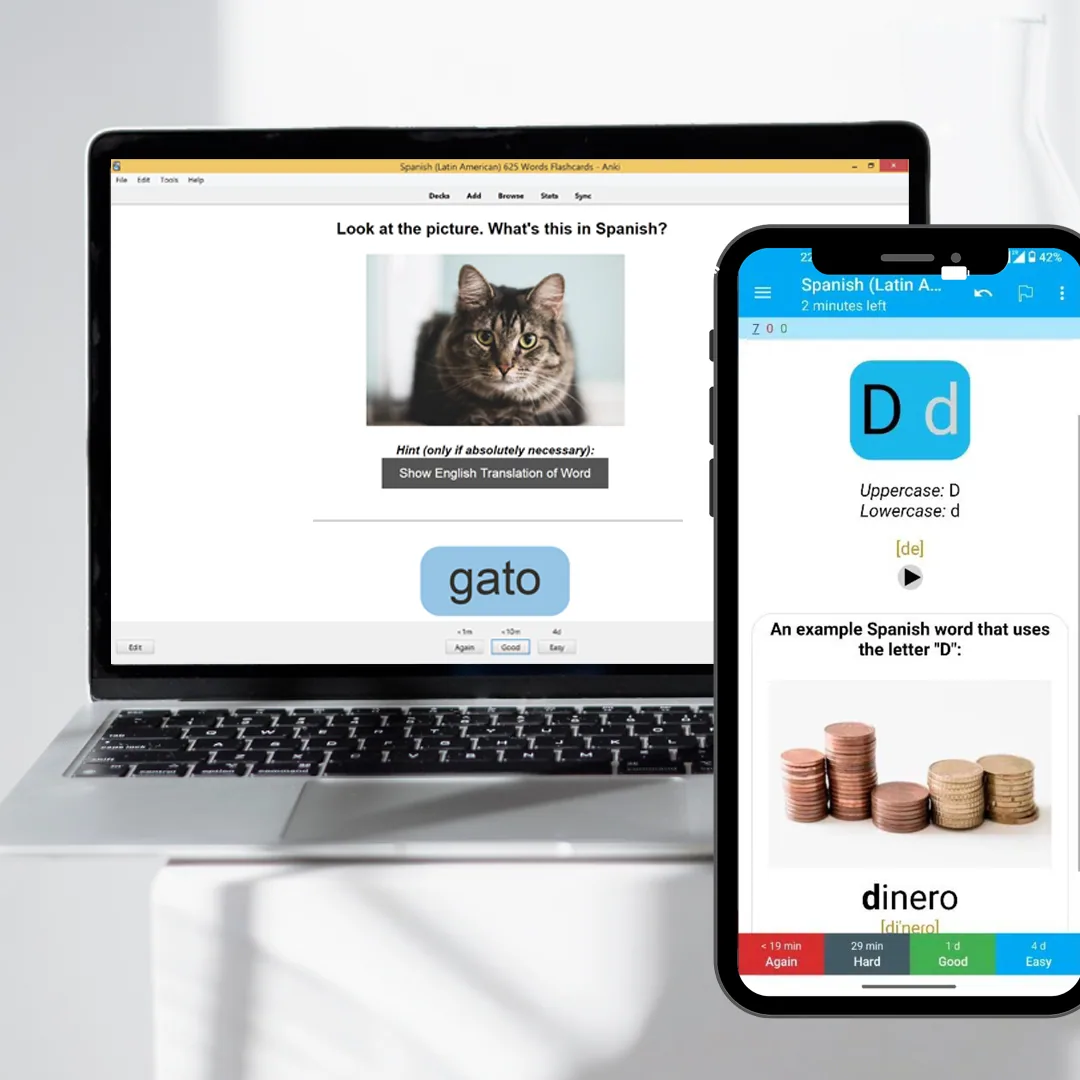
The key to effectively using Anki for language learning is to review your flashcards regularly. Anki uses a spaced repetition algorithm to present your flashcards to you at intervals that become increasingly longer as you demonstrate mastery of the material.
To review and study German flashcards on Anki, follow these steps:
-
Open the Anki app on your device and select the deck you want to review.
-
The app will show you a card with a question or prompt on one side.
-
Answer the question in your head or out loud.
-
Select ‘Show Answer’ in the Anki app to see the answer on the other side of the card.
-
Use the buttons at the bottom of the screen to rate your response: if you got the answer correct, press ‘Good’; if you got it wrong, press ‘Again’; if you took a long time to answer correctly, press ‘Hard’; if you quickly knew the answer, press ‘Easy’.
-
Continue reviewing cards until you have completed the deck or reached your desired review time.
By rating your familiarity with each flashcard as you review it, you can help Anki to adjust the spacing of your reviews and present the material to you at appropriate intervals. This can help to improve your retention of new vocabulary, pronunciation skills and grammar concepts and make your language learning more efficient.
In conclusion, there are three core steps to learning how to use Anki for German. Anki is a powerful tool for learning German. With its powerful spaced repetition algorithm and customizable features, it is an excellent choice for creating digital flashcards to aid in your language learning journey. By following the steps outlined in this article on how to use Anki for German, you can effectively use Anki to enhance your German learning and achieve your language learning goals.
Use Anki for German the effective way: recall first, then prioritize
Recall, don’t just recognize: with the article
Flipping a card and thinking “yeah, Schlüssel, key” is recognition, and in German it’s half a card: the gender is part of the word. Retrieval beats recognition (Roediger & Karpicke, 2006). So produce the whole thing out loud, such as der Schlüssel (not just Schlüssel), and for separable verbs put the prefix where it lands: aufstehen → ich stehe um sieben Uhr auf. Got the noun but missed der/die/das? That still counts as Again.
Prioritize your highest-value cards
A few verbs and modals do enormous work: sein, haben, werden, können, müssen, wollen. In the Browser, select them (plus your highest-frequency nouns) and Cards → Reposition to the front (reorders new cards only). Pair with high-frequency German vocabulary and which deck to start with.