Absorb Grammar Intuitively
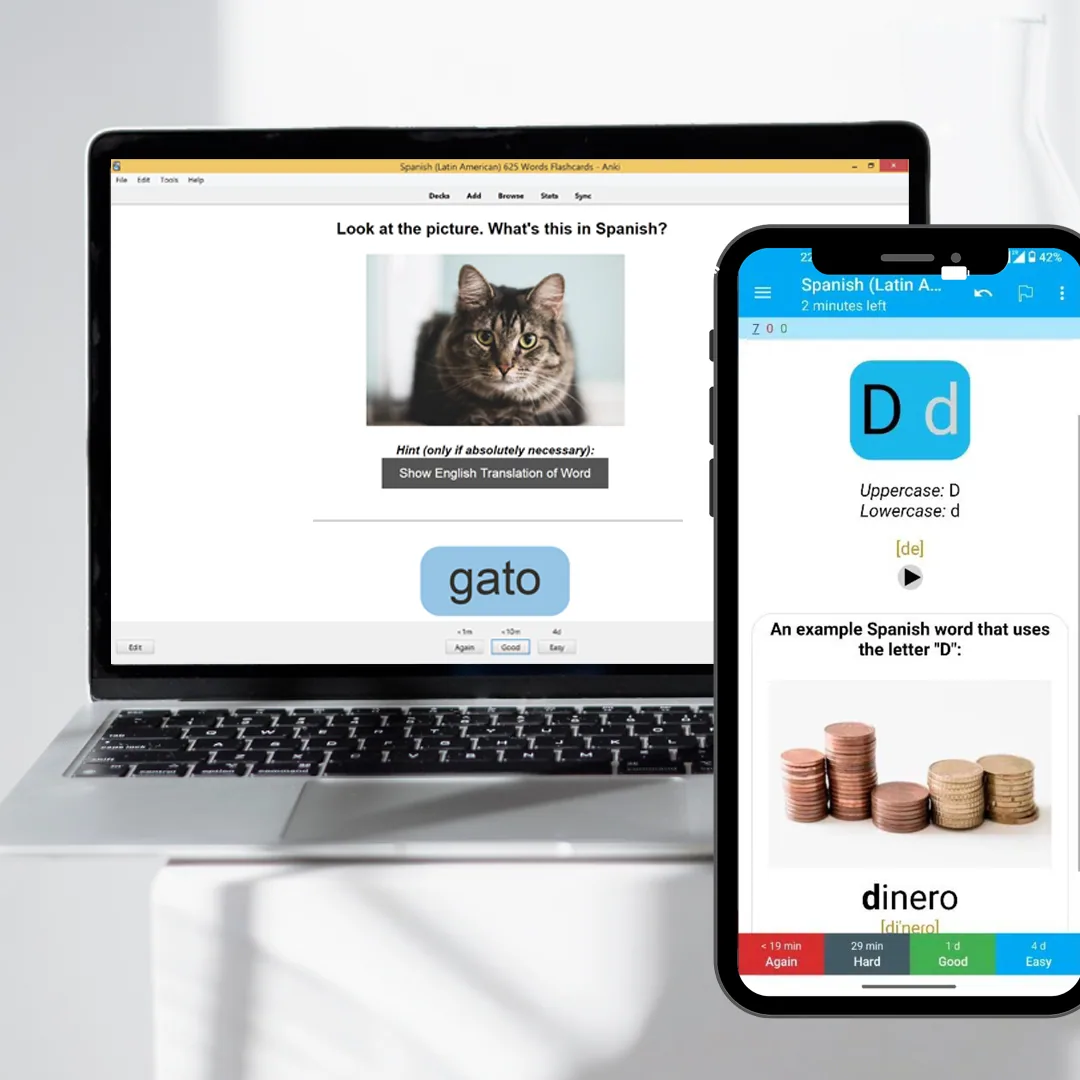
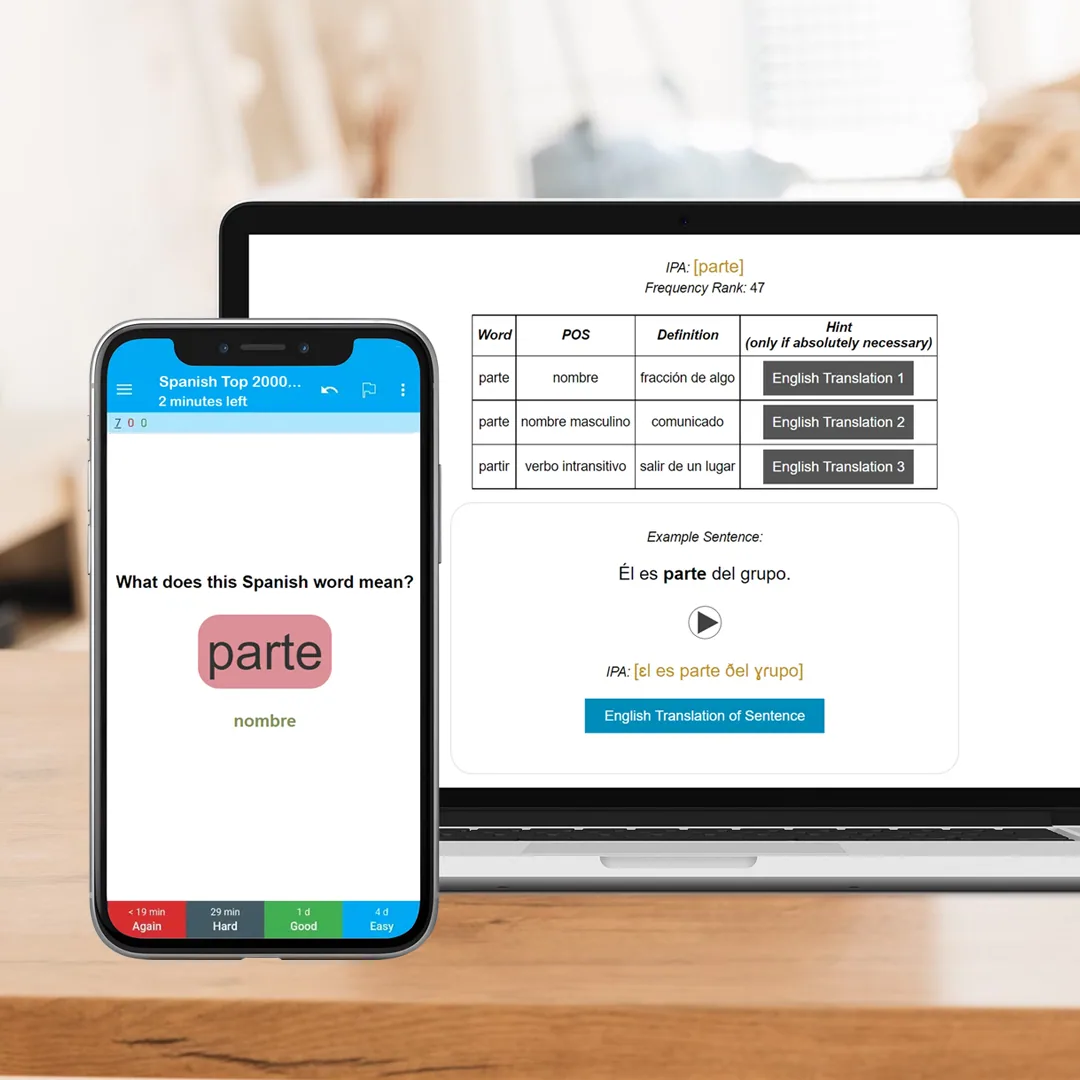
Memorizing conjugation tables doesn't work in real conversation. Learn grammar dynamically using fill-in-the-blank sentence cards tailored to your CEFR level.
Shop Grammar Bundles


Our Most Popular Grammar Bundles
Structured A0 → C1 decks for the languages learners study most
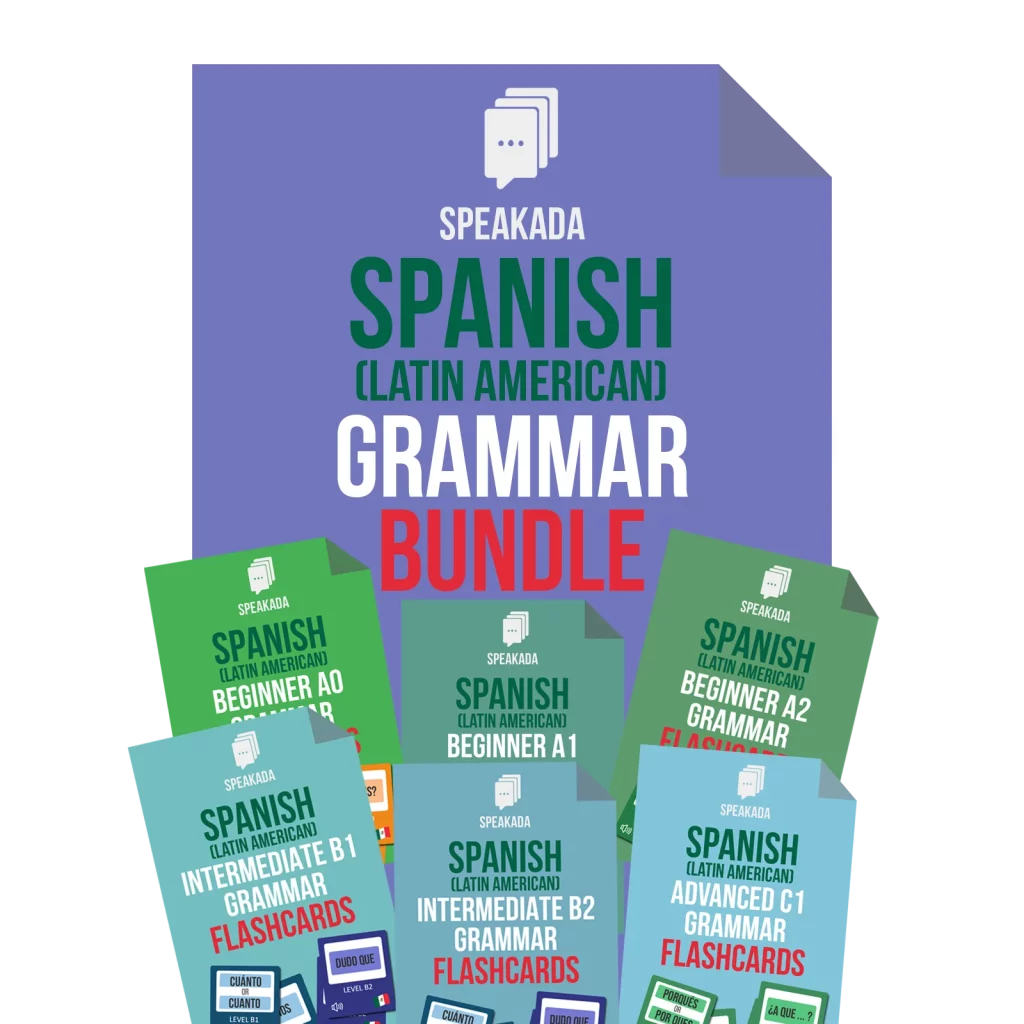
 Spanish: Complete Bundle (A0–C1)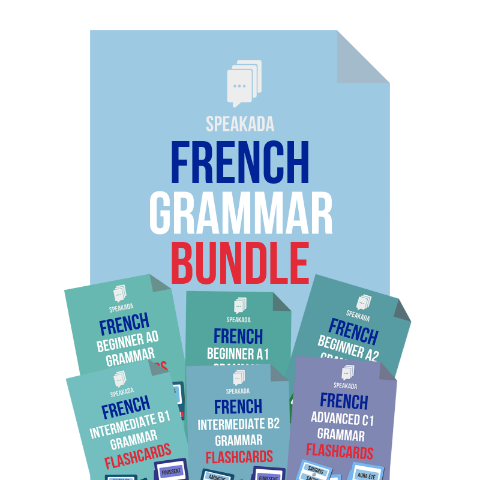
 French: Complete Bundle (A0–C1)
 Italian: Complete Bundle (A0–C1)
3 Types of Grammar Flashcards
Targeted practice for comprehension, production, and self-correction.
1) Comprehension Cards
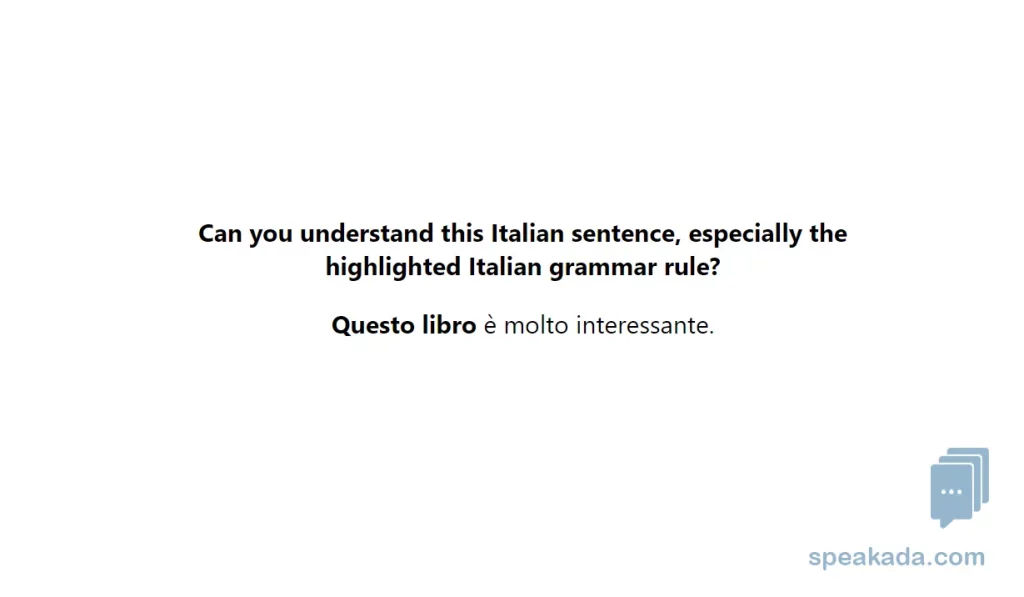
Receptive ability – Helps learners understand a sentence, with particular emphasis on the highlighted grammatical element within that sentence. Perfect for establishing basic pattern recognition.
2) Fill-in-the-Blank Cards
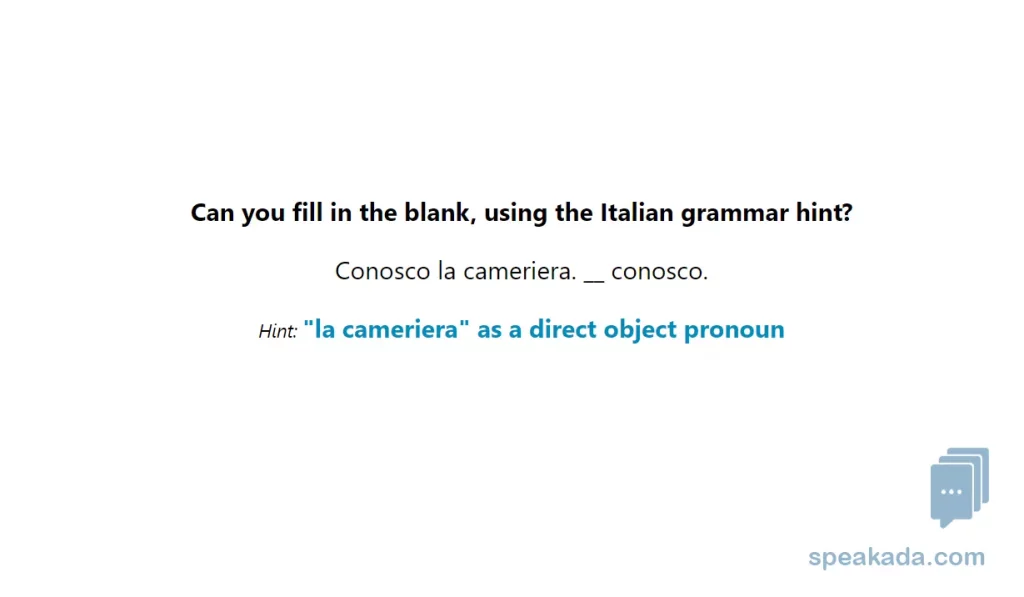
Productive ability – Helps you use the grammar rule in practice, in the context of a real sentence. Also known as a cloze card, the goal is to correctly replace the blank with the relevant foreign word.
3) Multiple Choice Cards
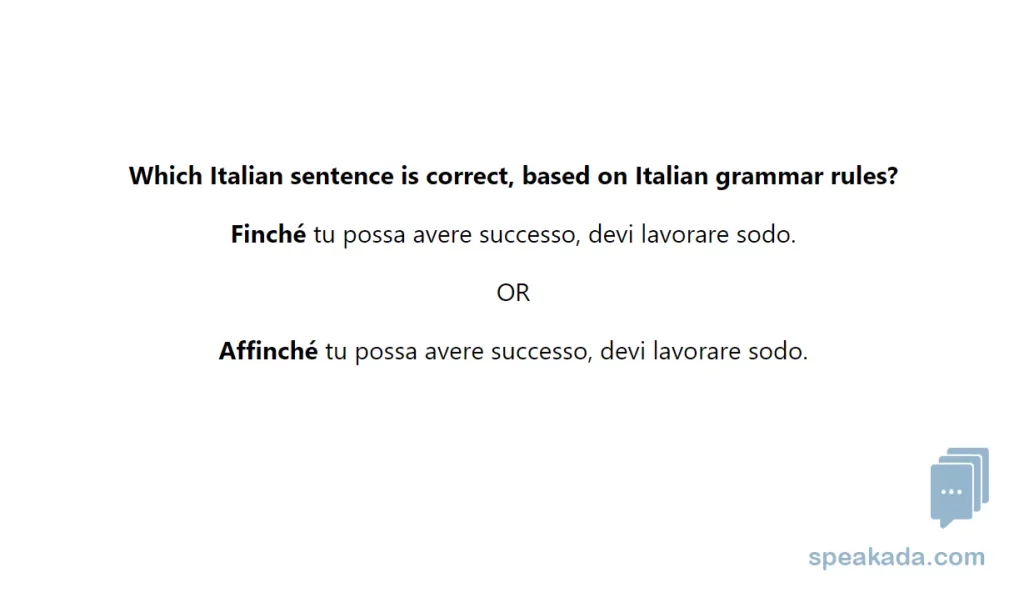
Self-correcting ability – Helps you distinguish between incorrect and correct ways to use a grammar rule. Often focuses on common mistakes made by learners, helping you self-correct for real situations.
What Are Grammar Flashcards?
Grammar flashcards are digital flashcards that cover essential grammar rules, concepts, and examples in context. The best grammar flashcards are compatible with Anki, a free spaced-repetition app widely used by serious language learners.
What makes grammar flashcards effective is their simplicity combined with context. Rather than memorizing a rule from a textbook, each card presents the grammar in action, in a real sentence, so your brain learns to use it automatically, not just recite it. The grammar rule itself appears on the back as a supporting hint, not the primary test.
Our grammar flashcards test whether you understand grammar in context, not whether you can memorize a rule word-for-word. The cards ask whether you can understand and use grammatically correct words within a real sentence, building the intuitive, automatic grammar that fluent speakers use.
3 Principles for Learning Grammar
1. Support Communication, Don't Obstruct It
The goal of language learning should be communication. Grammar study should be used to the extent that it helps you achieve this. Studies show that a combination of 75% comprehensible input and 25% grammar study is more effective than focusing purely on grammar drills. Grammar is a tool for expression, not an end in itself.
2. Pop-Up Grammar
Pop-up grammar refers to brief explanations or insights into rules that "pop up" on the back of your flashcards. It offers quick clarification without a 30-minute lecture. You can choose to absorb the information or skip it based on your needs, making each review session as focused or as exploratory as you want.
3. Active Recall & Spaced Repetition
Research at Hiroshima Shudo University (Japan) found that learners who received explicit instruction showed notable short-term gains, but over time, those gains faded without reinforcement. Anki flashcards solve this directly: spaced repetition schedules regular reviews that solidify grammatical knowledge and promote long-term retention, addressing the core weakness of explicit instruction alone.
Should You Consciously Study Grammar?
The research community is divided: here's what the evidence actually shows.
The "No Explicit Grammar" Camp
Some researchers and learners argue that there is no need for explicit grammar learning at all. Their view: ongoing exposure to authentic native materials is sufficient for grammatical progress. Conscious grammar study, they say, is not necessary: immersion does the work.
The Case for Deliberate Grammar Study
Other researchers have found clear benefits to deliberate grammar learning, particularly for accuracy, self-correction, and reaching advanced levels that immersion alone rarely achieves.

"Raising awareness of grammatical rules is necessary for learners' linguistic development. When learners are aware of the grammar rules, it can lead them to notice their own errors, and to reconstruct their understanding of grammatical structures."
– Prof. Rod Ellis, Curtin University (Australia)
3 Benefits of Deliberate Grammar Study
Our position: grammar study should support your ultimate goal of fluency, not replace communication. With that framing, deliberate grammar study with flashcards offers three specific advantages:
1. Precision on Specific Grammar Points
Explicit grammar learning helps you fine-tune accuracy for specific structures where natural input doesn't give you enough exposure. Some grammatical features, like subjunctive mood, complex tenses, or gender agreement, require focused attention to master.
2. Mastery of Rare & Advanced Grammar
To reach C1 or C2 proficiency, the levels required by major universities, language exams, and international companies, you need exposure to grammar that rarely appears in casual native input. Flashcards let you target these advanced structures directly.
3. A Clearer Path of Progress
Random reading and listening doesn't always give you a sense of forward progress. CEFR-organized grammar flashcards show you exactly where you are and what comes next, reducing plateau frustration and keeping motivation high.
Why Use Grammar Flashcards? 3 Reasons
Grammar flashcards are used by serious language learners because they solve the three core problems of traditional grammar study.
Efficiency
You invest time and energy where it matters most. Grammar flashcards break grammar into small, focused pieces, targeting the specific structures that challenge you. Instead of reviewing entire textbook chapters, you practice the exact rules you haven't yet mastered. Spaced repetition ensures no review is wasted.
Retention
Active recall and spaced repetition are the two most evidence-based techniques for long-term memory. When you engage with grammar flashcards, you're not reading. You're retrieving. That retrieval effort is what locks grammar into long-term memory. You'll remember what you've learned weeks and months later, not just days.
Adaptive Learning
The system adapts to your needs. If a particular grammar concept is difficult, it returns for additional practice until you've mastered it. As you improve, the review interval grows. You're never over-practicing what you know, or under-practicing what you need, making every study session productive.
Grammar Levels According to CEFR
The Common European Framework of Reference for Languages: the global standard for language proficiency assessment.
| Level | Name | What You Can Do |
|---|---|---|
| A0 | Absolute Beginner | No prior knowledge. Introduced to basic greetings, simple vocabulary, and elementary grammar concepts. |
| A1 | Beginner | Understand and use simple, everyday expressions. Introduce yourself, ask and answer basic questions, interact in routine situations. |
| A2 | Elementary | Understand and use commonly used phrases. Communicate in simple tasks and describe your background, environment, and personal experiences. Past and future tenses. |
| B1 | Intermediate | Handle most situations while traveling. Express opinions, describe experiences and plans. Understand the main points of clear standard input. |
| B2 | Upper Intermediate | Understand complex texts and engage in in-depth discussions. Communicate effectively in most social and professional situations. |
| C1 | Advanced | Understand and produce complex texts and academic content. Express yourself fluently and spontaneously. Engage in nuanced discussions and debates. |
| C2 | Proficiency | Near-native or native-level skills. Understand virtually everything heard or read, including complex, abstract, and technical content. Express with precision, clarity, and subtlety. |
By organizing grammar flashcards according to CEFR levels, you can focus on exactly the structures relevant to your current proficiency, without being overwhelmed by advanced concepts before you're ready, or wasting time on material you've already mastered.
Why Are CEFR Levels Used for Grammar Flashcards?
CEFR isn't just a label: it's the global standard for universities, companies, and language exams worldwide.

"The CEFR framework provides a reliable and standardized basis for assessing grammar competence, making it the most appropriate structure for designing targeted language learning materials."
– Prof. Michael McCarthy, University of Nottingham (UK)
Over 40 countries worldwide have incorporated CEFR levels into their language education systems. Universities, international organizations, and multinational companies use CEFR-based exams to evaluate candidates' language skills for admissions, employment, and professional certification.
University Language Requirements by CEFR Level
Here are examples of top universities worldwide that require proof of language competence according to CEFR levels:
| Language | University | Required Level |
|---|---|---|
| Spanish | Universidad Panamericana (Mexico) | B2 |
| MIU City University Miami (USA) | B2 | |
| Complutense University of Madrid | B1+ | |
| French | Sorbonne University (Arts & Sciences) | B2 |
| Sorbonne University (Medicine) | C1 | |
| Italian | Università di Bologna | B2 |
| Università della Svizzera italiana | B2 | |
| German | Humboldt-Universität zu Berlin | C1 |
| University of Vienna | C1 | |
| English | Harvard University & MIT | C1+ |
| University of Cambridge | C1+ |
By aligning your grammar study with CEFR levels, you're not just learning grammar. You're building toward internationally recognized proficiency standards. Whether your goal is university admission, a professional role abroad, or simply the confidence to speak fluently, CEFR-organized flashcards give you a clear, structured path to get there.
Shop Grammar Flashcard Bundles
Complete A0 → C1 grammar decks for every available language