
★★★★★
I've been able to tweak my pronunciation, reducing the mistakes I make & increasing my memory of new words.
Learn the 2000 most common English words with sentence-based Anki flashcards. Reach A2–B1 CEFR level and 90% everyday English comprehension. Available in American and British English.
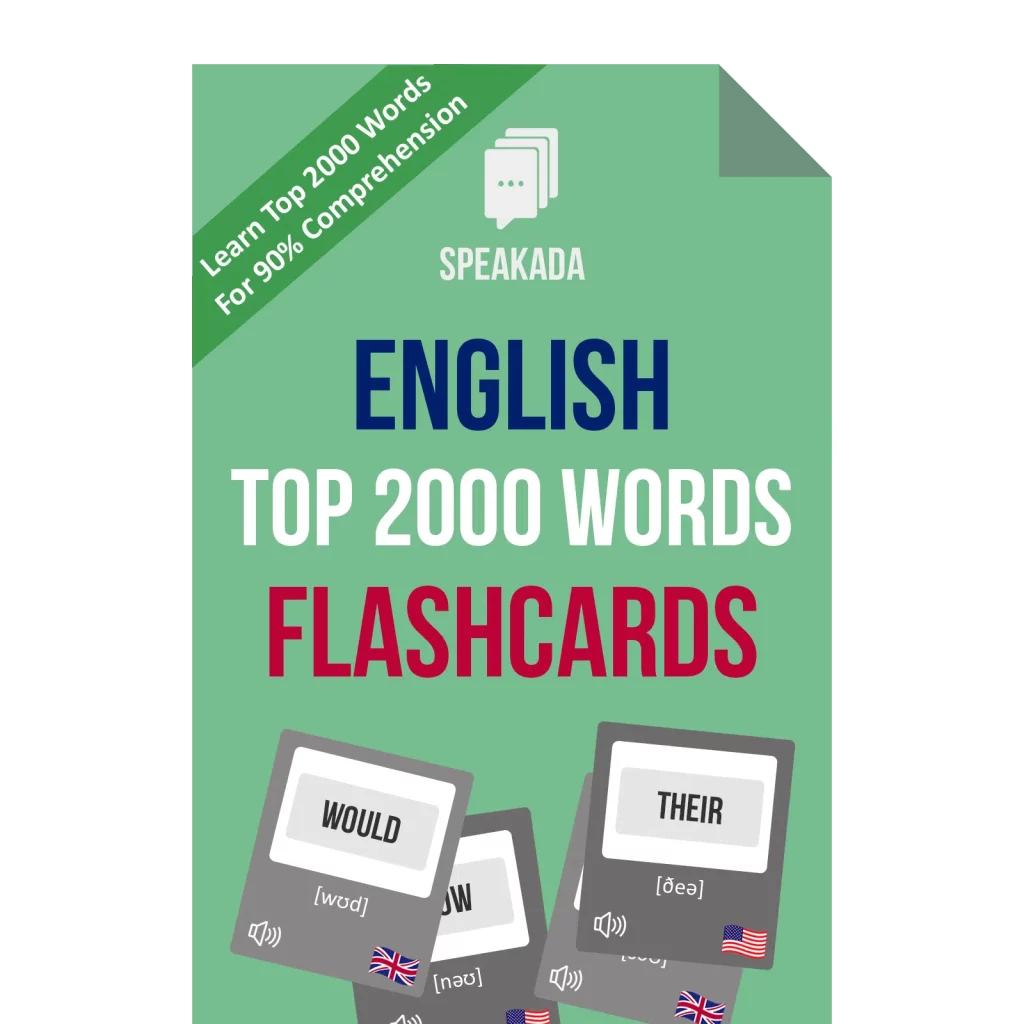
The English Top 2000 Words Flashcards are a pre-made Anki deck of the 2,000 most common English words, learned in the context of real sentences and monolingual English definitions, so you build the habit of thinking in English rather than translating from your native language.
The deck is grounded in frequency research by linguist Paul Nation, whose studies show the top 2,000 English words account for approximately 90% of words used in everyday spoken and written English. Every card targets one of these high-value words, ordered by frequency so you always learn the most important words first.
Cards use sentence context and monolingual English definitions, the same method you'd encounter reading a native English dictionary. This approach is supported by linguists Michael Lewis (sentence "chunks") and Stephen Krashen (comprehensible input), and is available in American English and British English editions.
Language: 
 English (American & British) · Cards: 2,000 cards (2 variations per word) · Level: Beginner–Intermediate · Time to Complete: 3–9 months
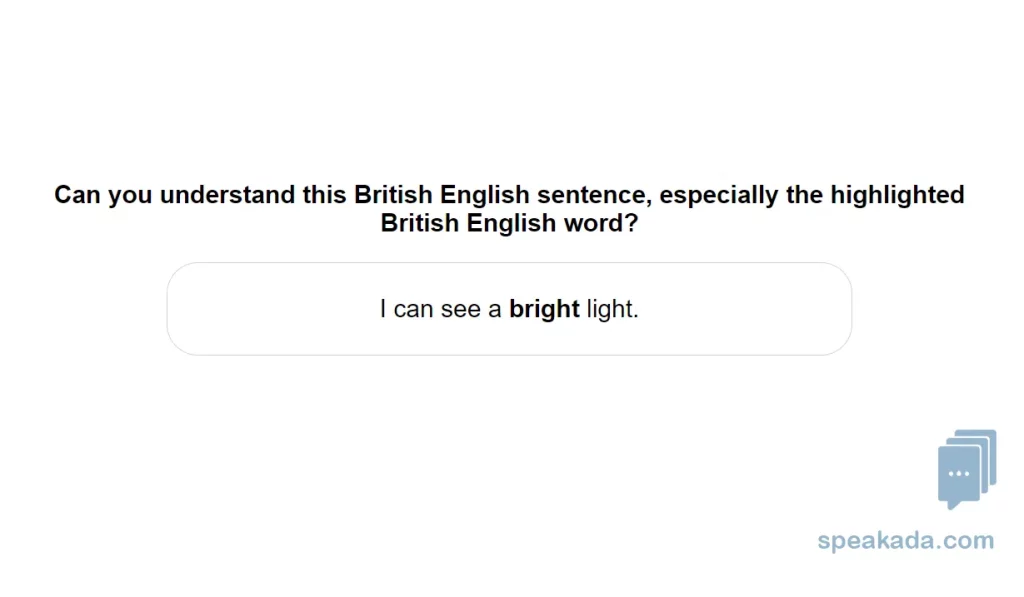
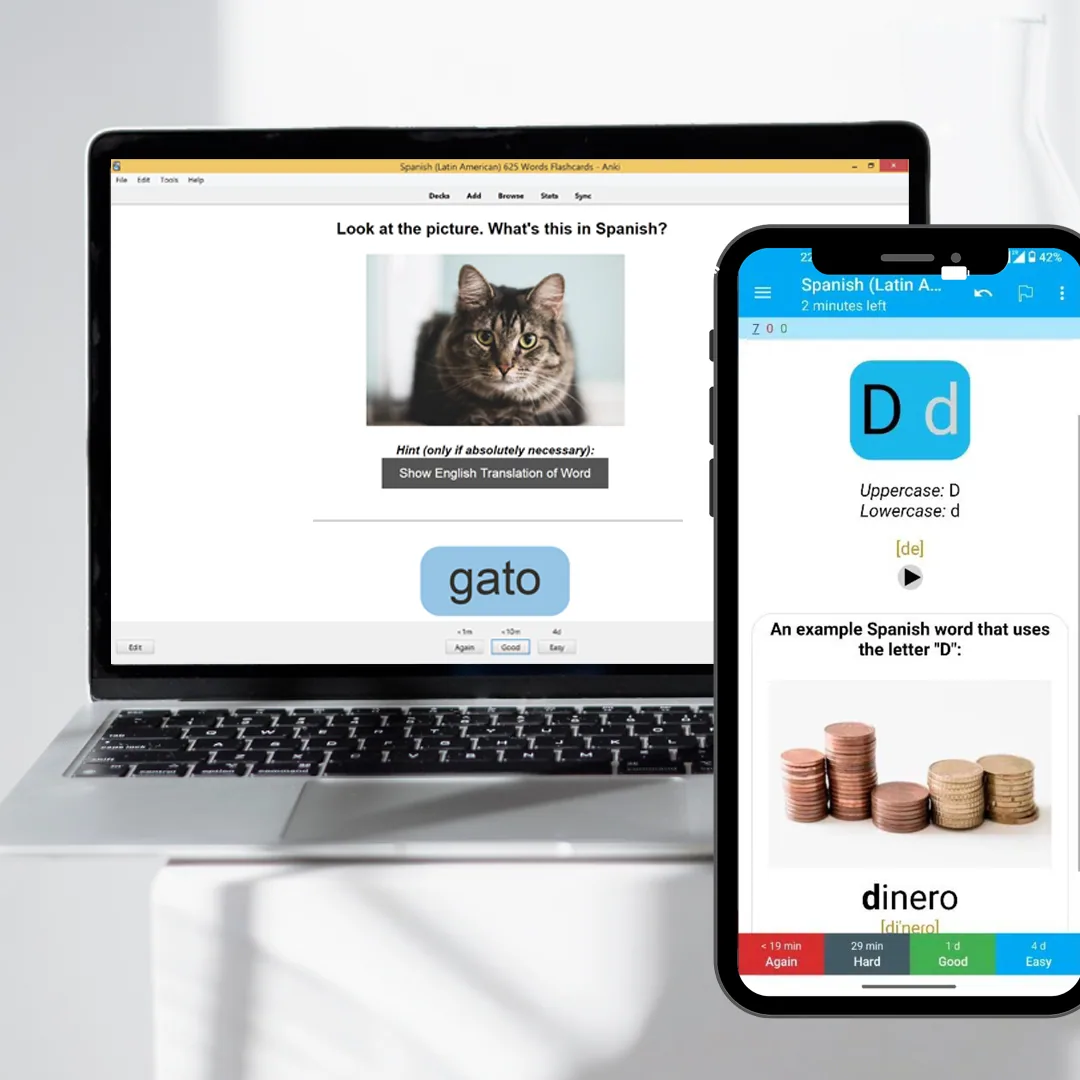
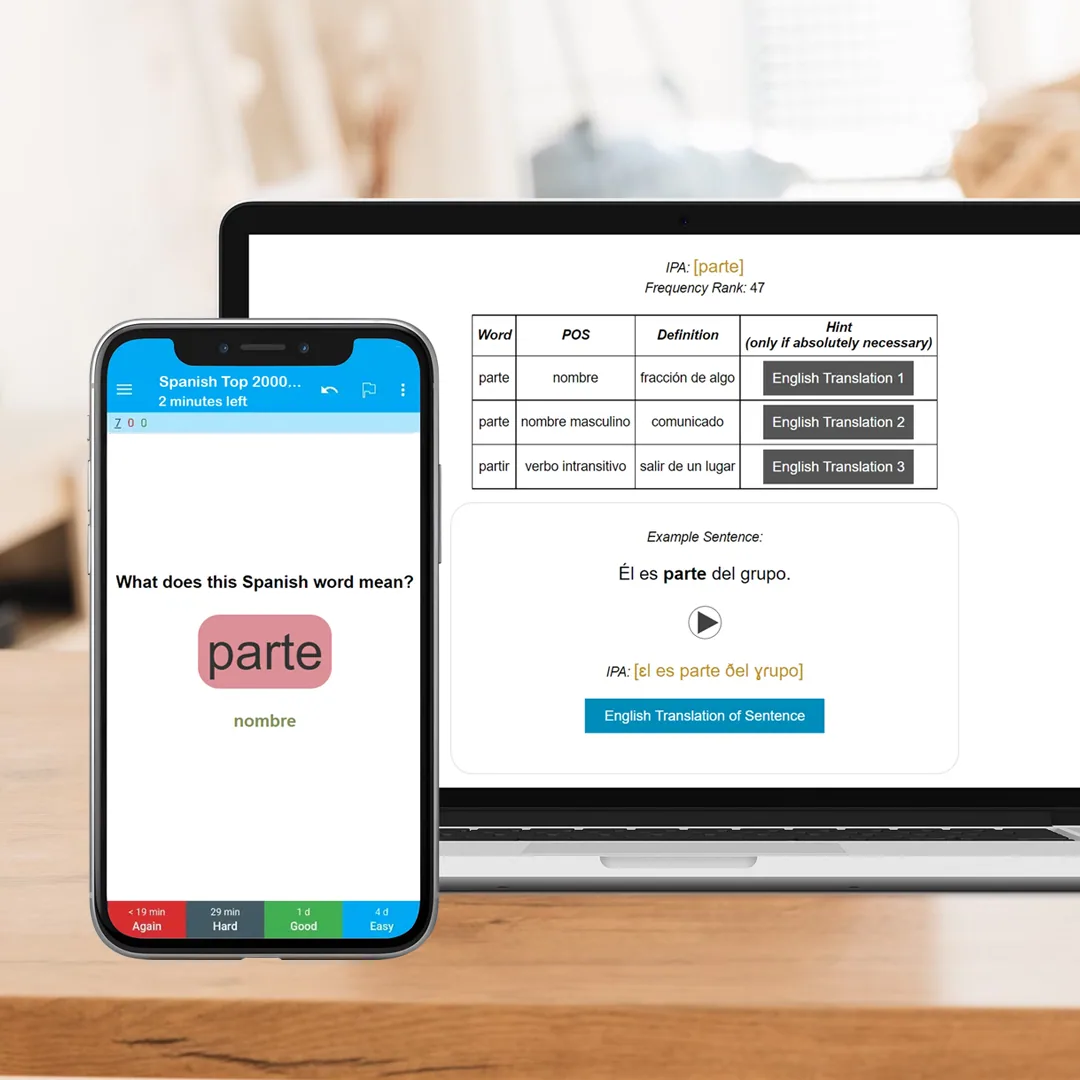
Below are real screenshots from the English Top 2000 Words Flashcards for Anki. Each word appears in two card variations.
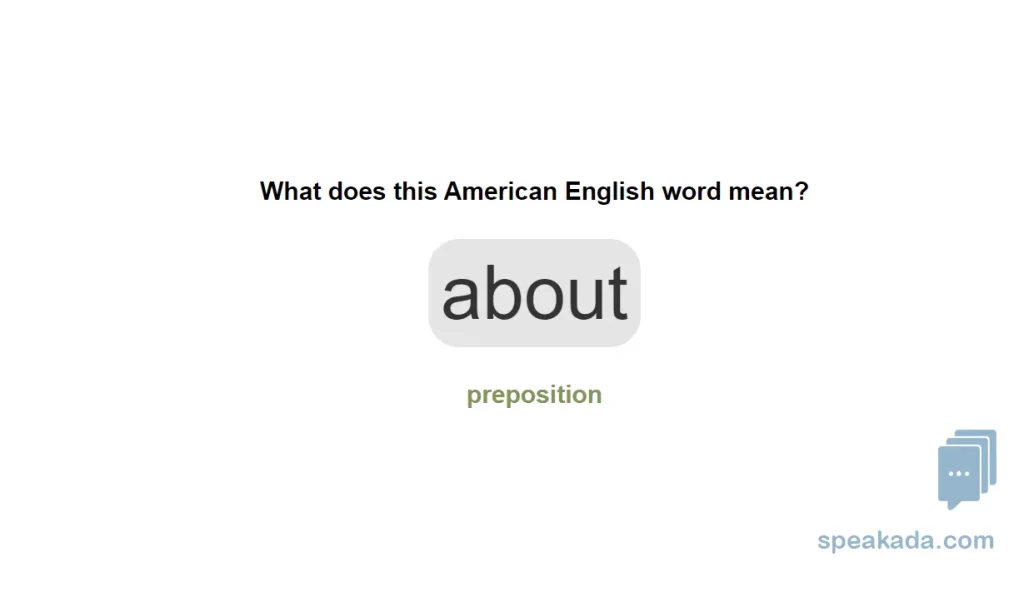
Front of card, Variation 1 "Word Comprehension": the English word appears on the front; recall the meaning and say the word aloud before flipping
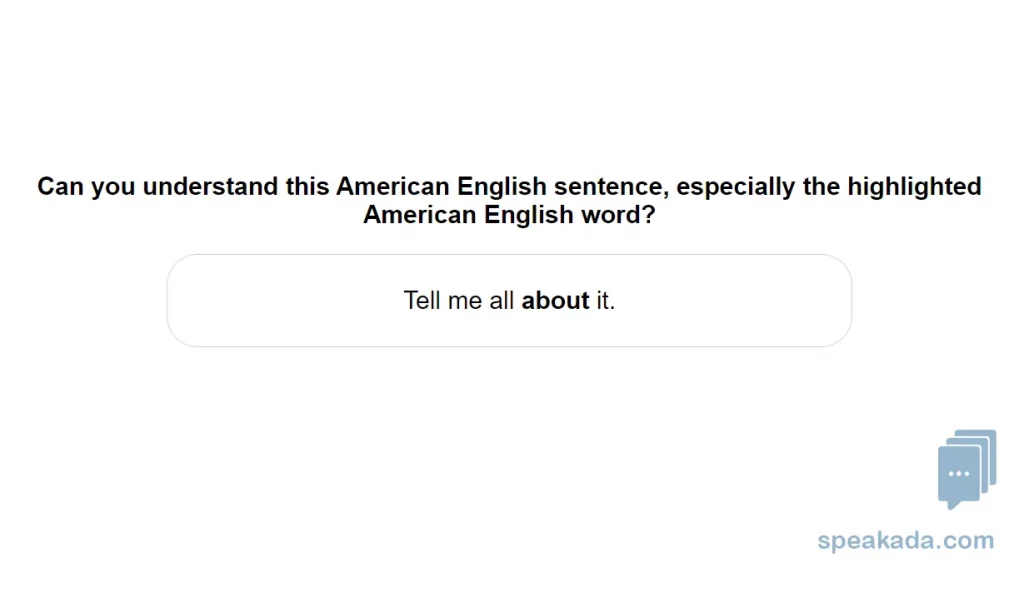
Front of card, Variation 2 "Sentence Comprehension": an example sentence appears with the target word blanked; identify and recall the missing word
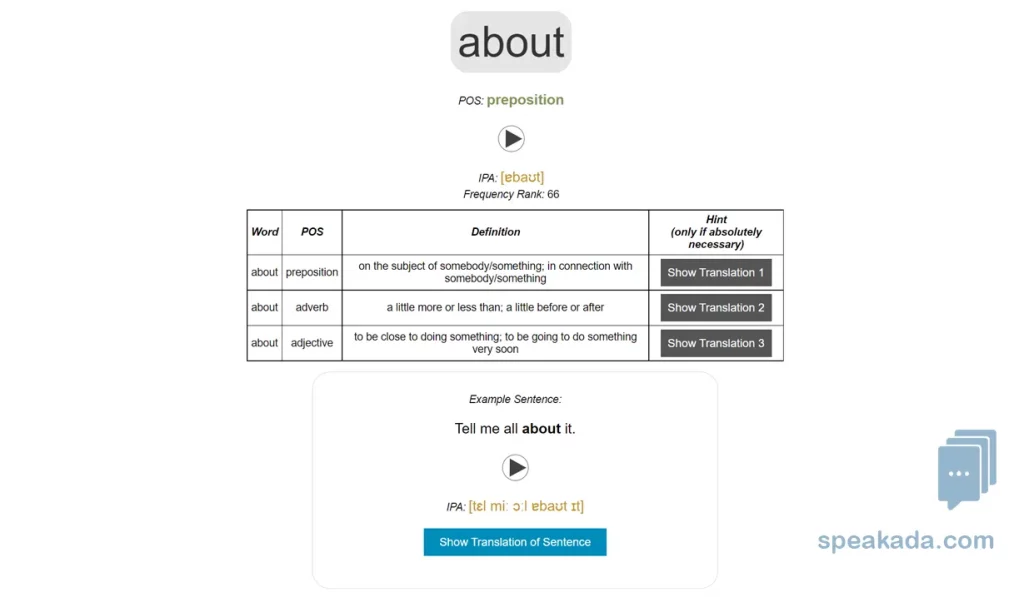
Back of card: the word, IPA, frequency rank, high-quality audio, monolingual English definition, and example sentence, with optional English translation hidden until needed
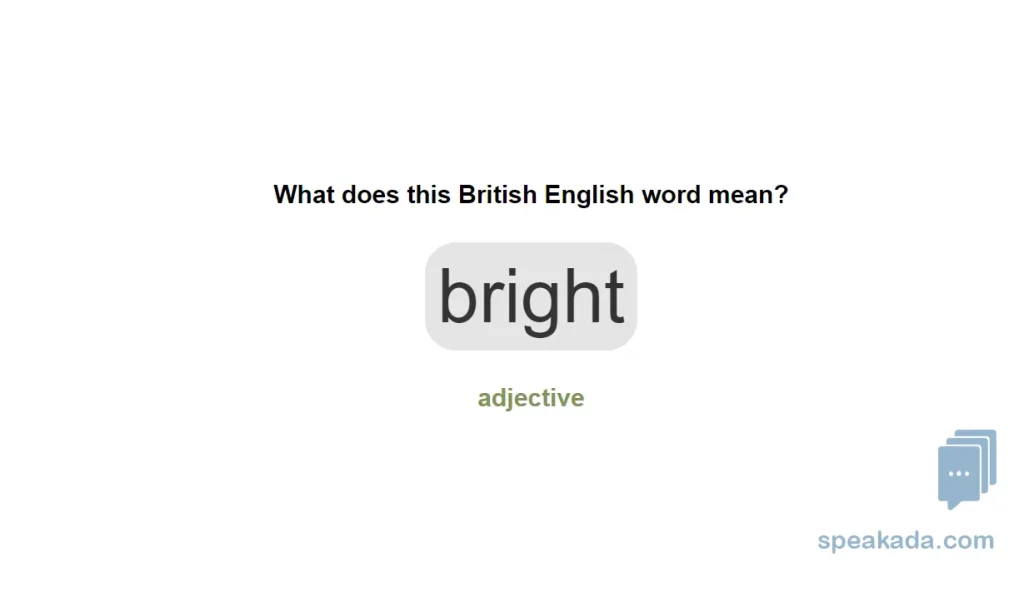
Every card includes an example sentence showing the word in real context. The sentence uses only top-2000 vocabulary, keeping it readable from day one
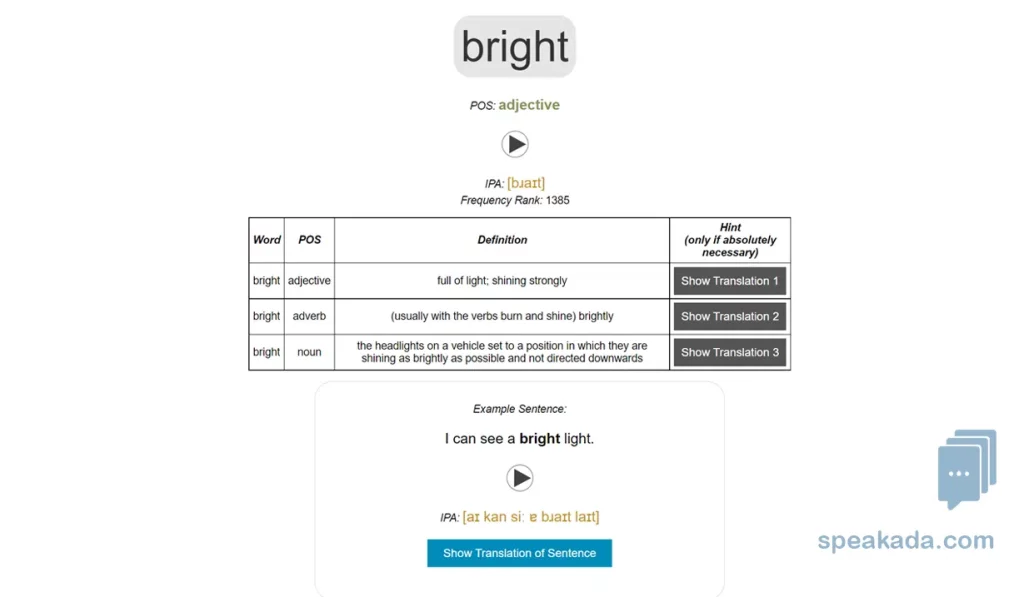
IPA transcription and high-quality audio on every card: hear the exact pronunciation and see how to read the phonetic symbols simultaneously
Anki's spaced repetition tracks your progress across all 2,000 words: difficult words come back sooner; known words appear less often
Paul Nation's frequency research shows the most common 2,000 English words account for approximately 90% of words used in everyday spoken and written English. Once you know these words, you understand the vast majority of what you read and hear, without needing to look up every other word.
| Words learned | Comprehension |
|---|---|
| 1,000 words | ~75% of any text |
| 2,000 words | ~90% of any text |
| 6,000–7,000 words | ~98% of spoken material |
| 8,000–9,000 words | ~98% of written material |
Our deck is built on Nation's word frequency lists: every card targets one of these high-value words, ordered by frequency so you learn the most common words first.
Linguist James Milton from Swansea University found that mastering approximately 2,000 words enables learners to pass the A2 CEFR language exam, taking you firmly into the intermediate stages of English. Our deck is designed around this threshold: every word in the deck is one of the top 2,000 most frequent in English.
Each flashcard includes a complete example sentence in context. You're not memorising an isolated word. You're learning how to use it grammatically, what words it naturally combines with, and what register it belongs to. The sentences use only words from the top 2,000 list, keeping them immediately readable from your first card.
This approach is grounded in linguist Michael Lewis's "chunk" theory: that vocabulary sticks most effectively when learned in sentence patterns, not as isolated items.
Every card includes high-quality audio, American or British English depending on your edition. Hearing the word pronounced correctly as you review it creates a direct link between the written word, its meaning, and its sound. IPA on every card means you always know exactly how to pronounce it, including stress patterns and vowel sounds that English spelling doesn't reliably indicate.
Once you've built your picture-based vocabulary foundation (with the 500 Picture Words deck), this deck takes you into the next phase: English-only content. Cards use monolingual English definitions so you understand new words through English itself, not by mapping everything back to your native language. This trains the direct English thought process that native speakers use.
The English Top 2000 Words Flashcards use sentence-based cards and monolingual definitions as the main way for you to learn English. We do not include pictures in the Top 2000 Words Flashcards for 2 core reasons:
We focus on English sentences and English definitions with the 2000 Words Flashcards because you need to eventually ease yourself into English-only content. If you already studied the picture-based 500 Picture Words flashcards, then it is certainly time for you to move on to actual English sentences. Eventually, you will want to read native English books and articles, as well as listen to native English broadcasts, conversations and media. These are all only in English, and all of the communication in them is mainly through sentences, not random, individual words. So, we want to help you become familiar with English-only content, and that's why our flashcards use English sentences.
We also provide you with English monolingual definitions for each of the flashcards. This means that if you have trouble understanding the meaning of the word in the sentence, you can also read the basic English definition we provide. This helps you get familiar with synonyms and builds a network of words in your brain that help to describe and reinforce newer ones. If you still have trouble, we also provide a translation hint, but you're encouraged to first try and understand the English sentence on its own, along with the monolingual English definition.
Overall, we are trying to help you think in English. That's why we remove your reliance on pictures and your native language, because real-life English content will not give you those.
The Top 2000 Words Flashcards contain the exact words most frequently used in English, and this includes many abstract words that are difficult to visualize with a picture, such as "although," "except," "involve," and "consider." We believe the best way to learn these abstract words is through understanding the meaning they provide in real English sentence "chunks," as promoted by linguist Michael Lewis.
We have based these flashcards on research by linguists Michael Lewis and Stephen Krashen. Lewis emphasized that if you want to learn a language, you need to understand sentence "chunks" of the language. It's not enough to learn words on their own. Krashen's "input hypothesis" states that learners progress when they understand language input that is slightly more advanced than their current level. That is why you will focus on acquiring new English words in the context of real English sentences and basic English monolingual definitions.
Although it is up to you whether you would like to use both decks, there are a few things to consider before deciding whether you want to learn the 500 Picture Words first. Other than the obvious difference in the number of words, there are 2 main differences: how the words are learned, and the source of the frequency list used.
You may be wondering why we offer 2 flashcard decks for English vocabulary: 1) Picture-Based 500 Picture Words Flashcards, and 2) Sentence-Based 2000 Words Flashcards.
The 500 Picture Words Flashcards are intended to be the first step to learning English vocabulary: picture-based and therefore easier to learn for beginners. It includes only words (verbs, nouns and adjectives) that are easily visually represented with an image. After you learn the 500 words, you will be able to think in very basic English and identify and name several everyday objects and actions in the real world.
The Top 2000 Words Flashcards are sentence-based and the next logical step for learning English vocabulary in the context of example sentences and monolingual definitions. We include a simple yet useful sentence to learn each word. The sentence only contains words found in the 500 Picture Words and the top 2000 words, making it easier to learn and a great way to transition to reading real English. After learning the top 2000 words, you are estimated to reach the English A2 CEFR level, along with 90% comprehension of texts. You will be able to understand and produce English sentences to communicate confidently.
We recommend learning the English 500 Picture Words first if you are completely new to English, or if you would like an easy transition into English vocabulary and to get the most out of this deck.
The second main difference between the 500 Picture Words Flashcards and the Top 2000 Words Flashcards is the frequency list used for each. The 500 Picture Words are sourced from cross-language frequency research for the most common picturable words, although we have made tweaks and improvements where necessary. As the deck is picture-based, you'll only find commonly used words that can be clearly shown as an image.
The top 2000 words, on the other hand, are derived from a combination of the most popular corpora and comprehensive word frequency lists of the most common words in English. These include, but are not limited to: the Corpus of Contemporary American English, the British National Corpus, and the Routledge Frequency Dictionary series. We also use our own technology and proprietary process to analyse billions of words to determine the frequency of each word.
A few of the words found in the 500 Picture Words do overlap with the Top 2000 Words, but not all will be found in the larger deck. The top 2000 words include both abstract words and words that can be easily represented with a picture. The top 2000 words will be culturally and linguistically relevant for English because these are the words that actual English native speakers use most.
You can learn more than 2000 words, but you will get the highest yield on your effort with the first 2000 English words. The linguistic research of Paul Nation and James Milton both conclude that learning the top 2000 words gives you the best return on your effort. If you learn up to 7000 words, you only retain 8% more comprehension compared to learning 2000 words where you already understand 90%. You'll also take much longer to learn all 7000 words with diminishing gains. Once you start learning beyond the top 2000 words, it will take much more time and you'll be learning words that are less and less frequently used.
It's clear that you need to master the 2000 most common English words first before learning rare vocabulary. If you're a beginner, you're better off learning very common words like "go," "want," "have," "food," "house," "mother," and "father," because you're more likely to use these words in a range of contexts. If you haven't mastered these words and other top 2000 words, don't waste time memorising rarer words. It's very unlikely that you'll need them at this stage.
Once you have completed learning the top 2000 words, we recommend learning new words that you come across in media, literature and everyday life, rather than working through another frequency list. For example, if you are learning English for your career, you may want to focus on vocabulary common in your field. But only do this once you've learned and mastered the top 2000 English words.
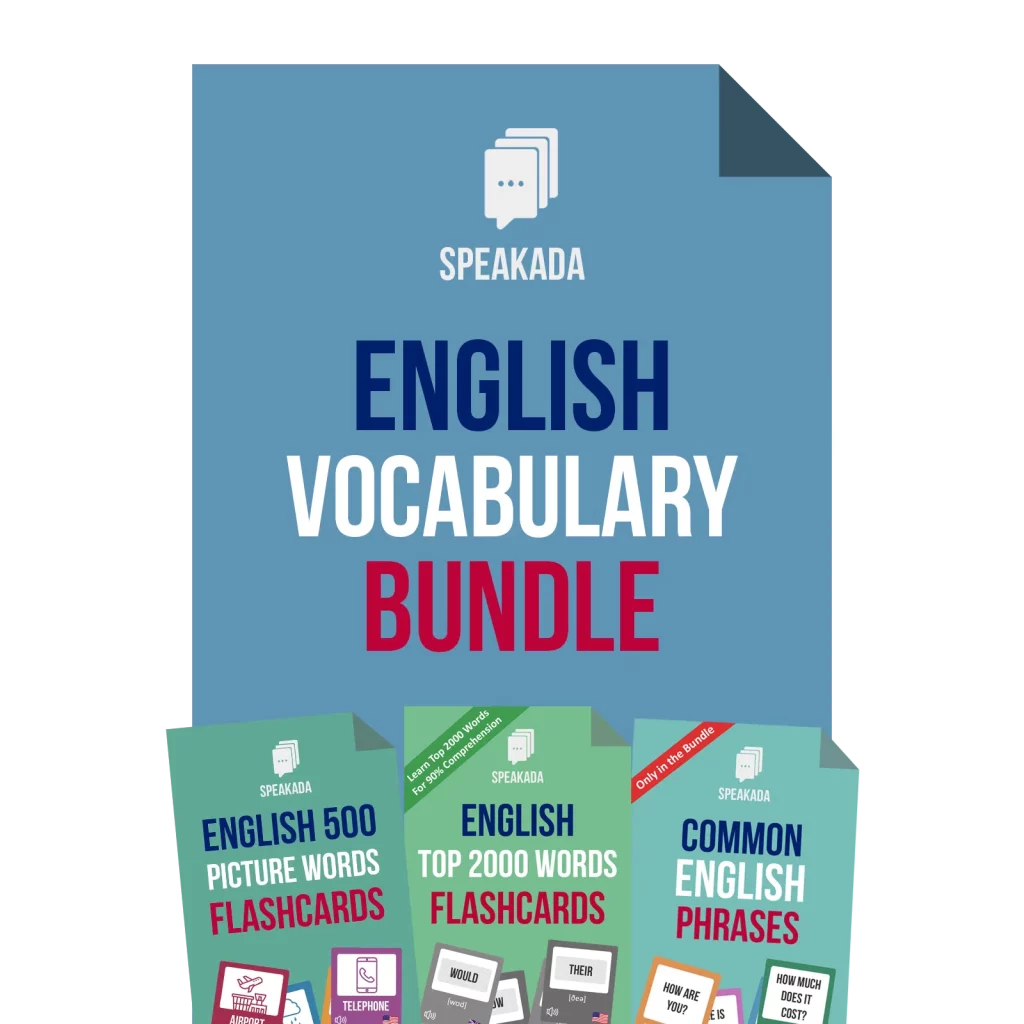
This deck is included in the English Vocabulary Bundle alongside 500 Picture Words and Common English Phrases. Get all 3 decks together and save: the complete word frequency system for 90% everyday English comprehension.
View English Vocabulary Bundle for $200I've been able to tweak my pronunciation, reducing the mistakes I make & increasing my memory of new words.
Speakada uses diverse methods of teaching and learning, from visual to vocal, which all makes it easy to learn.
Speakada motivates me by adapting to my schedule. I can learn in my own time. Now language learning is more fun.
Thanks to Speakada I was able to save hours making flashcards and instead, focus on learning with confidence.
All payments are processed securely via Stripe. If the product is significantly different from what's described here, email us within 7 days for a refund.
Save on your first order and get email only offers when you join.
🔒 No spam. Unsubscribe anytime.
Check your inbox in the next 2 minutes, and your spam folder if you don't see it.
In the meantime, browse our decks and fill your cart. Then use the code at checkout.
Browse All Decks →
These $1 flashcards will help you build a strong foundation with high-quality audio, example sentences, and customizable learning options through the Anki app. Start improving your vocabulary today and see results in under a week!
Get Your Flashcards for $1