English Minimal Pairs Flashcards
Word pairs that differ by one sound - train your ear and mouth on the vowel and consonant contrasts that confuse non-native English speakers. 556 pre-made Anki flashcards with high-quality audio. Included in the English Pronunciation Bundle.
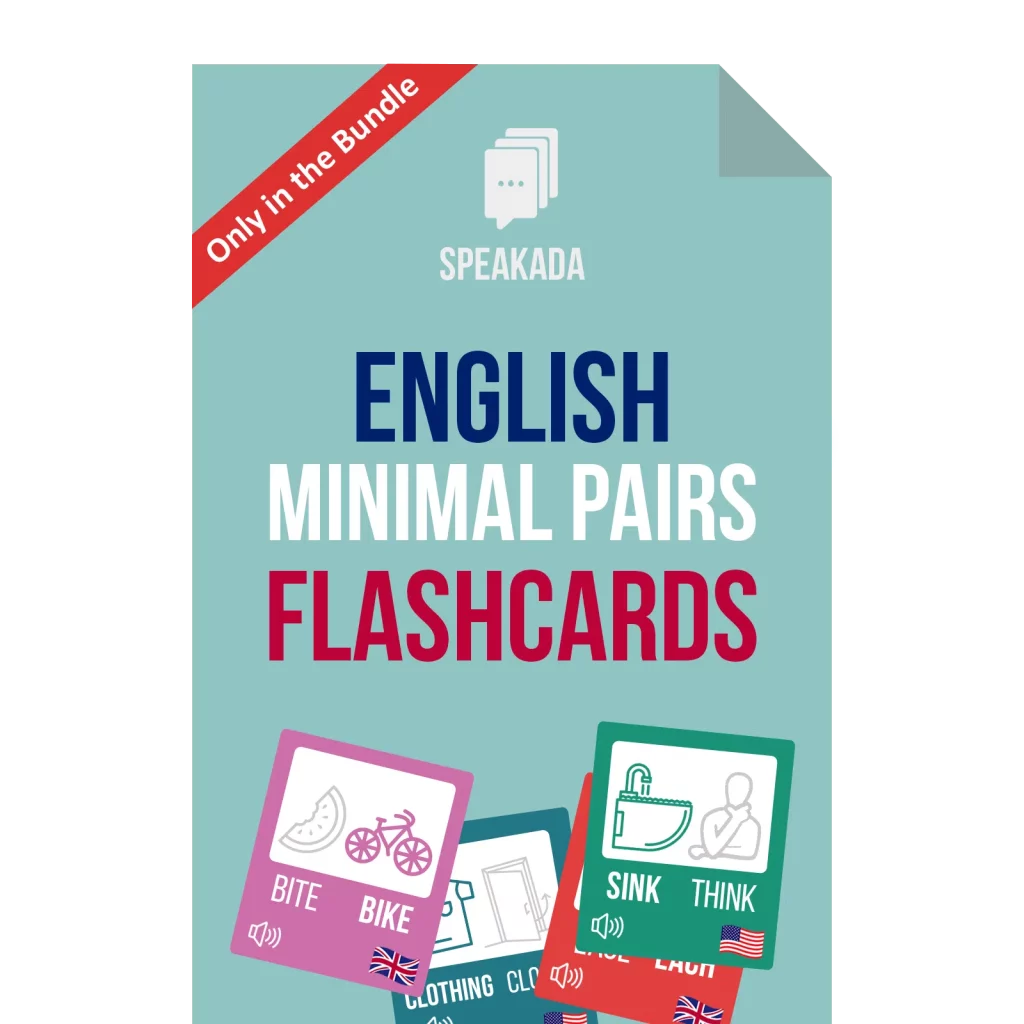
English Minimal Pairs Flashcards
The English Minimal Pairs Flashcards are a 556-card Anki deck covering 278 English minimal pairs: word pairs that sound very similar but differ by exactly one sound. Take “teeth” (/tiːθ/) and “teach” (/tiːtʃ/): two words that sound nearly identical but carry entirely different meanings. This deck trains your ear to hear that difference and your mouth to produce it consistently.
All 278 pairs in this deck are sourced from the top 10,000 most frequent English words, the same vocabulary you encounter every day in English conversations, reading, and media. Every pair you practise is one you will actually hear in real speech, and every card includes the IPA transcription and high-quality audio for both words so you train discrimination and production simultaneously.
Language: English (American & British) · Skill: Pronunciation · Cards: 556 cards · Level: Beginner–Advanced · Time to Complete: 3–6 weeks
What You Learn
- Sound discrimination across the full range of English consonant contrasts: voiced vs. voiceless pairs (/p/ vs /b/, /t/ vs /d/, /k/ vs /g/), sibilants (/s/ vs /z/, /ʃ/ vs /ʒ/), and challenging fricatives (/θ/ vs /s/, /ð/ vs /d/, /v/ vs /w/)
- Vowel contrasts that trip up most learners: short vs. long (/ɪ/ vs /iː/, /ʊ/ vs /uː/) and quality distinctions (/æ/ vs /e/, /ɒ/ vs /ʌ/)
- Both receptive (hearing) and productive (speaking) accuracy, each card trains you to recognise the pair and produce the contrast
- The IPA transcription for both words in every pair, reinforcing the sound–symbol connection from the IPA deck
- How to study smarter with spaced repetition: the deck automatically surfaces your most difficult contrasts at the optimal review interval
- The 278 most common minimal pair contrasts in English, all drawn from the top 10,000 most frequently used words
See the Flashcards in Action
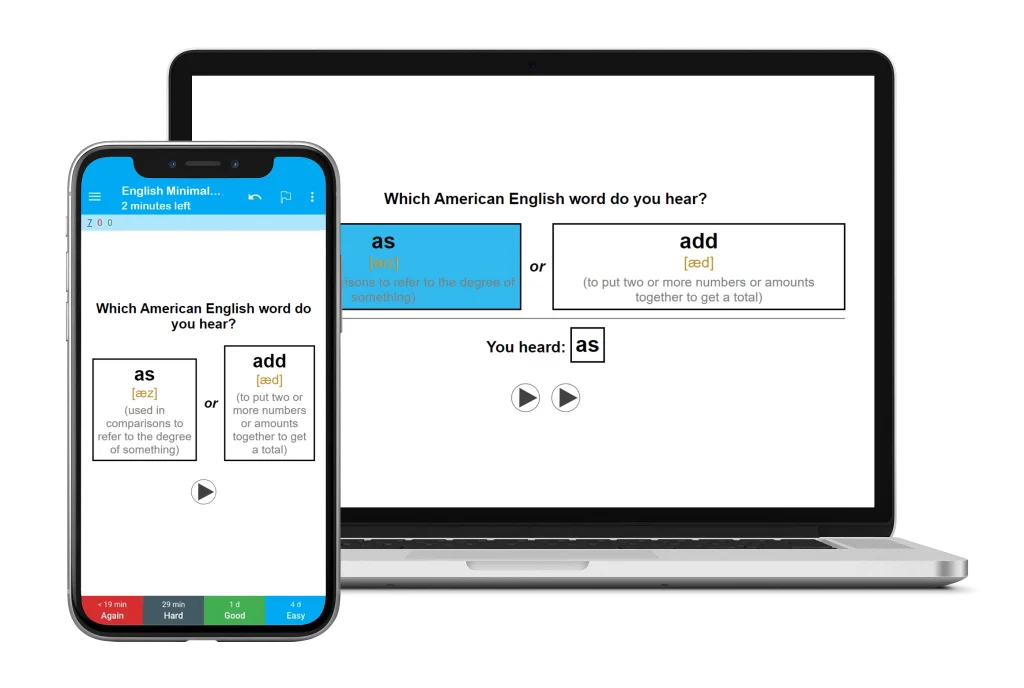
Below are real screenshots from the English Minimal Pairs Flashcards for Anki.
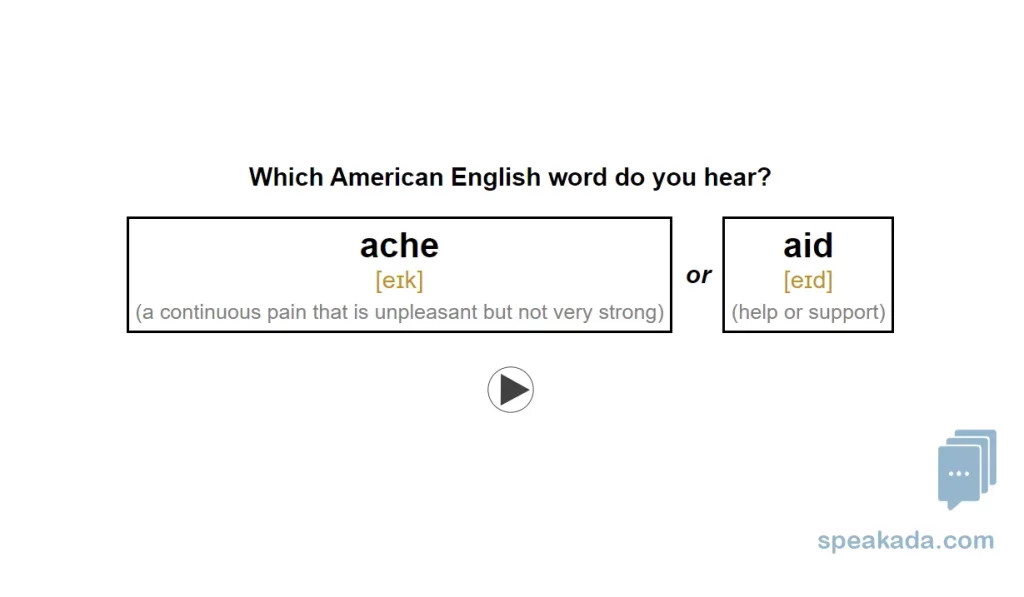
Front of card: one word of the minimal pair with its IPA transcription and a high-quality audio prompt
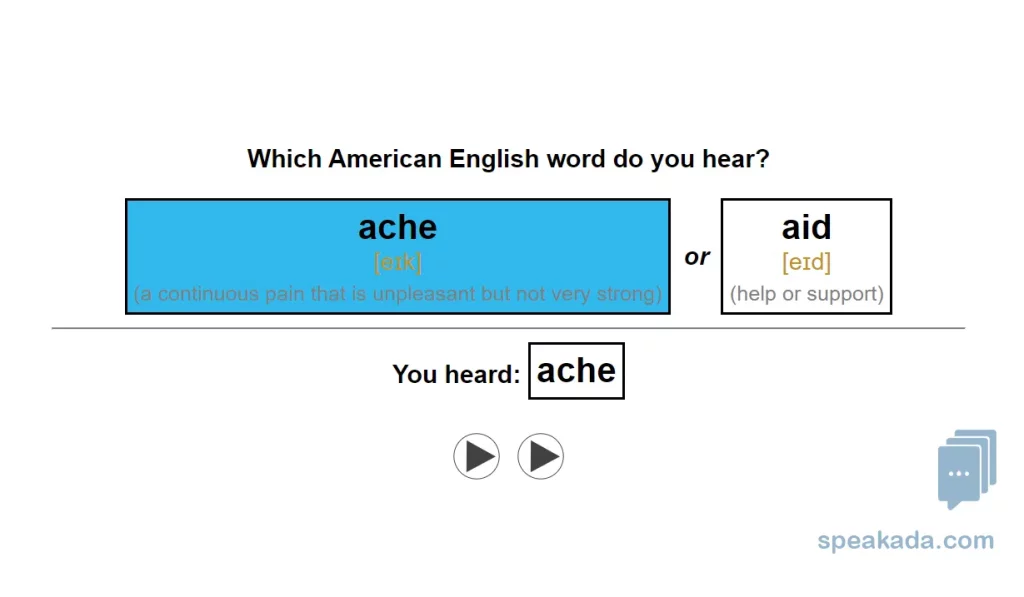
Back of card: both words revealed with IPA, the contrasting sound highlighted between the pair
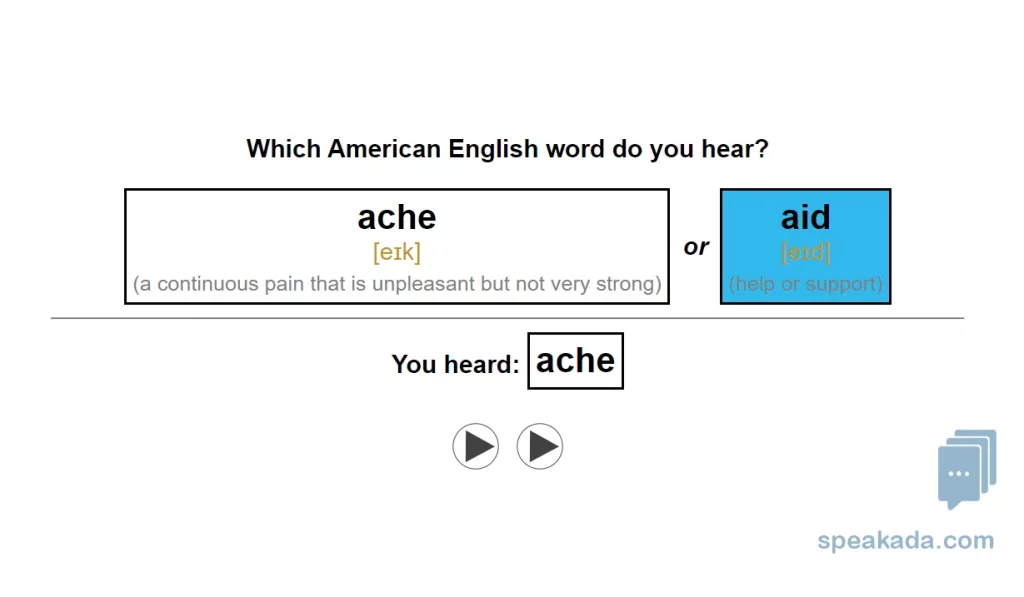
Answer view: the full minimal pair displayed with IPA and high-quality audio for each word side by side
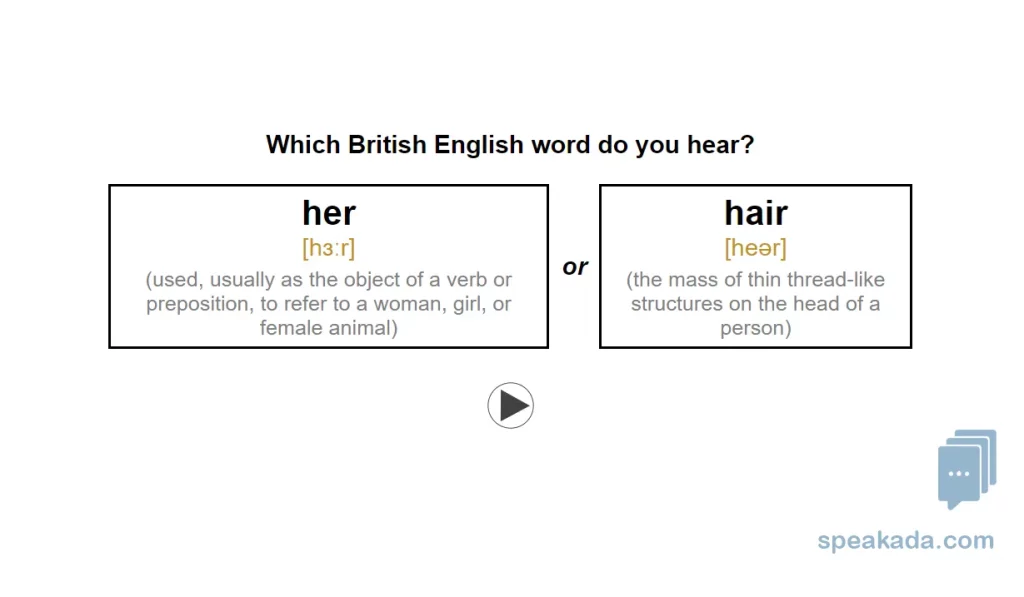
Each card shows both words of the minimal pair with their IPA transcriptions, all sourced from the top 10,000 most common English words
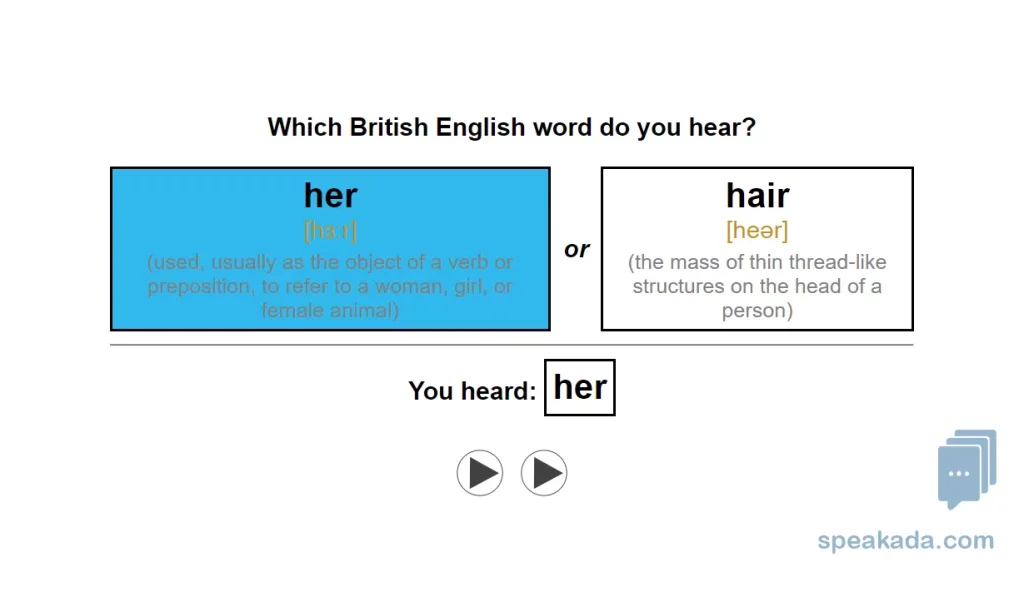
High-quality audio for each word: replay either recording to hone in on the exact sound difference
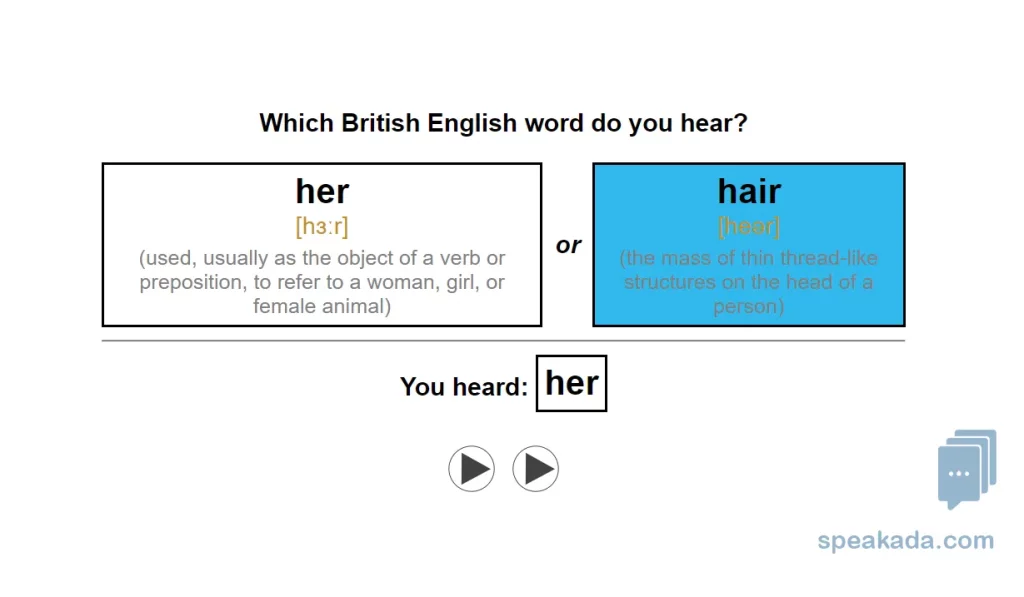
Results view: Anki tracks your progress and surfaces your most difficult contrasts for focused review
Why Minimal Pairs Matter for English
The Sounds Most Likely to Be Misheard
English has sounds that don’t exist in many other languages: /θ/ and /ð/ (the “th” sounds), /æ/ (the “a” in “cat”), the contrast between /ɪ/ and /iː/ (sit vs. seat), and the difference between /r/ and /l/ for speakers of certain Asian languages. When you encounter these sounds in natural speech, your brain defaults to the nearest equivalent sound in your first language, which leads to mishearing and mispronunciation.
Minimal pair training breaks this default. By repeatedly practising the contrast between similar sounds, hearing both, comparing them, and producing the correct one, you retrain your auditory system to make the fine distinctions that English requires.
Better Listening Through Sound Discrimination
Most learners know they need to improve their pronunciation, but fewer realise that the same training also improves their listening comprehension. When you train your ear to distinguish /θ/ from /s/, you stop mishearing “think” as “sink” in natural speech. When you practise /ɪ/ vs /iː/, “live” and “leave” become unambiguous in fast conversation.
Academic research in second-language acquisition consistently shows that phoneme discrimination training, exactly what minimal pair practice provides, directly improves listening accuracy, not just speaking clarity.
Sourced from the Words You Actually Use
Every pair in this deck was selected by analysing the top 10,000 most frequently used English words. That means every contrast you practise comes from real, common vocabulary, not rare or academic words you will rarely encounter. By the time you finish the deck, you have trained discrimination on the exact minimal pairs that matter most in everyday English communication.
We Recommend Completing IPA First
Each card in this deck includes the IPA transcription for both words in the pair. If you’ve already completed the English IPA Pronunciation Flashcards, you can read these transcriptions immediately and understand exactly where the contrast lies. If you haven’t, this is a good moment to start. The IPA deck is the key that makes every minimal pair immediately interpretable.
Sound Contrasts Covered
The deck targets the minimal pair contrasts most challenging for non-native English speakers:
- Vowel length: /ɪ/ vs /iː/ (sit/seat), /ʊ/ vs /uː/ (full/fool), /æ/ vs /ɑː/ (hat/heart)
- Vowel quality: /e/ vs /æ/ (bed/bad), /ɒ/ vs /ʌ/ (hot/hut), /ɜː/ vs /ə/ (bird/about)
- Voiced vs. voiceless consonants: /p/ vs /b/, /t/ vs /d/, /k/ vs /g/, /f/ vs /v/, /s/ vs /z/, /θ/ vs /ð/
- Challenging consonants: /l/ vs /r/, /w/ vs /v/, /θ/ vs /s/, /ð/ vs /d/, /ʃ/ vs /tʃ/, /ʒ/ vs /dʒ/
- Final consonants: English word-final consonants that many languages drop or devoice
Available in American and British English
Minimal pair sets differ slightly between American and British English due to accent-specific vowel distinctions. This deck is available in both American English (USA) and British English (UK) editions, each with high-quality audio. Choose the edition that matches the accent you’re working toward, or study both; they’re included together in the English Pronunciation Bundle.
Part of the English Pronunciation Bundle
This deck is one of three pronunciation decks in the English Pronunciation Bundle:
- English Alphabet Flashcards: letter names, sounds, and word examples
- English IPA Pronunciation Flashcards: master every English sound with IPA
- English Minimal Pairs Flashcards ← you are here
Testimonials
“Speakada uses diverse methods of teaching and learning, from visual to vocal, which all makes it easy to learn.”

Roger
(International trade diplomat & Language learner)
“Diverse methods of teaching and learning, from the visual to the vocal, and with a great system of evaluations, repetitions and recall, that makes it easy to learn without forgetting.”

Carolina
(Corporate Tax Specialist & Language learner)
“Speakada motivates me by adapting to my schedule. I can learn in my own time. Now language learning is more fun.”

Eric
(Emergency medical doctor & Language learner)
“Thanks to Speakada I was able to save hours making flashcards and instead, focus on learning with confidence.”

Ines
(Business lawyer & Language learner)
🔒 Your Purchase Is Safe
All payments are processed securely via Stripe. If the product is significantly different from what’s described here, email us within 7 days for a refund.