
German Pronunciation Flashcards Bundle
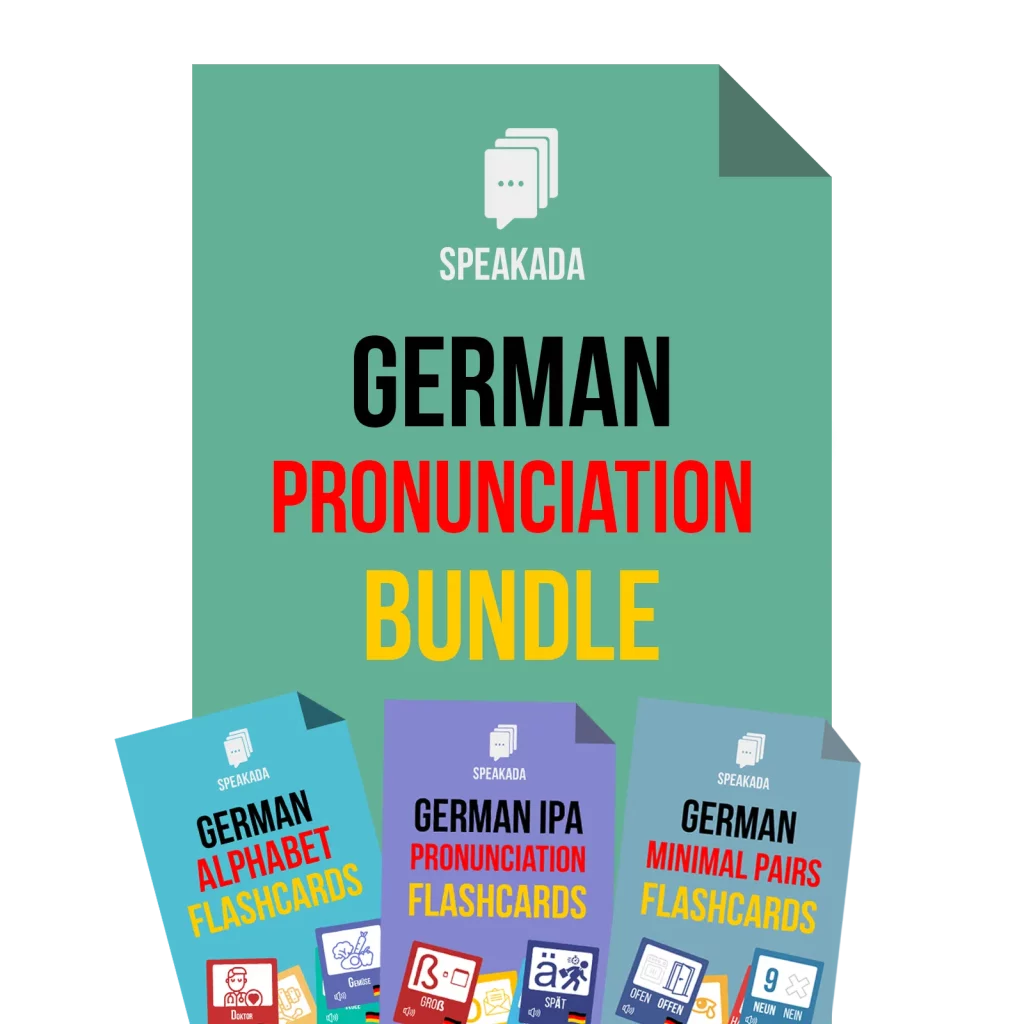
Build accurate German pronunciation from the ground up with all 3 pronunciation decks: German Alphabet, IPA Pronunciation, and Minimal Pairs. 3–6 months to complete. Master umlauts, the German R, and a native-like accent from day one.
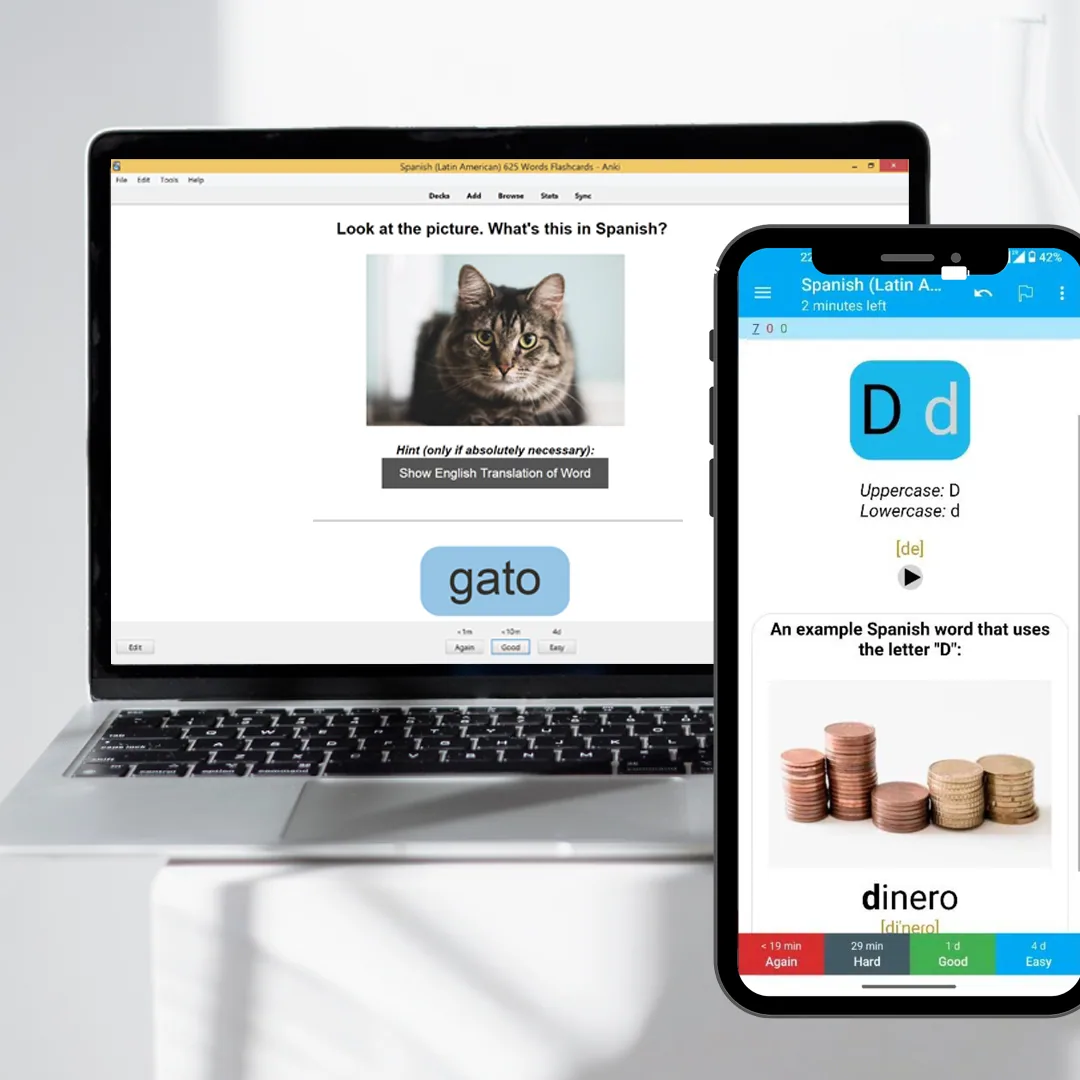
546 cards across 3 decks · audio on every single card
Buy Now: $60🔒 Secure checkout via Stripe · ⚡ Instant digital download
Not as described? Tell us within 7 days and we’ll fix it or refund it.
Built by Matthew Alberto, who worked on Fluent Forever’s pronunciation products. Read Gabriel Wyner’s reference →
The complete German system, and where this bundle sits in it
Every deck below is a rung on one ladder. Nothing arrives before the thing it depends on, and nothing is a repackaged frequency list. 3,154 cards across 2 tracks, and every single one has audio.
PronunciationYou’re looking at this
Sounds before words: fix what you can hear and say before building a vocabulary on top of it.
546 cards · 3 decks · $60 as a bundle
German AlphabetStart here
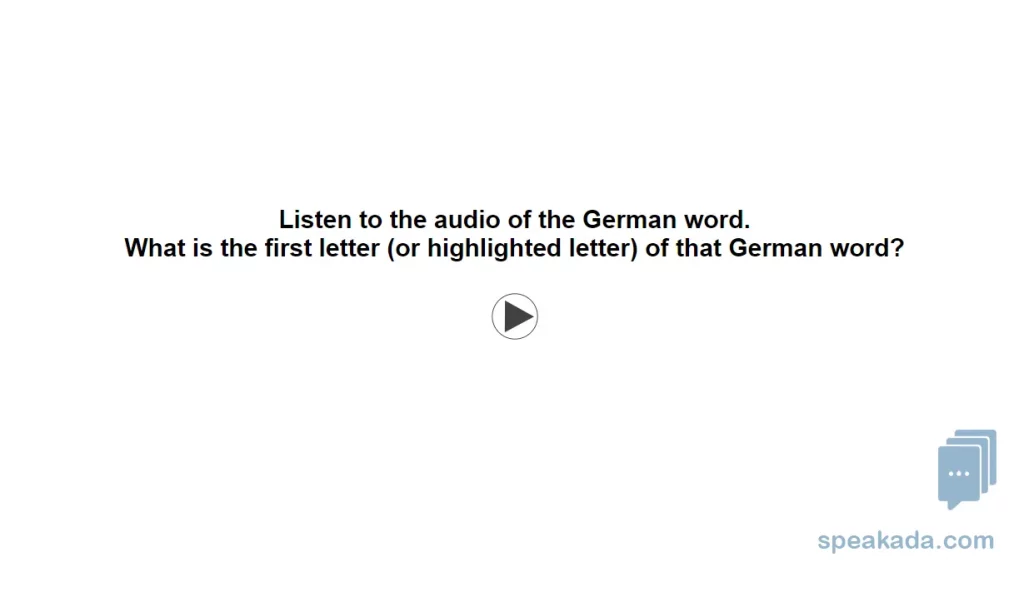
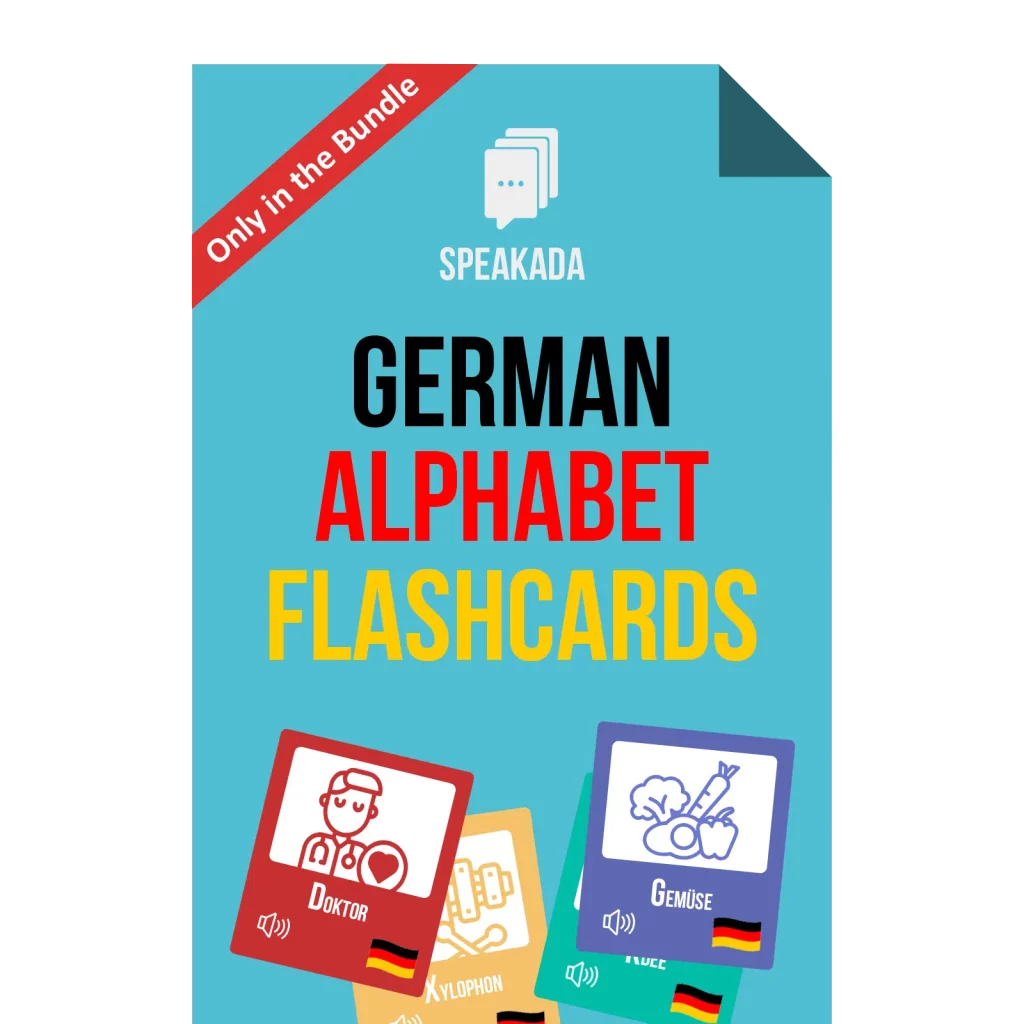
Every letter, its name, the sound it makes, and a real German word using it.
German IPABeginner
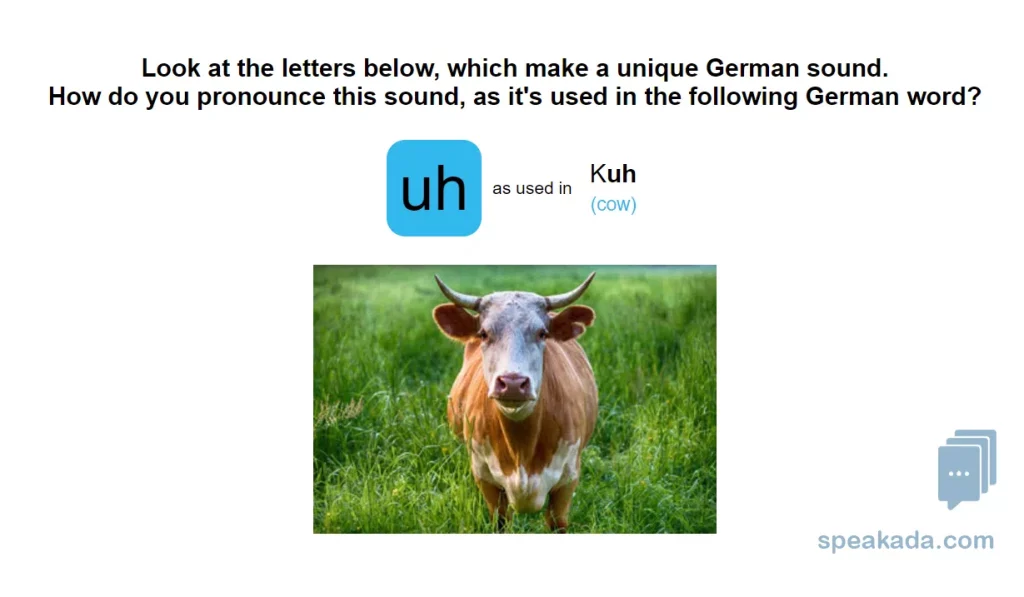
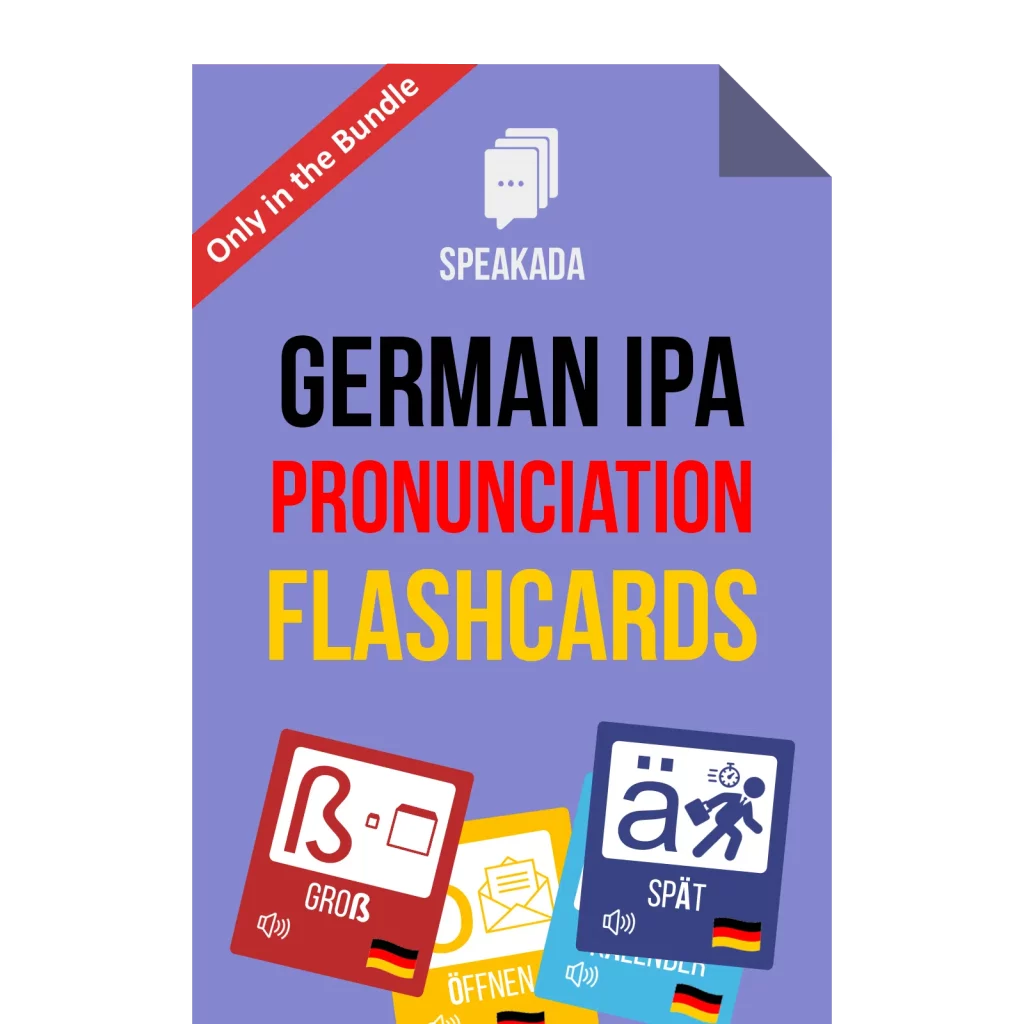
Every German sound mapped to its IPA symbol, including the umlauts and the two ch sounds that have no English equivalent.
German Minimal PairsBeginner–Intermediate
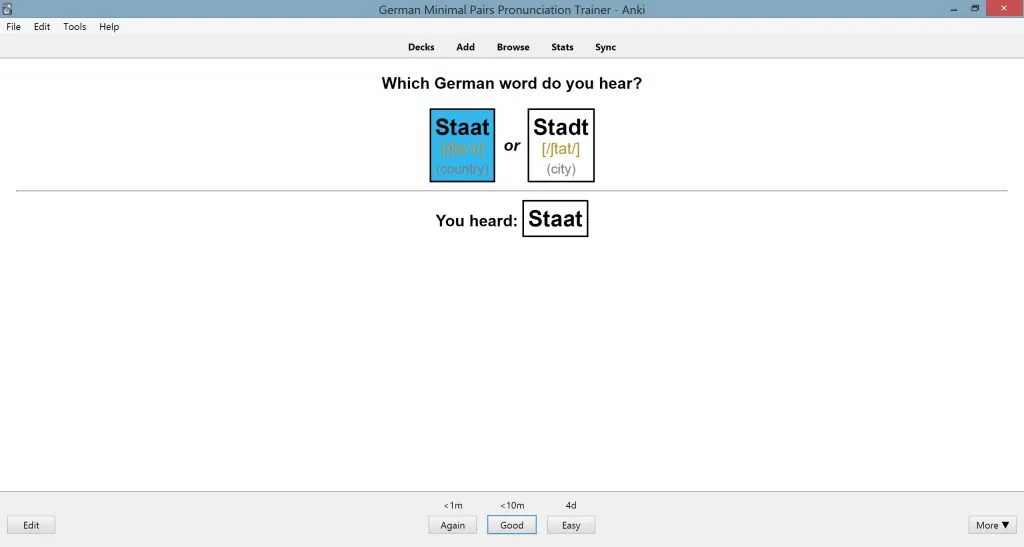
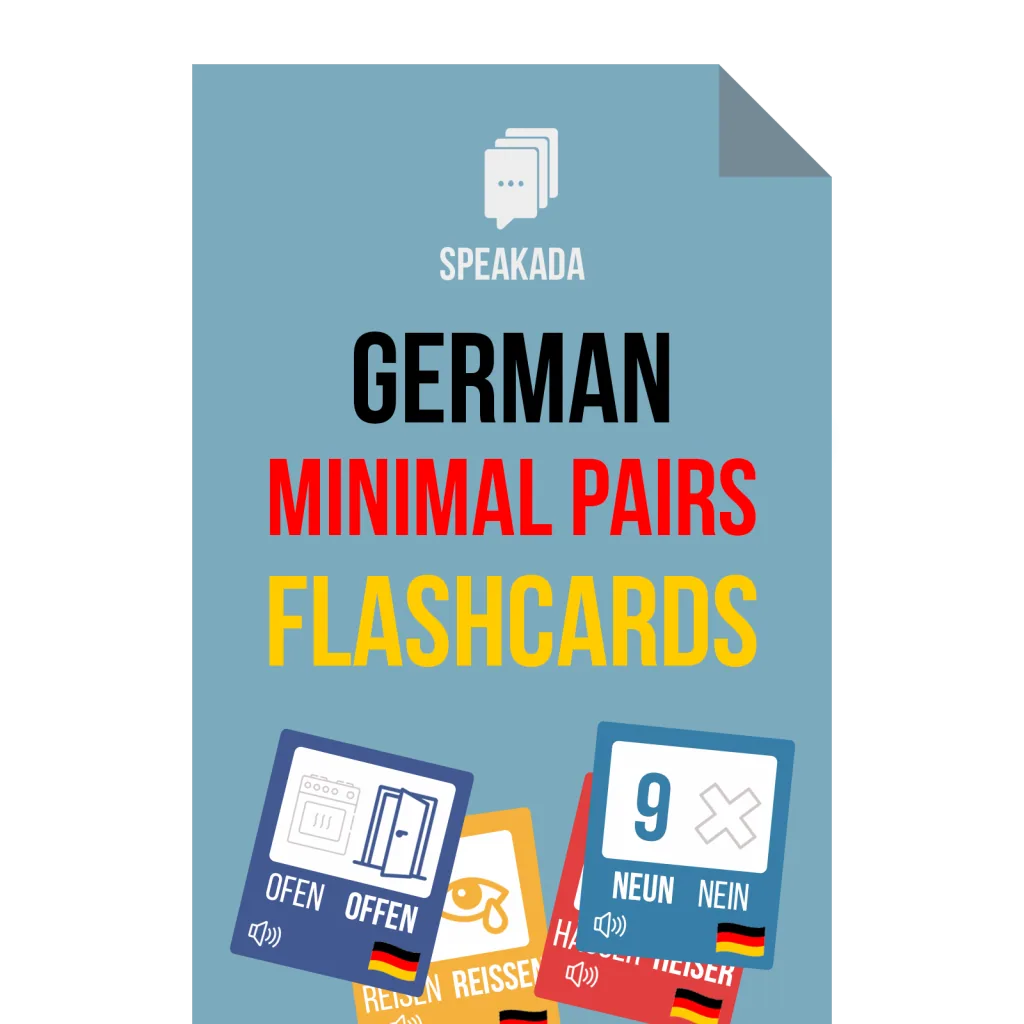
211 word pairs that differ by exactly one sound, drilled in both directions.
Vocabulary
Frequency order, then context: the most useful words first, then those same words inside sentences, then the phrases that turn them into speech.
2,608 cards · 3 decks · $220 as a bundle
German 500 Picture WordsBeginner
The 500 most common picturable words, taught with an image instead of an English translation.
German Top 2000 WordsBeginner–Intermediate (to A2)
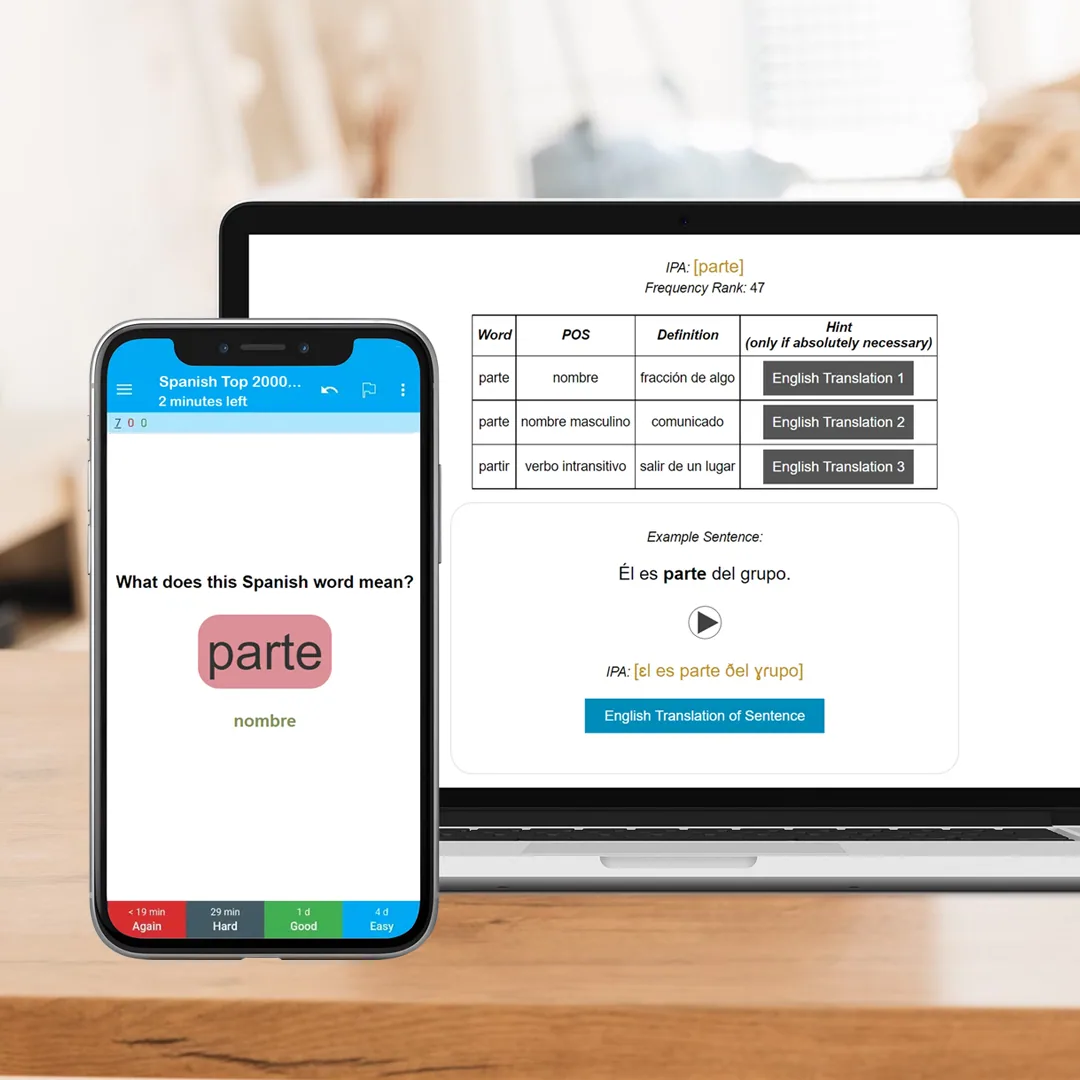
The 2,000 highest-frequency words, about 90% of everyday speech, each inside a German sentence built only from words already in the list.
German Common PhrasesBeginner–IntermediateBundle only
Ready-made phrases for the situations that actually recur: greetings, travel, phone calls, work.
Why German Pronunciation Matters
German Has Sounds That Require Explicit Training to Produce
German introduces several sounds with no English equivalent: the front rounded vowels ö (/ø/) and ü (/y/), the "ich-laut" (/ç/) and "ach-laut" (/x/), two distinct pronunciations of the same spelling "ch", and the uvular /ʁ/ that distinguishes German from any approximant English learners might substitute. Pronouncing these without IPA guidance means guessing from spelling, which doesn't work: "ch" in "ich" (/ɪç/) and "ch" in "Bach" (/bax/) are completely different sounds, but nothing in the spelling tells you which to use. The German Alphabet and IPA Flashcards give you a precise map of every German sound before you attempt any vocabulary.
Avoid Permanent Pronunciation Errors
Language researchers call it "fossilisation": pronunciation habits that solidify over time and become extremely difficult to reverse. German learners who skip phonetic training commonly anglicise the "ch" into /k/ or /sh/, replace ö and ü with their nearest English approximants, and collapse the vowel-length distinctions that change meaning (Stadt /ʃtat/ vs. Staat /ʃtaːt/). These errors form quickly and require sustained effort to correct later. Starting with the German Alphabet and IPA decks means every sound is correct from your very first word.
Minimal Pair Training for German's Critical Distinctions
German has vowel length distinctions that carry meaning across hundreds of common words: pairs like "Bett" (/bɛt/, bed) vs. "Beet" (/beːt/, flowerbed), or "offen" (/ˈɔ.fən/, open) vs. "Ofen" (/ˈoː.fən/, oven). These differences are not reliably marked in spelling and must be learned by ear. Research confirms that explicit minimal pair training produces the fastest improvement in phoneme discrimination for adult language learners, and the same effect applies to the umlaut distinctions and consonant clusters that trip up German learners at every level.
Self-Correction Builds Long-Term Fluency
Once you know the International Phonetic Alphabet, you can read any German word's phonetic transcription and immediately know how to pronounce it, without a recording or a native speaker. German dictionaries and grammar references consistently include IPA transcriptions. This turns every resource into a pronunciation guide and builds a self-correction skill that compounds across your entire learning journey, from first vocabulary through advanced conversation.
Add the German Vocabulary Bundle
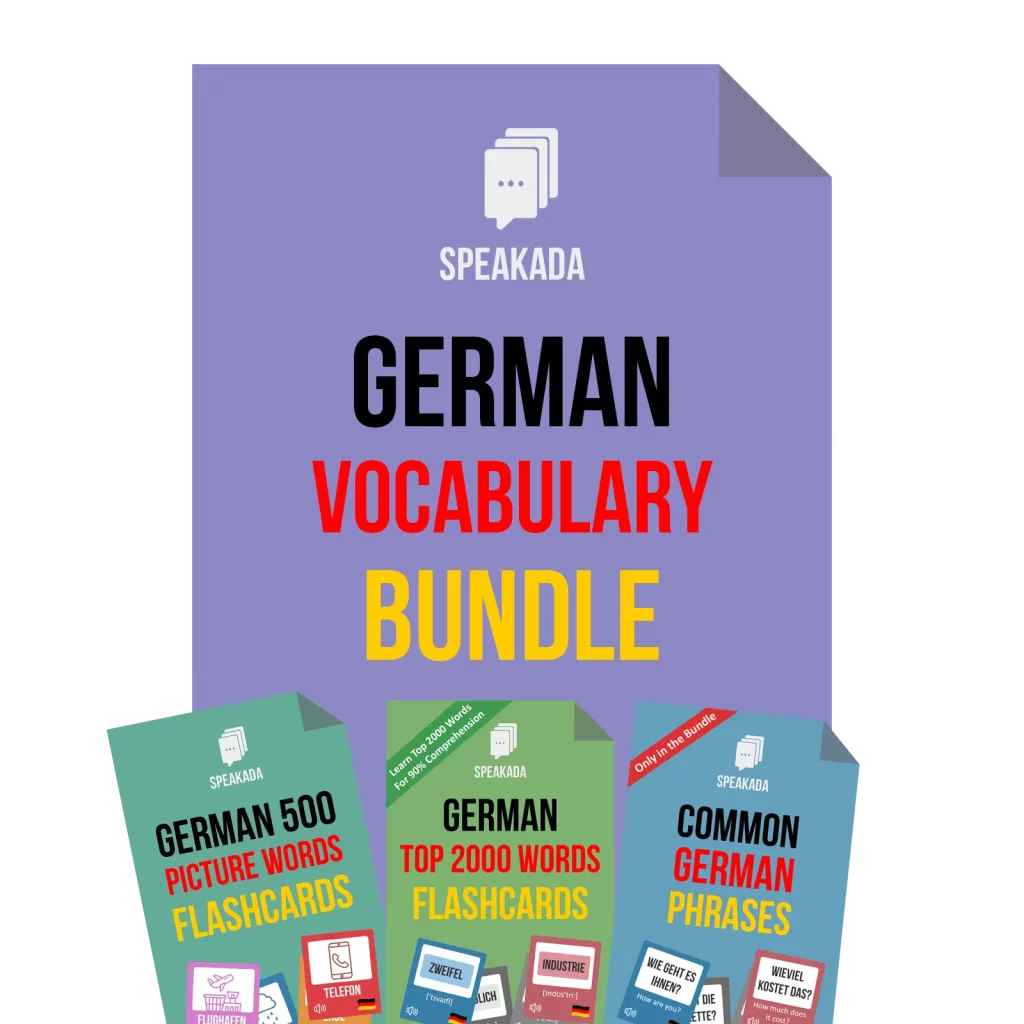
Pair pronunciation with vocabulary for a complete German foundation. The German Vocabulary Bundle includes 3 decks: 500 Picture Words, Top 2000 Words, and Common German Phrases, the word-frequency approach that builds 90% everyday comprehension.
View German Vocabulary Bundle: $220What Language Learners Say
"Diverse methods of teaching and learning, from the visual to the vocal, and with a great system of evaluations, repetitions and recall, that makes it easy to learn without forgetting."
"Speakada uses diverse methods of teaching and learning, from visual to vocal, which all makes it easy to learn."

"Thanks to Speakada I was able to save hours making flashcards and instead, focus on learning with confidence."
Ready to Fix Your German Pronunciation?
💳 One-time purchase · ⚡ Instant digital download · ♾️ Lifetime access
Buy German Pronunciation Bundle: $60