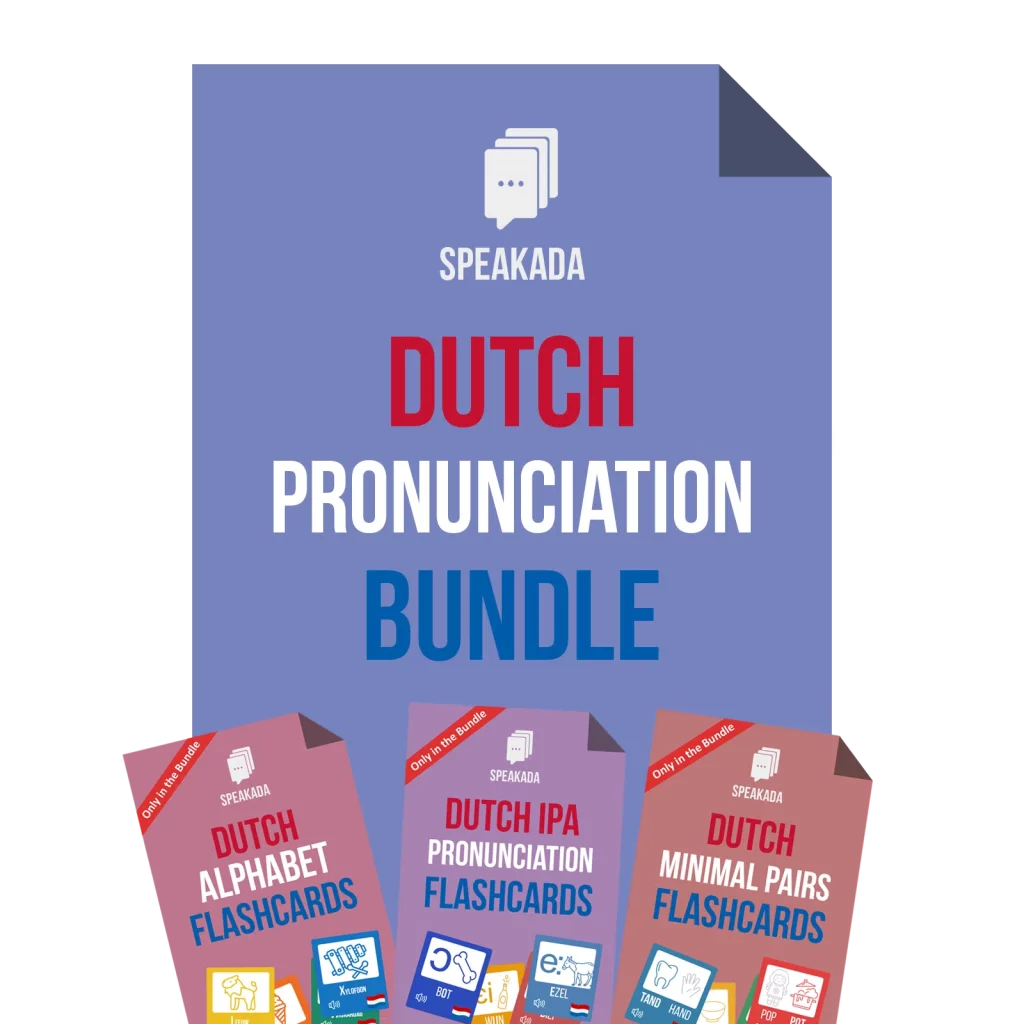

Dutch Pronunciation Flashcards Bundle
Build accurate Dutch pronunciation from the ground up with all 3 pronunciation decks: Dutch Alphabet, IPA Pronunciation, and Minimal Pairs. 3–6 months to complete. Master a native-like accent from day one.
640 cards across 3 decks · audio on every single card
Buy Now for $100🔒 Secure checkout via Stripe · ⚡ Instant digital download
Not as described? Tell us within 7 days and we’ll fix it or refund it.
Built by Matthew Alberto, who worked on Fluent Forever’s pronunciation products. Read Gabriel Wyner’s reference →
The complete Dutch system, and where this bundle sits in it
Every deck below is a rung on one ladder. Nothing arrives before the thing it depends on, and nothing is a repackaged frequency list. 3,248 cards across 2 tracks, and every single one has audio.
PronunciationYou’re looking at this
Sounds before words: fix what you can hear and say before building a vocabulary on top of it.
640 cards · 3 decks · $100 as a bundle
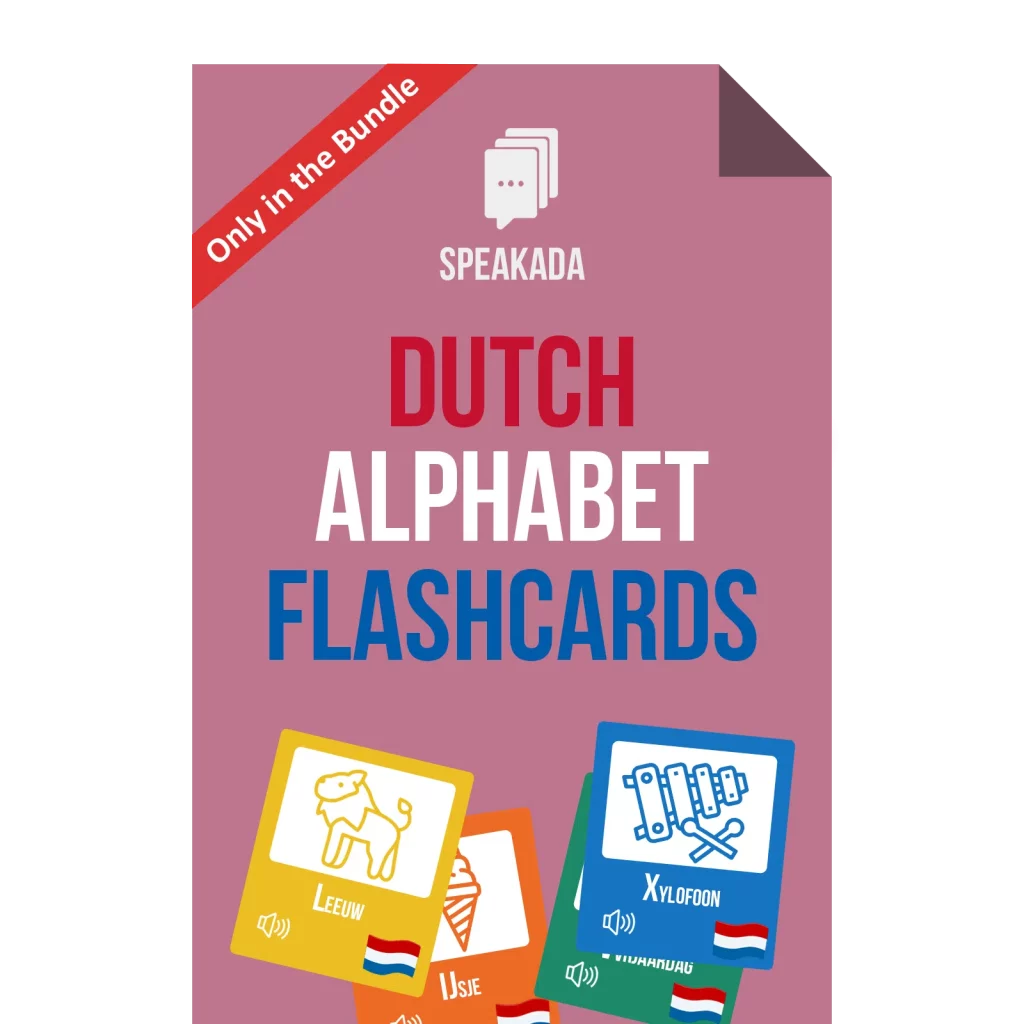
Dutch AlphabetStart here
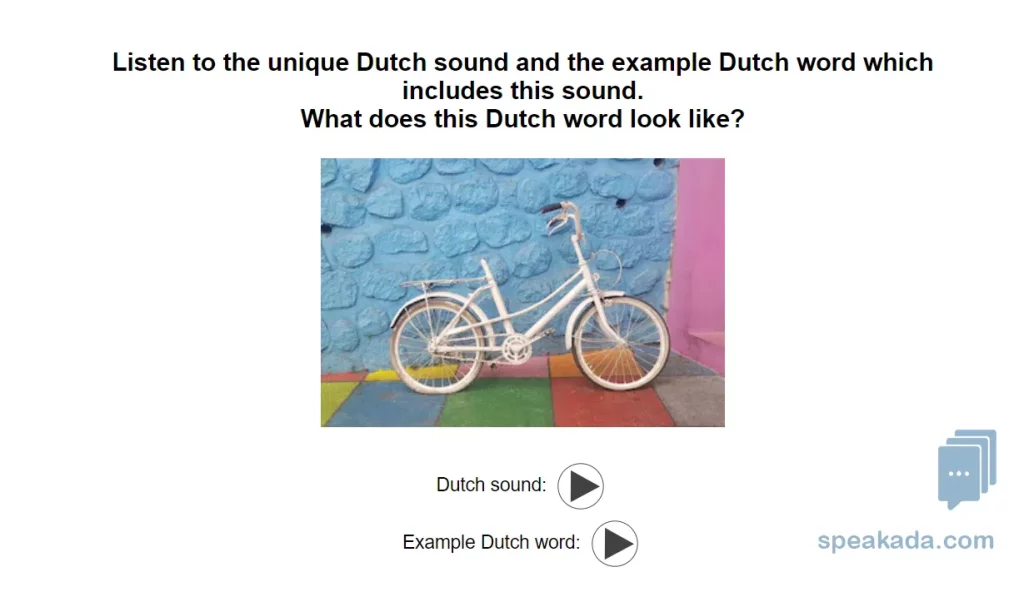
Every letter, its name, the sound it makes, and a real Dutch word using it.
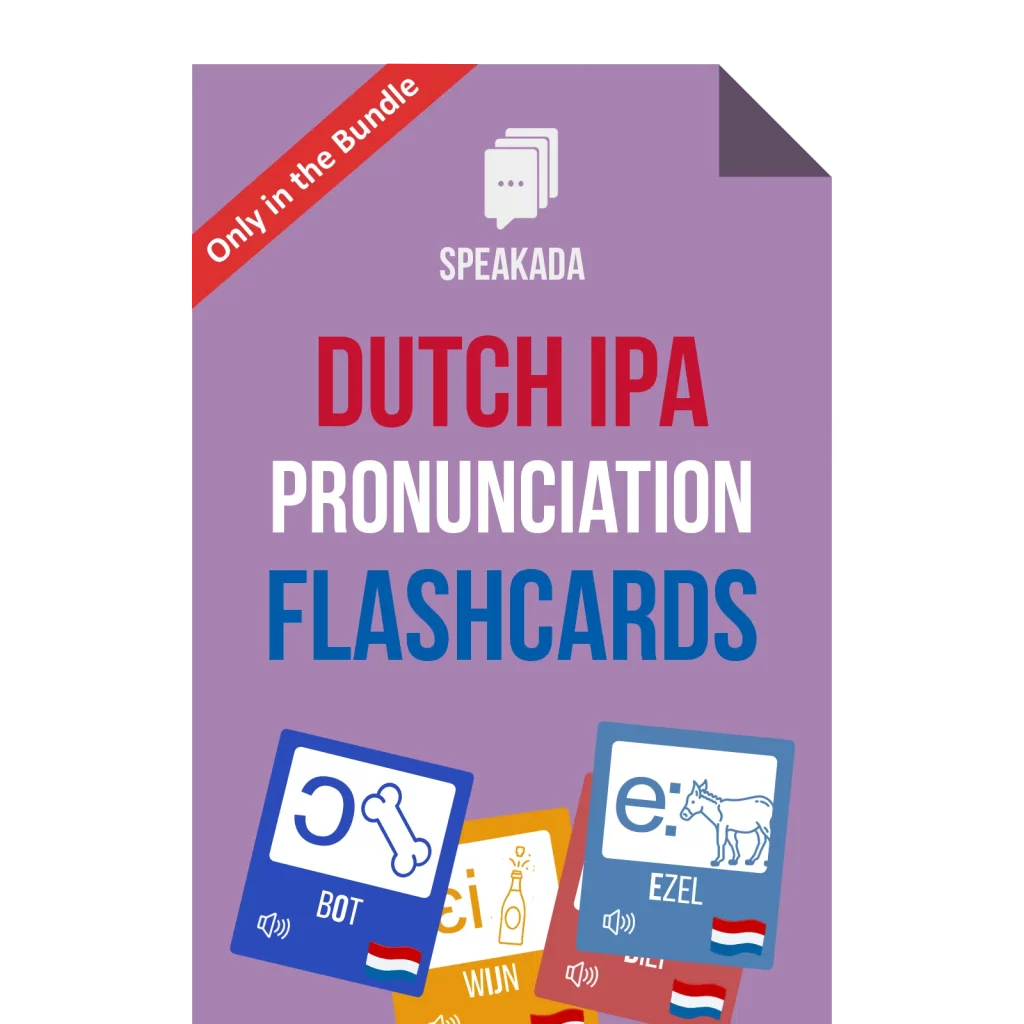
Dutch IPABeginner
Every Dutch sound mapped to its IPA symbol, including the diphthongs and the guttural g that English speakers routinely flatten.
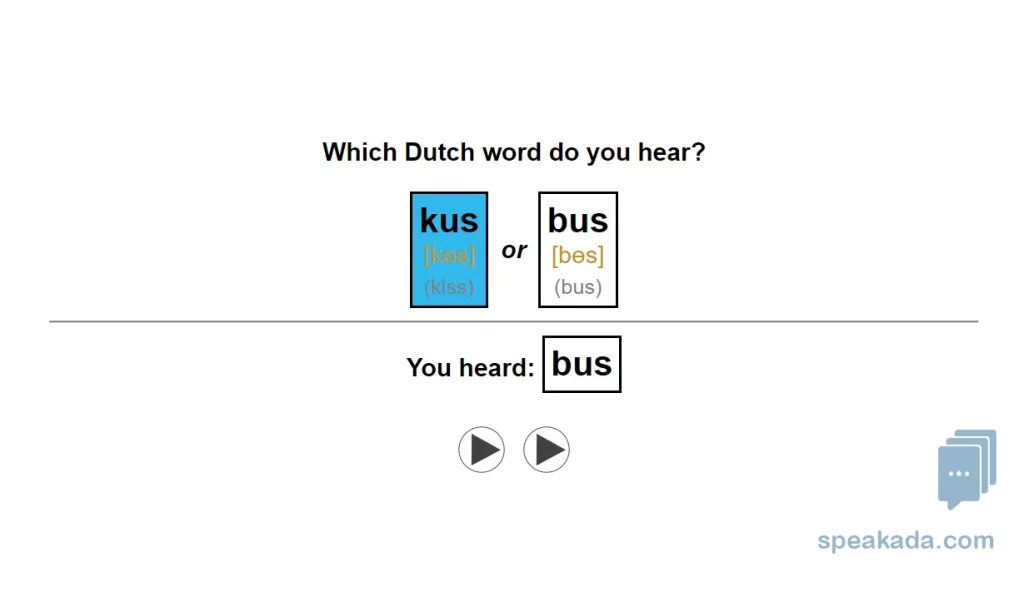
Dutch Minimal PairsBeginner–Intermediate
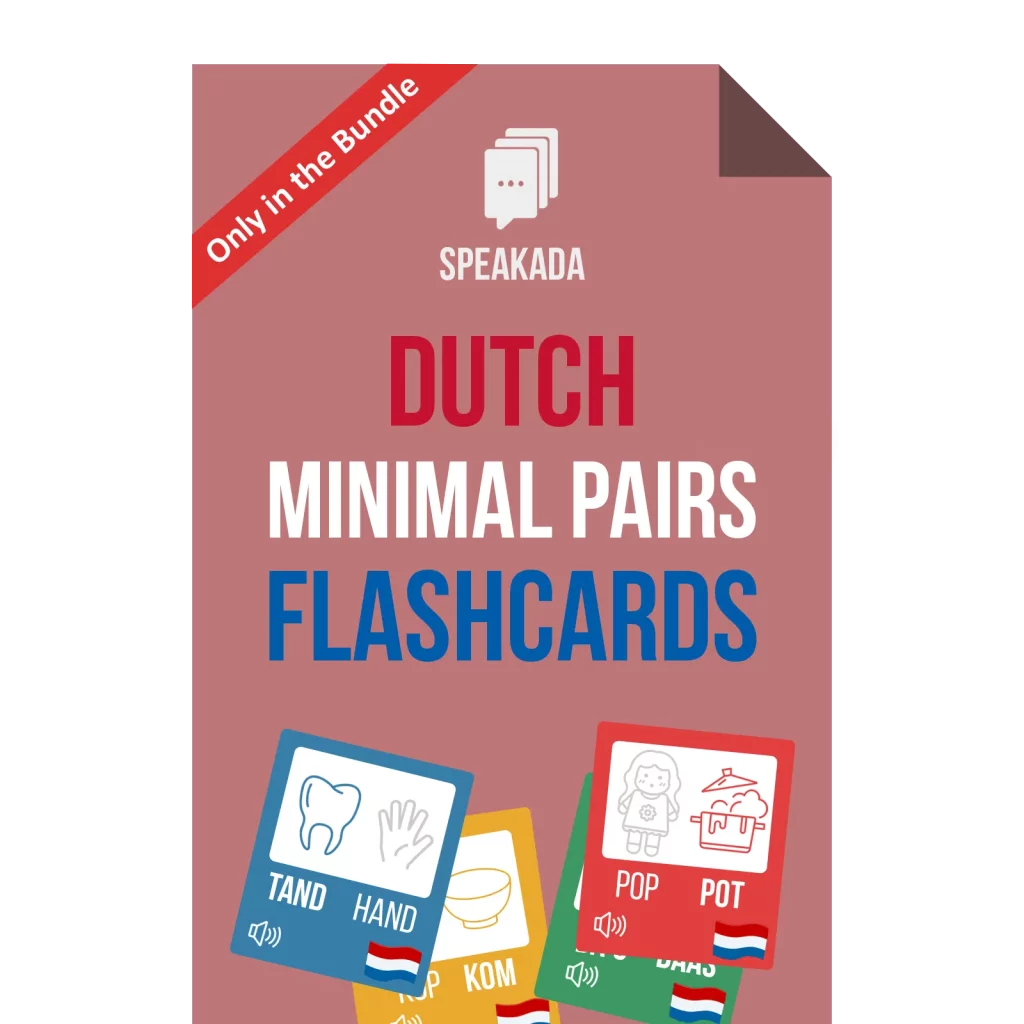
274 word pairs that differ by exactly one sound, drilled in both directions.
Vocabulary
Frequency order, then context: the most useful words first, then those same words inside sentences, then the phrases that turn them into speech.
2,608 cards · 3 decks · $350 as a bundle
Dutch 500 Picture WordsBeginner
The 500 most common picturable words, taught with an image instead of an English translation.
Dutch Top 2000 WordsBeginner–Intermediate (to A2)
The 2,000 highest-frequency words, about 90% of everyday speech, each inside a Dutch sentence built only from words already in the list.
Dutch Common PhrasesBeginner–IntermediateBundle only
Ready-made phrases for the situations that actually recur: greetings, travel, phone calls, work.
Why does Dutch cost more than Spanish?
Because far fewer people learn it. That is also why good Dutch material is so hard to find: most companies will not build a complete course for an audience this size. Pricing by demand is what lets us cover the languages they skip. Our most widely-learned languages are the cheapest, and the rarer ones cost more.
Why Dutch Pronunciation Matters
Dutch Has Sounds That Simply Don't Exist in English
Dutch contains several sounds with no English equivalent, and that's where most learners get stuck. The velar fricative /x/, the guttural g/ch sound in words like "goed" (/xut/, good) and "lachen" (/ˈlɑxən/, to laugh), requires a completely different part of the throat than anything in English. Then there are the diphthongs: "ui" (/œy/) in "huis" (house), "ij/ei" (/ɛi/) in "wijn" (wine), and "ou/au" (/ɑu/) in "blauw" (blue). These aren't just "different vowels." They're sounds that English speakers have never produced. Without the Alphabet and IPA decks anchoring these sounds correctly from the start, learners substitute English approximations that never stop sounding foreign.
Avoid Permanent Pronunciation Errors
Language researchers call it "fossilisation": pronunciation habits that solidify over time and become extremely difficult to reverse. Dutch learners commonly fossilise two errors above all others: replacing the Dutch g/ch with either an English /g/ ("good") or an exaggerated throat-clearing sound, and producing the "ui" diphthong as a simple English /aɪ/. Dutch also has final devoicing, where voiced consonants at the end of words become voiceless (so "bad" is pronounced /bɑt/, not /bɑd/), a rule that requires conscious training to apply automatically. The earlier you build accurate sound representations, the less unlearning you'll need later.
Vowel Length Is Meaning in Dutch
Dutch distinguishes short and long vowels with different spelling patterns, and the distinction changes meaning completely. "Man" (/mɑn/, man) vs "maan" (/maːn/, moon). "Vel" (/vɛl/, skin) vs "veel" (/veːl/, much). "Bot" (/bɔt/, bone/blunt) vs "boot" (/boːt/, boat). Research consistently shows that vowel length distinctions are among the hardest for adult learners to acquire because the perception and production both require retraining. Minimal pair training, hearing and producing these pairs hundreds of times in structured review, is the most efficient known method for internalising them.
IPA Turns Every Dutch Dictionary into a Pronunciation Guide
Dutch spelling is more phonetically consistent than English, but it still has ambiguities, particularly around the g/ch allophone distinction, the exact quality of short vs long vowels, and compound word stress. Dutch dictionaries and language resources consistently use IPA transcriptions. Once you know the International Phonetic Alphabet, you can look up any Dutch word and immediately know how to pronounce it, without needing a teacher or a recording. This self-correction skill compounds over your entire Dutch learning journey.
Add the Dutch Vocabulary Bundle
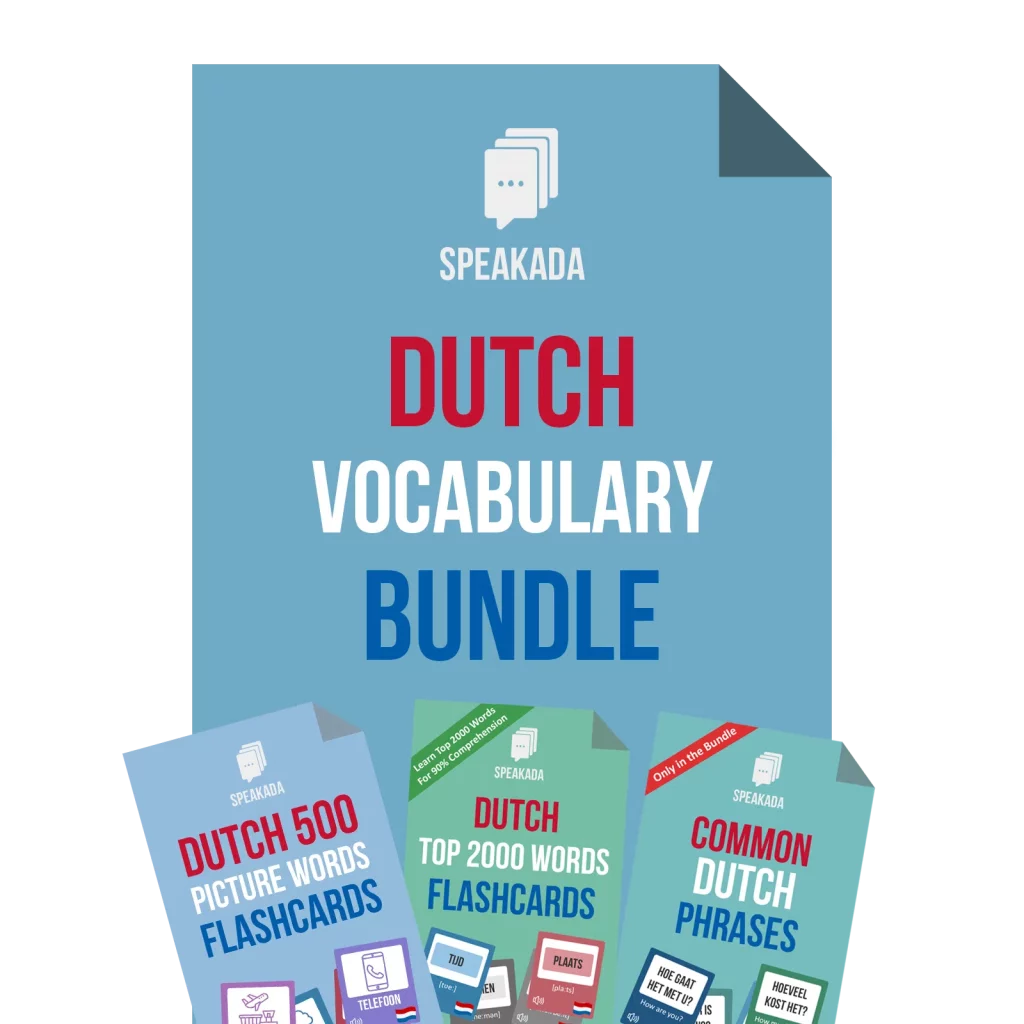
Pair pronunciation with vocabulary for a complete Dutch foundation. The Dutch Vocabulary Bundle includes 3 decks: 500 Picture Words, Top 2000 Words, and Common Dutch Phrases, the word-frequency approach that builds 90% everyday comprehension.
View Dutch Vocabulary Bundle for $350What Language Learners Say
"Diverse methods of teaching and learning, from the visual to the vocal, and with a great system of evaluations, repetitions and recall, that makes it easy to learn without forgetting."
"Speakada uses diverse methods of teaching and learning, from visual to vocal, which all makes it easy to learn."

"Thanks to Speakada I was able to save hours making flashcards and instead, focus on learning with confidence."
Ready to Fix Your Dutch Pronunciation?
💳 One-time purchase · ⚡ Instant digital download · ♾️ Lifetime access
Buy Dutch Pronunciation Bundle for $100