How to Use Anki for Spanish: The 2 Habits That Decide Whether You Speak
Updated
Short answer: the learners who get fluent with Anki for Spanish aren’t the ones with the most cards. They’re the ones who recall before they flip (say the Spanish out loud, rolled rr and article included) and reposition their highest-value cards (the workhorse verbs) to the front. Install and setup take five minutes; those two habits are what actually move you toward speaking. Here’s the whole system.
Anki is a spaced-repetition flashcard app, and it’s one of the most effective tools for building Spanish vocabulary, grammar, and pronunciation. Paper flashcards work, but digital ones let you add audio, example sentences, and images, and you can review them anywhere on your phone.
It can look complicated at first, but it’s intuitive once you know the basics. Below we’ll cover install and setup, then the review habits that decide whether all those reviews turn into real Spanish.
Benefits of Using Digital Spanish Flashcards
Flashcards are a highly effective tool for learning a new language, and they continue to be a popular choice among Spanish learners.
While paper flashcards have been used for years, digital flashcards offer a number of additional benefits, such as the ability to include pictures, audio, example phrases, and other interactive features.
By using a tool like Anki, you can easily access your Spanish flashcards on your phone, making them more convenient and portable.
In addition to the convenience and interactivity of digital flashcards, using Anki to study Spanish can also be easily integrated into your language learning routine.
Flashcards are an excellent way to learn how to use Anki for Spanish through actively recalling information and committing it to memory efficiently. It is a tried-and-true method that can be a valuable addition to your Spanish learning strategy.
What is Anki and how does it help you learn Spanish?
Many language learners wonder how to use Anki for Spanish, as it’s a popular tool for improving vocabulary and retention. Anki is a popular flashcard-based learning app and software that can be used to learn a variety of subjects, including learning a new language like Spanish. Anki allows users to create and study from digital flashcards that contain information that they want to learn, such as vocabulary words, grammar rules, and other language-specific content.
Anki uses a spaced repetition algorithm to present digital flashcards to the user at regular intervals, with the frequency of review increasing as the user demonstrates mastery of the Spanish material. Understanding the spaced repetition algorithm is crucial when learning how to use Anki for Spanish, as it optimizes memory retention.
Anki can be used to help language learners memorize new vocabulary, practice grammar concepts, and improve their overall comprehension and speaking skills in Spanish. The app is available for various platforms, including desktop computers, mobile devices, and web browsers, making it convenient and accessible for language learners.
Anki can be a very helpful tool for learning Spanish for a number of reasons. Here are some ways in which Anki can support your Spanish journey:
1. Vocabulary acquisition
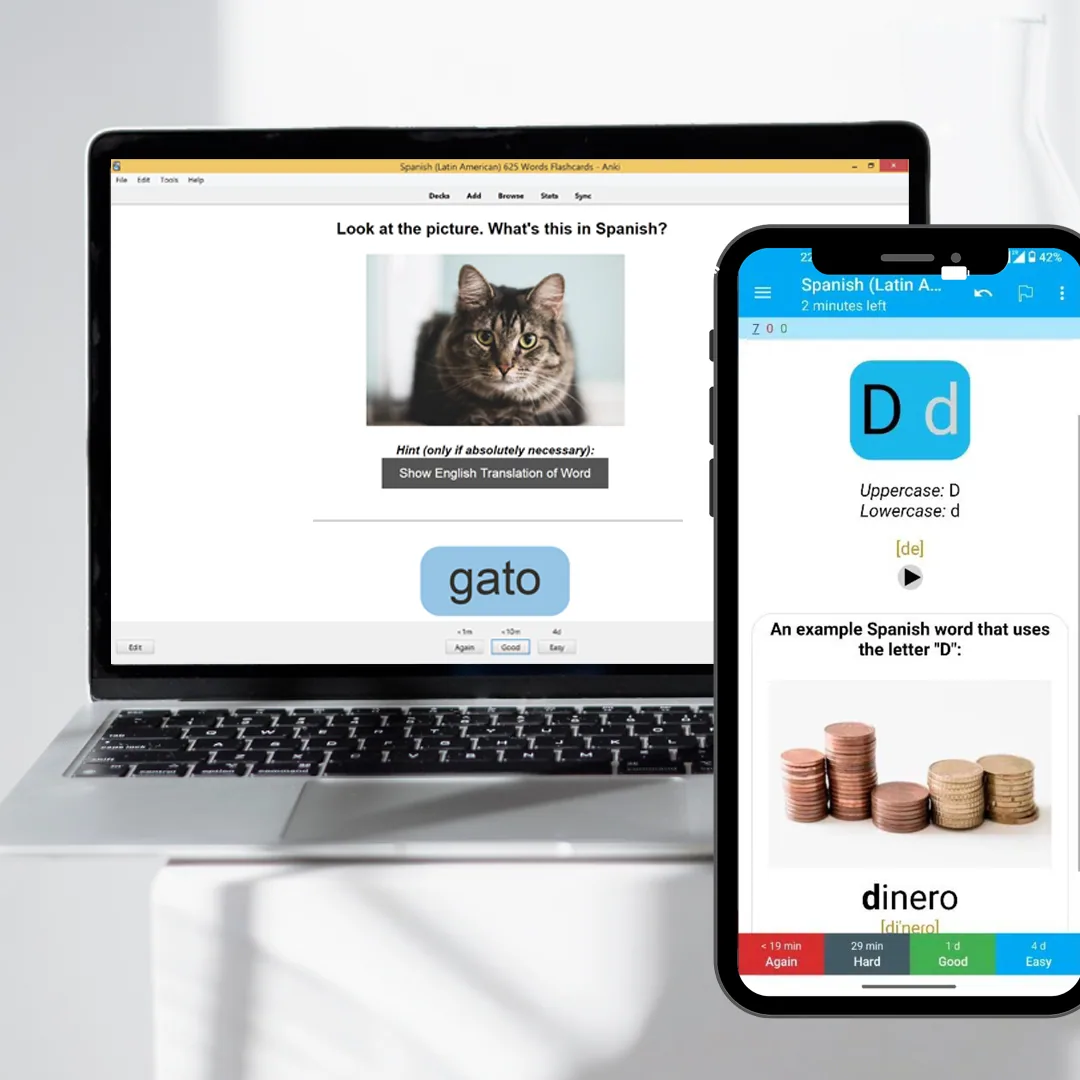
Anki opens up a world of possibilities for expanding your Spanish vocabulary. With this versatile tool, you can craft dynamic flashcards featuring Spanish words, their English translations, illustrative example sentences, accompanying audio clips, and even visual aids like images.
This comprehensive approach to vocabulary acquisition not only enhances your ability to remember new words but also deepens your comprehension by providing context and pronunciation practice.
Regularly revisiting these flashcards strengthens your word retention, ensuring that your Spanish vocabulary grows and sticks in your memory, helping you communicate more effectively and understand the language more comprehensively.
Spanish Vocabulary Bundle
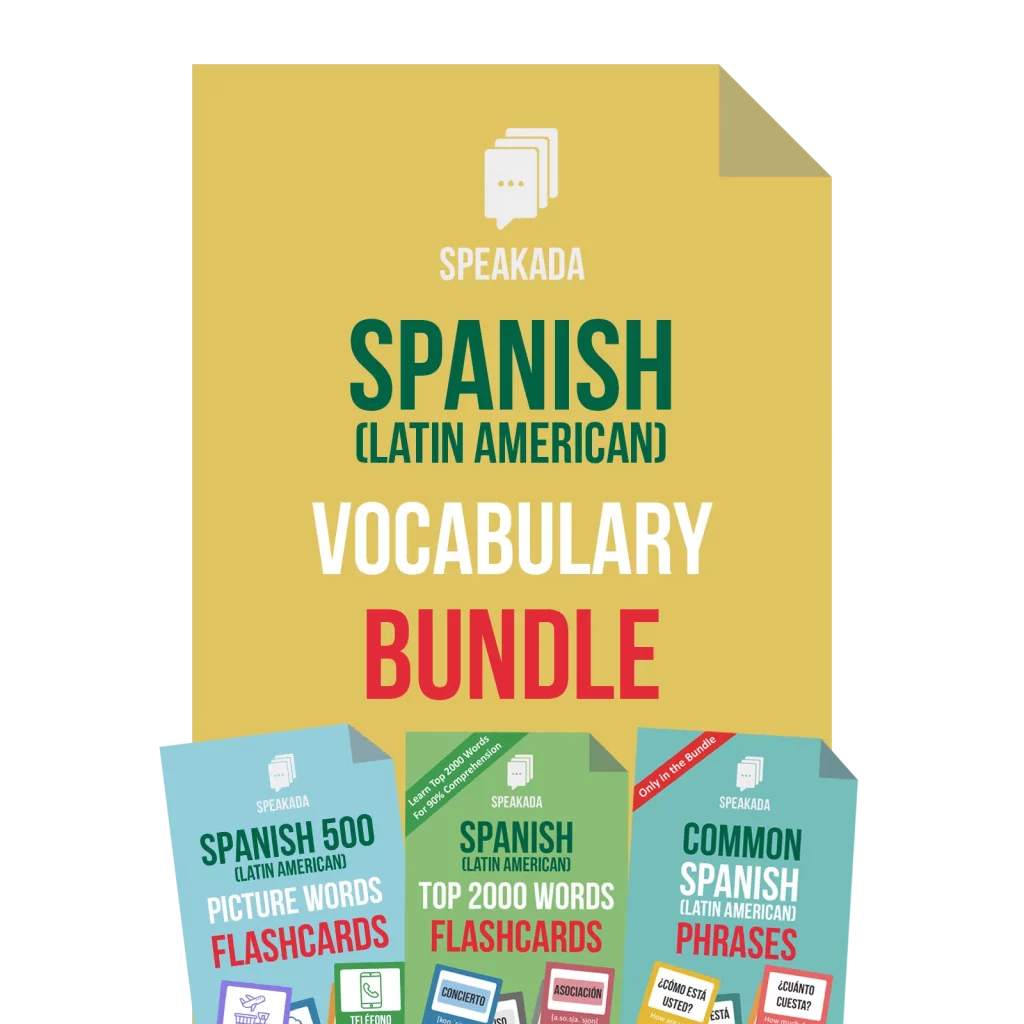
90% of everyday Spanish comes from just 2,000 words - these 3 decks cover them in frequency order: 500 Picture Words, Top 2,000 Words with full sentences, and Common Phrases.
Spanish 500 Picture Words Flashcards
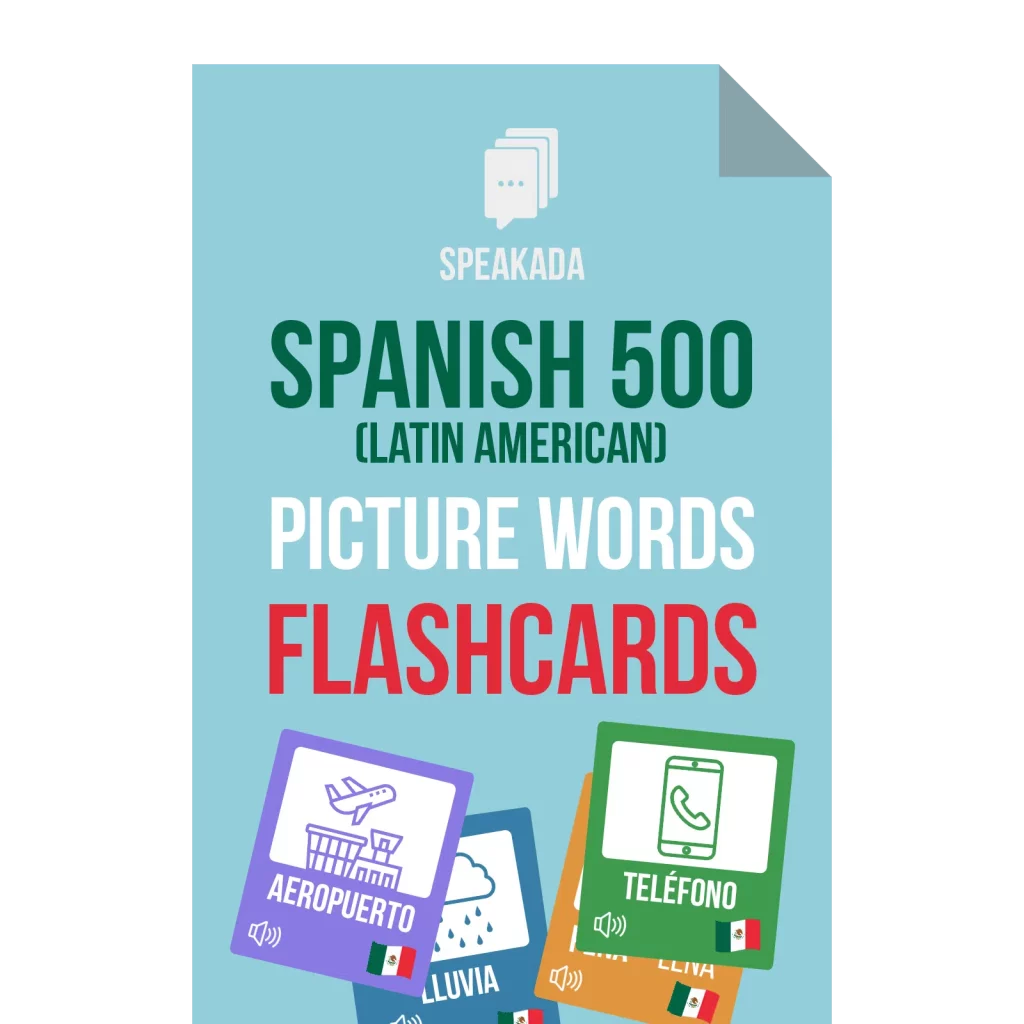
Learn 500 of the most common Spanish words through images, not English translations. Includes high-quality audio, IPA, and gender color-coding for every word.
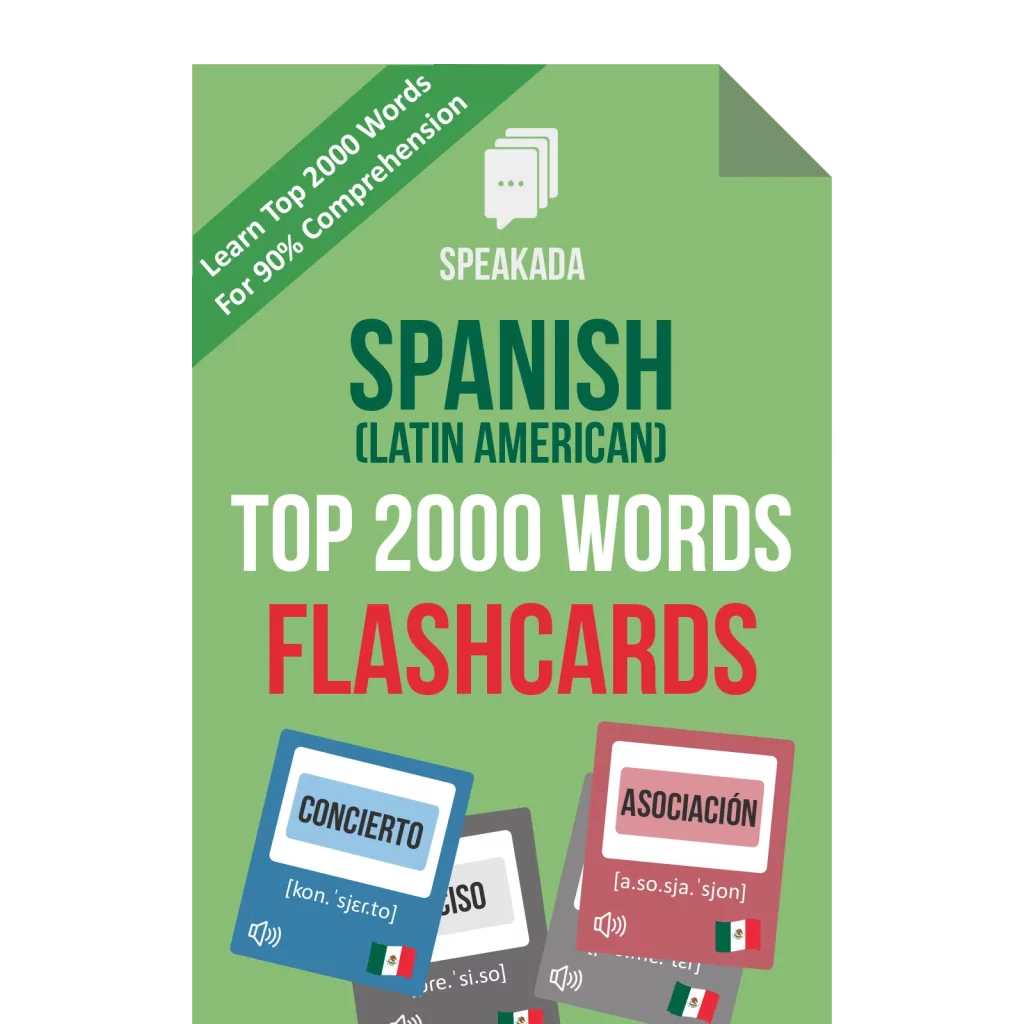
Spanish Top 2000 Words Flashcards
Learn the 2,000 most common Spanish words using sentence-based flashcards - high-quality audio, IPA pronunciation, and full context sentences so every word sticks in real usage.
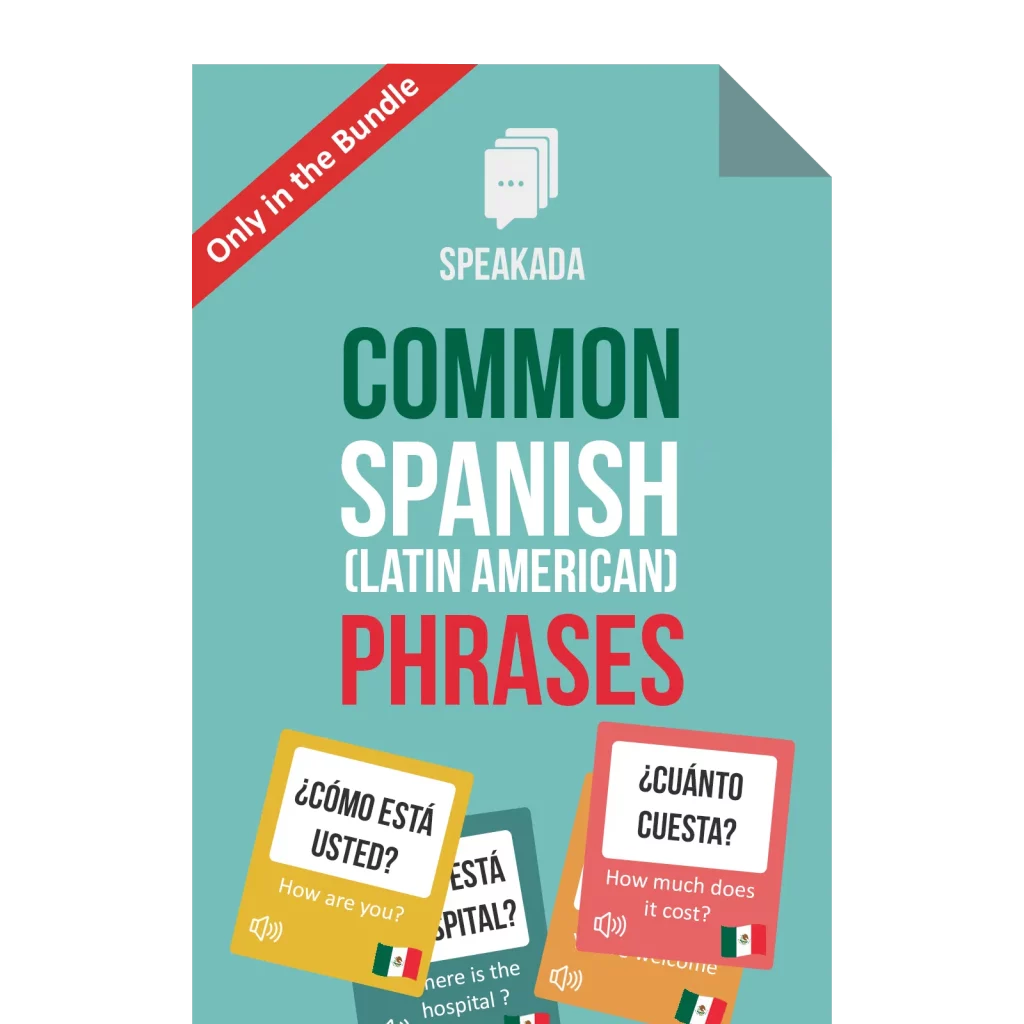
Spanish Common Phrases Flashcards
Practical Spanish expressions for everyday conversation, travel, and professional situations. The third deck in the Spanish Vocabulary Bundle.
2. Grammar practice
Anki proves to be an excellent companion for mastering Spanish grammar, too.
You can create targeted flashcards with sentences and phrases in Spanish that emphasize specific grammar rules. These flashcards can help you practice everything from verb conjugation to subject-verb agreement and more intricate grammar concepts.
By integrating example sentences into your Anki decks, you not only solidify your understanding of these rules but also learn how to use them contextually, enhancing your ability to construct grammatically correct and meaningful sentences in Spanish.
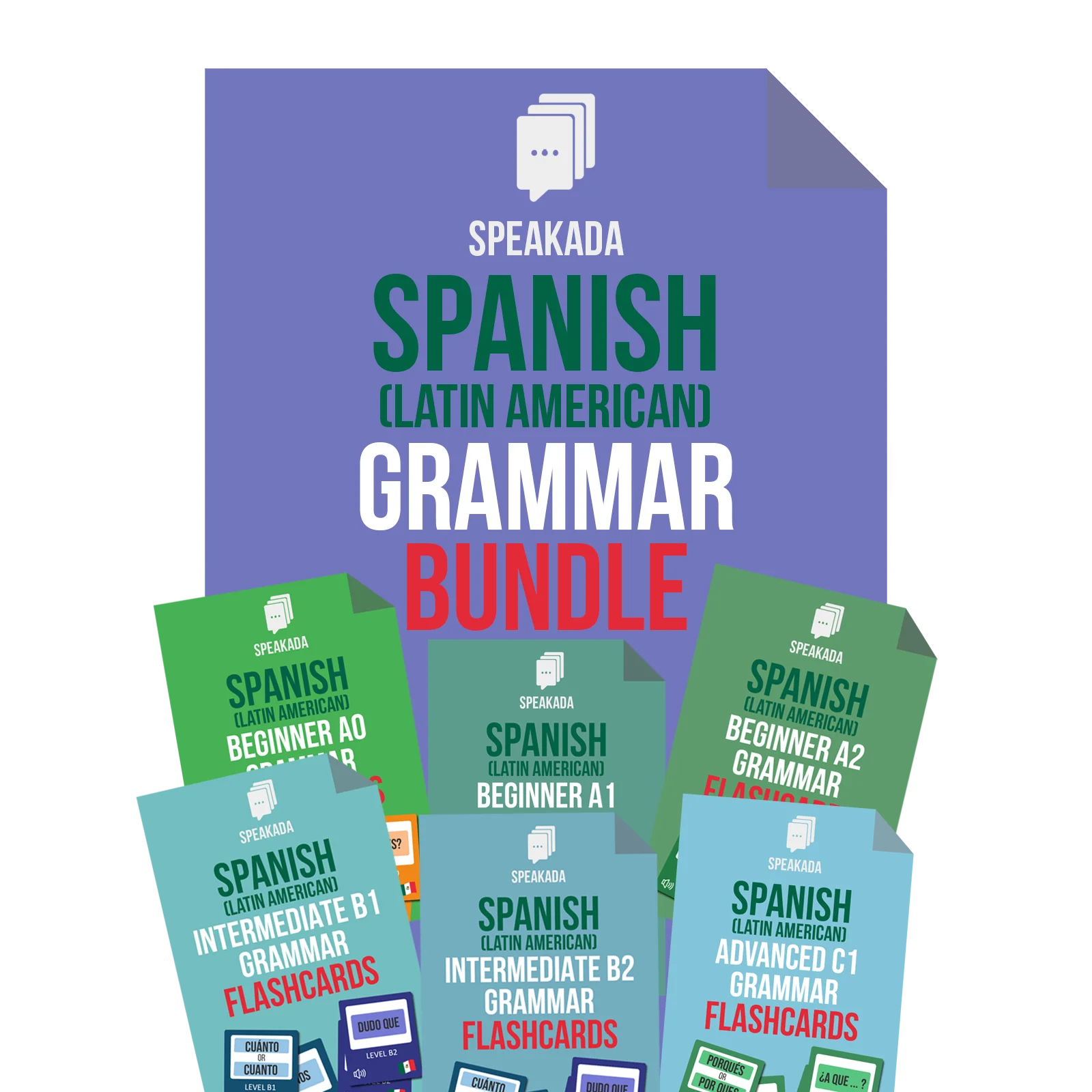
Spanish Grammar Bundle
Vocabulary gets you understood - grammar makes you sound educated. 6 decks cover every CEFR level from A0 beginner through C1 advanced - sentence-based flashcards drilling every key Spanish grammar rule until accuracy becomes automatic.
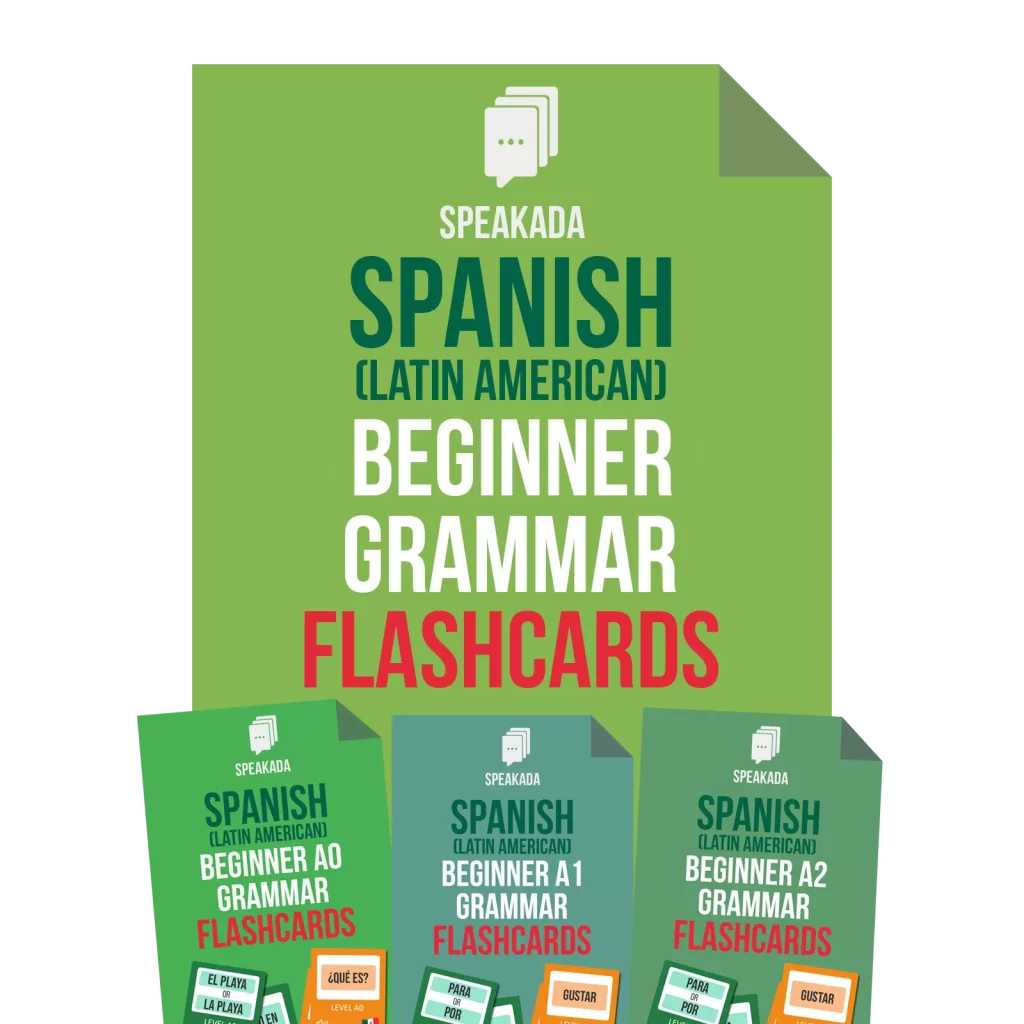
Spanish Grammar Beginner Flashcards (A0, A1 & A2)
Master Spanish grammar from absolute beginner to A2 level. Sentence-based Anki flashcards with pop-up grammar rules, high-quality audio, and IPA - covering every key structure at the A0, A1, and A2 CEFR levels.
Spanish Grammar Intermediate & Advanced Flashcards (B1, B2 & C1)
Take your Spanish grammar from B1 intermediate through to C1 advanced. Sentence-based Anki flashcards with pop-up grammar rules, high-quality audio, and IPA - covering every key structure at the B1, B2, and C1 CEFR levels.
3. Pronunciation and speaking skills
Anki is an invaluable tool for improving your Spanish pronunciation and speaking skills. With the ability to integrate audio into your flashcards, you can listen to and mimic native Spanish pronunciation, aiding in accent reduction and fluency.
You can also practice shadowing and self-assessment, comparing your pronunciation to native speakers. Anki’s flexibility extends to recording your own voice for real-time improvement and creating speaking prompts that encourage thinking and responding in Spanish.
Regular use of Anki in this regard enhances your conversational abilities and boosts confidence.
Spanish Pronunciation Bundle
Pronunciation errors set in early are nearly impossible to reverse. Three decks build the correct Spanish sound model from day one: the full alphabet, every IPA phoneme, and 500+ minimal pairs.
Spanish Alphabet Flashcards
Learn every letter of the Spanish alphabet with high-quality audio, IPA pronunciation, and word examples. The phonetic foundation for correct Spanish speech from day one.
Spanish IPA Flashcards
Master Spanish pronunciation using the International Phonetic Alphabet. Once you know IPA, you can self-correct your accent anywhere - no tutor required.
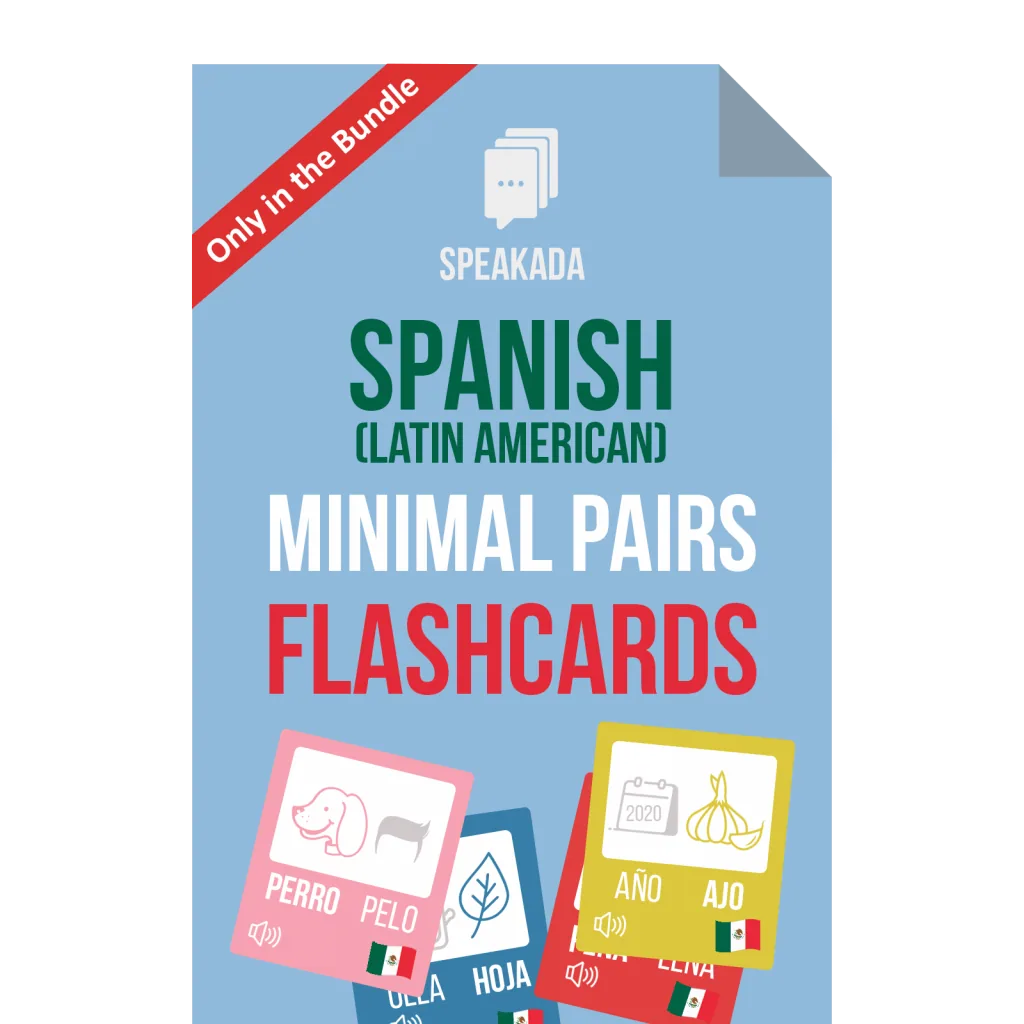
Spanish Minimal Pairs Flashcards
Train your ear to distinguish near-identical Spanish sounds. Academic research confirms minimal pair training sharpens both listening comprehension and speaking precision.
4. Customization and flexibility
Anki is a highly customizable and flexible tool that allows you to tailor your learning experience to your specific needs and goals.
You can create and organize flashcards based on your personal learning style, and you can access the app on a variety of platforms and devices, making it convenient to study whenever and wherever you have time.
Overall, Anki can be a very useful tool for learning Spanish and improving your language skills. By creating and reviewing flashcards on a regular basis, you can acquire new vocabulary, practice grammar concepts, and improve your pronunciation and speaking skills in Spanish.
How to Use Anki for Spanish
1. Install Anki
To install Anki on a desktop or laptop computer, you will need to follow these steps:
-
Go to the Anki website (https://apps.ankiweb.net/) and click on the ‘Download’ button.
-
Select the appropriate version of Anki for your operating system (e.g. Windows, Mac, Linux).
-
Once the download is complete, open the downloaded file to begin the installation process.
-
Follow the on-screen instructions to complete the installation. This may involve clicking ‘Next’ or ‘Install’ a few times, and agreeing to the terms and conditions.
-
Once the installation is complete, you will be taken to the main Anki screen where you can start creating and studying flashcards.
To install Anki on a mobile Android or iOS device, you will need to follow these steps:
- Download & Install AnkiDroid or AnkiMobile:
For Android devices, download AnkiDroid from the Google Play Store.
-
For iOS devices, get AnkiMobile from the App Store.
-
Alternatively, access both apps from the official Anki website at https://apps.ankiweb.net/.
-
Launch AnkiDroid or AnkiMobile:
After the download is complete, open the AnkiDroid or AnkiMobile app.
- Main Anki Screen:
You’ll arrive at the main Anki screen, where you can view, create, and review your flashcards.
2. Create your flashcards
Once you have Anki installed, you can begin creating your Spanish flashcards. Creating flashcards is the first step in understanding how to use Anki for Spanish effectively. You have 2 options: (1) you can make your own Anki flashcards, or (2) you can use pre-made Anki decks that save you time.
1) Making your own Anki flashcards
To create your own decks in Anki, you will need to follow these steps:
-
Open Anki and click on the ‘Create Deck’ button.
-
Enter the name that you want for your new deck.
-
Click ‘OK’.
-
Now you can add new flashcards to that deck.
To add new cards to your deck in Anki, click on the ‘Add’ button.
This will bring up a new card creation window. From here, you can enter details for the front and back of the card, as well as any additional information or media that you want to include.
Once you are finished, click on the ‘Add’ button to save the card to your deck. This button may be shown as a check mark on mobile devices.
Once you have created your flashcard, it will be added to your deck and will be available for review when you study.
Here is a very basic example of the content you can add to an Anki flashcard to learn the Spanish word for ‘mother’:
Front: madre
Back: mother
2) Using Pre-Made Spanish Anki Decks
To import a pre-made deck into Anki, you will need to follow these steps:
-
Download the deck file you want to import. Make sure it is in the .apkg file format.
-
Open Anki. Then, find and click the ‘Import’ button.
-
Navigate to the location of the deck file you downloaded and select it.
-
Click ‘Open’ to import the deck into Anki.
-
The imported deck will now be added to your collection of decks in Anki.
Keep in mind that you should only import decks from trusted sources, as importing decks from untrusted sources may result in errors or cause problems with your Anki app or software.
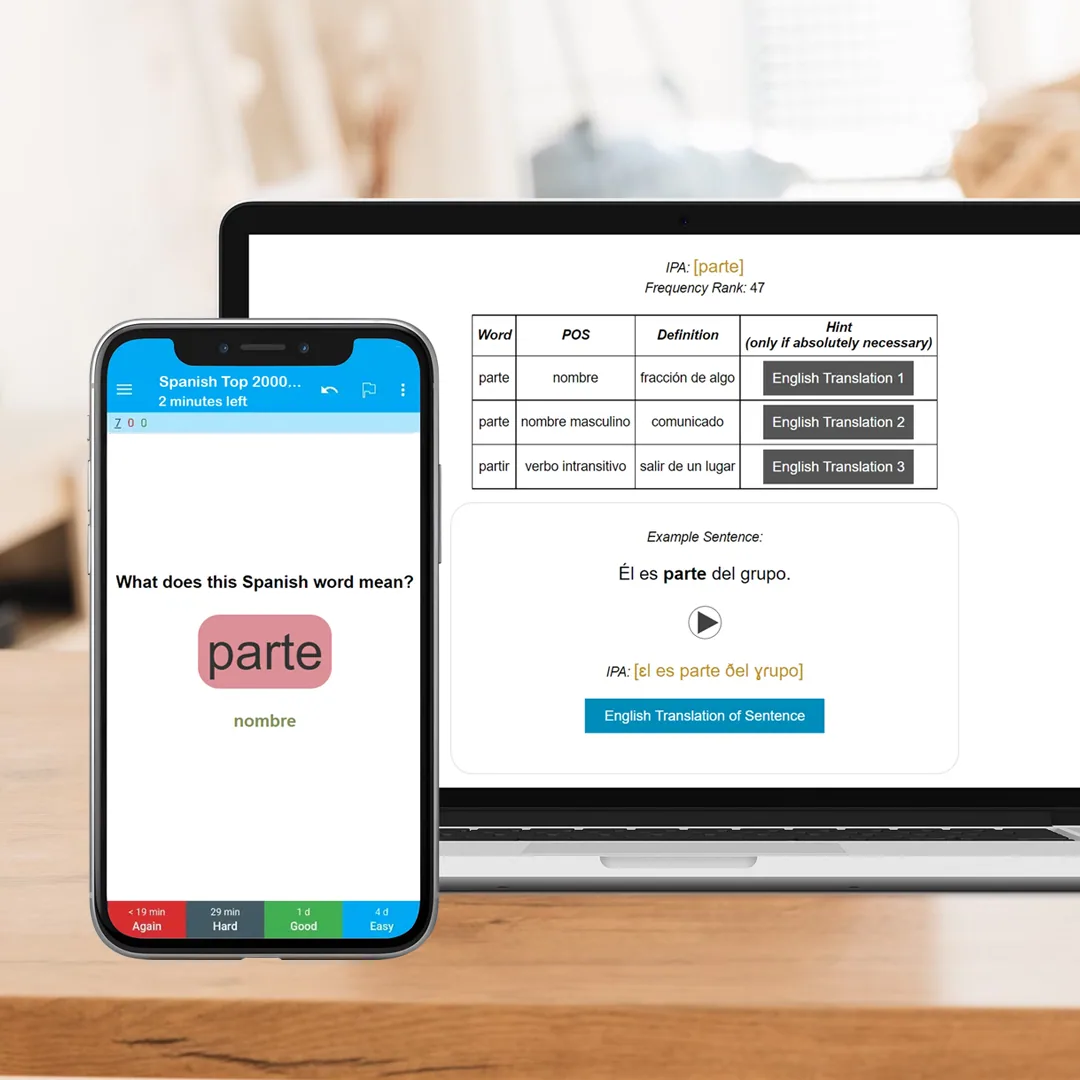
Our team at Speakada have produced effective ready-to-use Anki decks for learning Spanish. If you want to save time and effort, then consider our Speakada Spanish Anki decks so that you can get started studying right away. Learn more about our Spanish Anki decks to help you with Spanish Pronunciation, Spanish Vocabulary and Spanish Grammar.
3. Review and study your Anki Spanish flashcards
The key to effectively using Anki for language learning is to review your flashcards regularly. Anki uses a spaced repetition algorithm to present your flashcards to you at intervals that become increasingly longer as you demonstrate mastery of the material.
To review and study Spanish flashcards on Anki, follow these steps:
-
Open the Anki app on your device and select the deck you want to review.
-
The app will show you a card with a question or prompt on one side.
-
Answer the question in your head or out loud.
-
Select ‘Show Answer’ in the Anki app to see the answer on the other side of the card.
-
Use the buttons at the bottom of the screen to rate your response: if you got the answer correct, press ‘Good’; if you got it wrong, press ‘Again’; if you took a long time to answer correctly, press ‘Hard’; if you quickly knew the answer, press ‘Easy’.
-
Continue reviewing cards until you have completed the deck or reached your desired review time.
By rating your familiarity with each flashcard as you review it, you can help Anki to adjust the spacing of your reviews and present the material to you at appropriate intervals. This can help to improve your retention of new vocabulary, pronunciation skills and grammar concepts and make your language learning more efficient.
In conclusion, there are three core steps to learning how to use Anki for Spanish. Anki is a powerful tool for learning Spanish. With its powerful spaced repetition algorithm and customizable features, it is an excellent choice for creating digital flashcards to aid in your language learning journey. By following the steps outlined in this article on how to use Anki for Spanish, you can effectively use Anki to enhance your Spanish learning and achieve your language learning goals.
Use Anki for Spanish the effective way: recall first, then prioritize
Most people who stall with Anki are doing the mechanics right (daily reviews, honest ratings) and still not improving. The reason is almost always one of two habits. Fix these and the same deck starts producing real Spanish.
Recall, don’t just recognize
When a card flips and you think “yeah, I knew that,” that’s recognition, and recognition isn’t the memory you can use when a native speaker is waiting for your reply. Retrieval is. This is one of the most replicated findings in learning science: Roediger and Karpicke found people who tested themselves remembered far more a week later than people who simply re-read the same material (Roediger & Karpicke, 2006, Psychological Science).
So before you flip a Spanish card, produce it out loud, including the parts Spanish punishes if you skip them: roll the rr so perro doesn’t collapse into pero, and say the article with the noun (el agua, la mano) so gender is stored as one chunk. That half-second of “wait… how do I say it?” is the whole point. If you can’t produce it, mark Again honestly. Lying to the algorithm only hurts you.
Prioritize your highest-value cards
Anki shows new cards in the order they were added, which means the verbs you most need to speak can sit buried behind nouns you’ll rarely use. A small set of Spanish verbs, ser, estar, tener, hacer, poder, ir, does enormous work, so bring them to the front: in the Browser, select those cards and use Cards → Reposition to move them to the top of the new-card queue. Repositioning only changes the order new cards appear; your existing review schedule is untouched. Within a couple of weeks the cards you see most are the cards that matter most.
This pairs with picking the right material in the first place: high-frequency Spanish vocabulary gives the most usable coverage per card, and knowing which deck to start with helps if you’re at the very beginning.