The "Learn a Language in 7 Days" Promise Is a Lie: Here's the Honest Truth
Every few weeks, it shows up again. An ad, a headline, a social media post promising the world:
"Learn Spanish in 7 days." "Speak French fluently before your vacation." "Master Italian in a single weekend."
These promises are everywhere, and they work because they tap into something every language learner genuinely feels. The desire for a shortcut. The hope that this time, it might actually be as fast and painless as they say.
But if you've been at this for any length of time, you probably already sense the truth: it's not.
Let's talk about why, and more importantly, what actually works.
What Does "Fluent" Actually Mean?
Before debunking the myth, it's worth pinning down what fluency actually means, because the word gets thrown around loosely.
In professional and academic language learning circles, fluency is most commonly benchmarked against the Common European Framework of Reference for Languages (CEFR). The CEFR defines language ability on a scale from A1 (complete beginner) through C2 (mastery). Most language educators and employers consider B2 to be the threshold for genuine, functional fluency.
At B2, you can:
- Hold a complex, natural conversation with a native speaker
- Understand films, podcasts, and news without constant dictionary lookups
- Read a newspaper article or novel with reasonable comprehension
- Express nuanced ideas, opinions, and abstract thoughts in the language
That's real fluency. Not tourist phrases. Not ordering coffee. Not surviving a ten-minute conversation about the weather.
And no credible linguist or language researcher anywhere suggests you can reach B2 in 7 days.
How Long Does It Really Take?
Research from institutions like the Foreign Service Institute (FSI), which trains U.S. diplomats to work in foreign languages, consistently shows that reaching professional proficiency in a language like Spanish, French, or Italian requires 600 to 750 hours of meaningful study for English speakers, with more grammatically distant languages like German requiring longer still (around 900 hours). For languages with different scripts or structures (like Polish), the estimate rises even further.
That's not 7 days. That's months or years of consistent, dedicated effort.
Now, none of this should discourage you. The point isn't to make language learning sound impossibly hard. It's to help you set realistic expectations so you don't feel like a failure when you're not "fluent" after a week. Because that's the other cost of the "7-day fluency" myth: it makes learners blame themselves when the shortcut doesn't deliver.
The Real Problem with "Fluent in a Week" Marketing
Here's how the playbook actually works:
A language app or course promises fluency in days. In that time, you do get something: maybe 50 common tourist phrases, maybe a basic survival vocabulary. You feel a quick win, and the company declares success. "See? You learned Spanish!"
Then real life kicks in. You watch a TV show in Spanish and understand almost nothing. A native speaker talks to you and you freeze. The excitement fades, and you quietly give up, feeling like you just weren't good enough.
That's not a you problem. That's a messaging problem.
The "quick win" was real, but it wasn't fluency. And the gap between the promise and the reality is what kills motivation. You were set up to feel like a failure.
Understanding this matters, because it changes how you approach language learning entirely. Instead of chasing the next shortcut, you start building the only thing that actually works: a real, sustainable daily habit.
Why Spaced Repetition Beats Cramming Every Time
This is where the science gets interesting, and where tools like Anki language learning flashcards genuinely shine.
Human memory doesn't work well with cramming. Reviewing 500 words in a single intense session leads to rapid forgetting. What the research consistently shows is that spaced repetition, reviewing material at increasing intervals over time, produces dramatically better long-term retention.
Anki is built around this principle. It schedules your reviews automatically, showing you cards just before you're likely to forget them. That means every minute you spend studying is working harder than traditional methods.
The key word, though, is consistent. Spaced repetition works over time, not overnight. Ten minutes of Anki practice every day will outperform three-hour cramming sessions every two weeks. Every single time.
If you'd like a deeper look at the mechanism, check out our guide on how Anki works to learn a language better.
The Three Pillars of Real Language Progress
Reaching genuine fluency, B2 and beyond, isn't just about vocabulary. It's about building three interconnected skill sets simultaneously:
1. Pronunciation
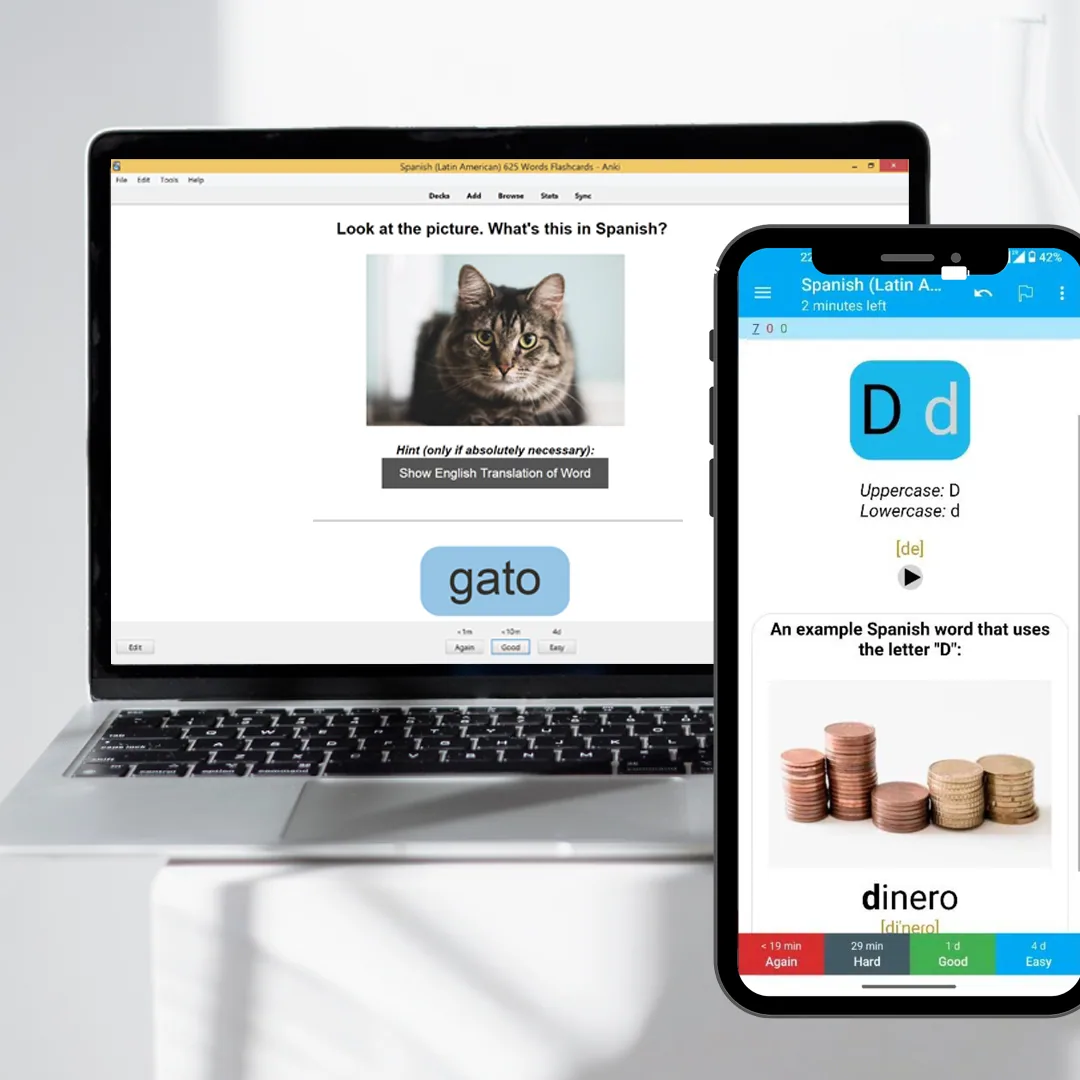
Most learners underinvest here, and it costs them. Poor pronunciation makes you harder to understand and makes listening comprehension more difficult, because you're mentally mapping sounds incorrectly. Starting with solid pronunciation training pays dividends across every other area of language learning.
Speakada's Pronunciation Flashcards, including IPA guides and minimal pairs decks, help you build accurate phonetic habits from the beginning, so you're not unlearning bad habits later.
2. Vocabulary
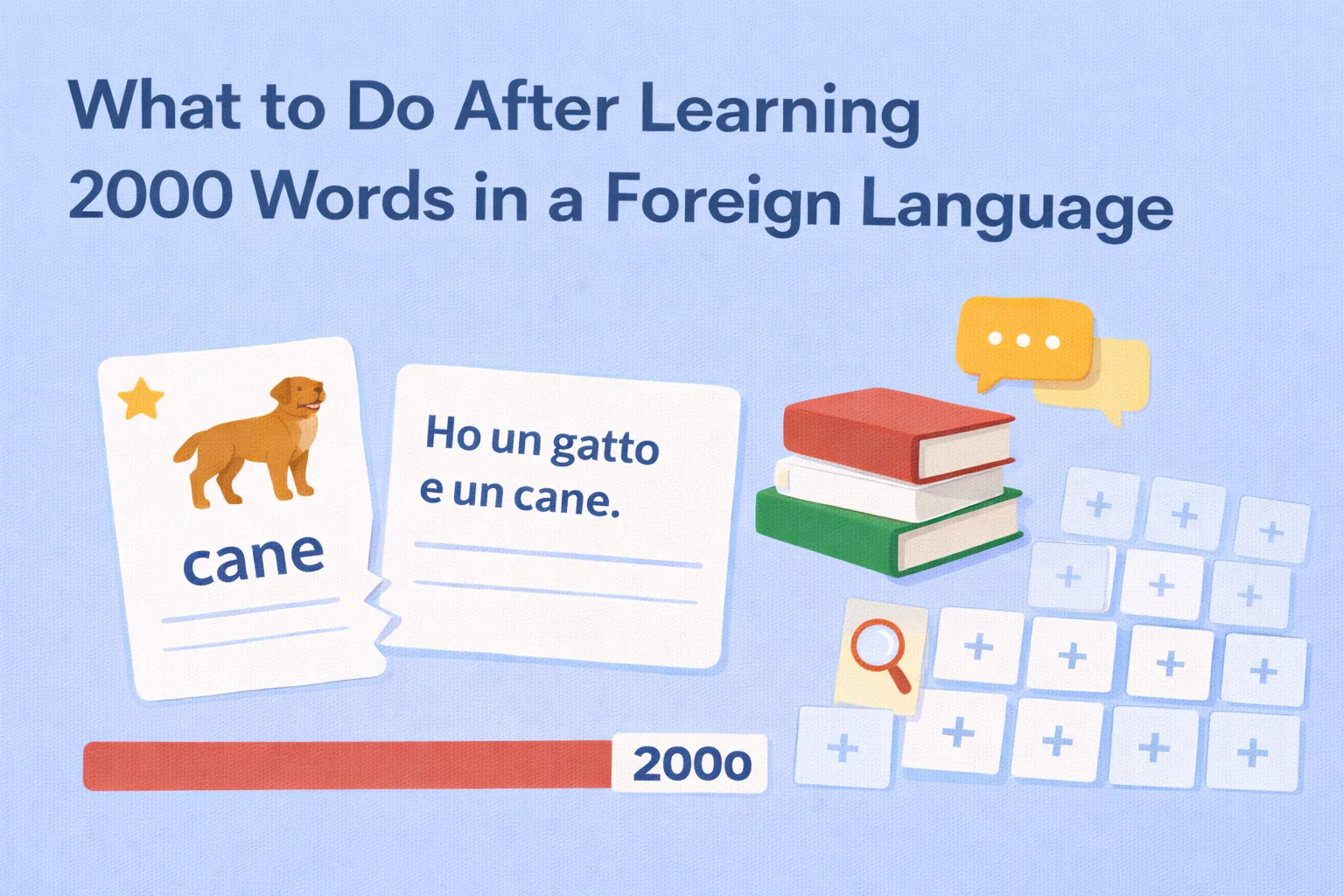
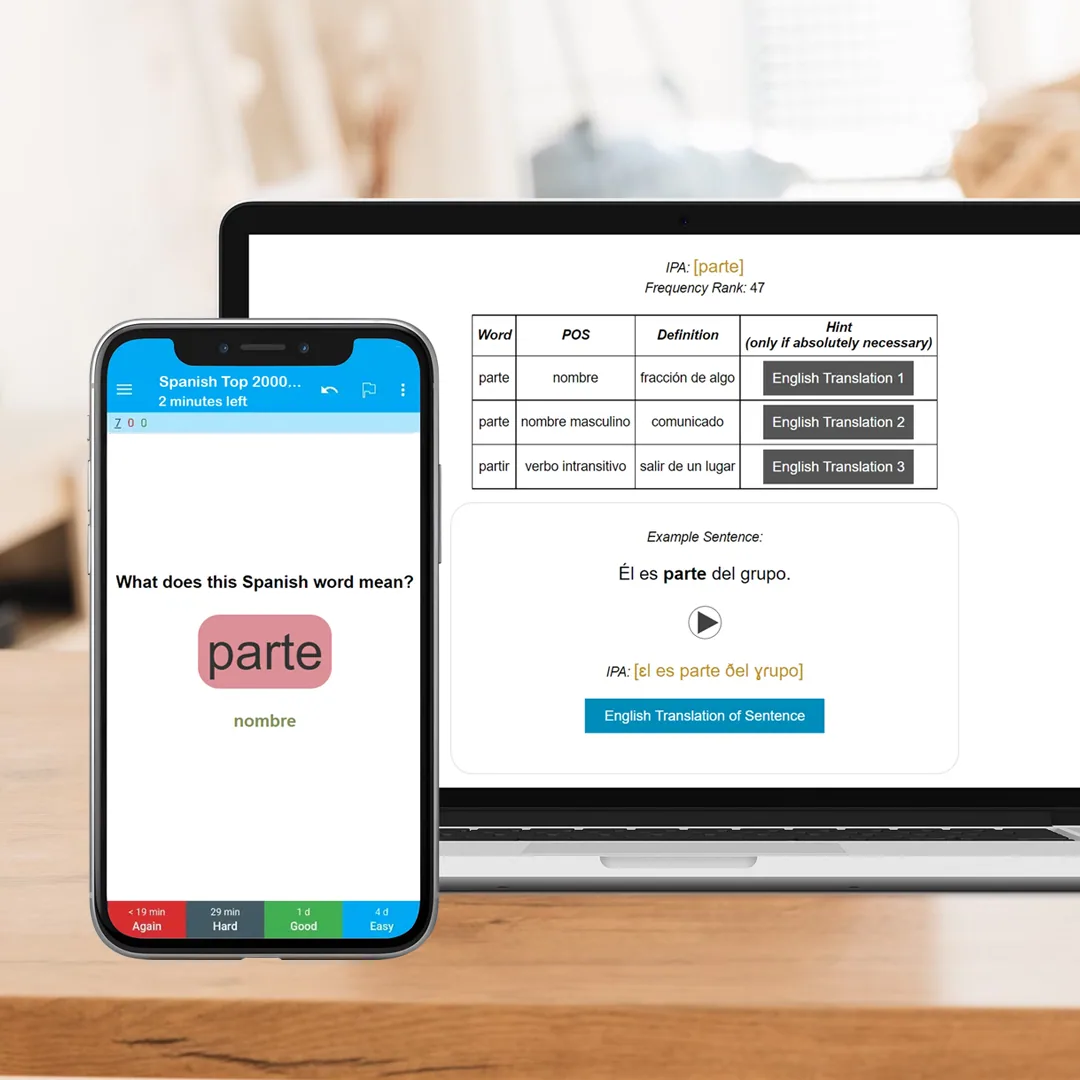
You cannot have a real conversation without words. Research suggests that knowing the most frequent 2,000 words in a language gives you comprehension of roughly 80–90% of everyday speech. That's a concrete, achievable target, and a far more useful framework than "fluent in 7 days."
Our Vocabulary Flashcards are built to help you reach that target efficiently, using picture-word associations, frequency-ranked word lists, and common phrases to build usable vocabulary fast.
3. Grammar
Grammar is the framework that lets vocabulary become communication. You can know 2,000 words, but without grammar, they remain a collection of parts rather than a working engine. The good news is that grammar doesn't have to be the dry, textbook experience many people remember from school.
Our Grammar Flashcards present grammar patterns in context, making them stick the way vocabulary does: through repetition and real examples rather than rote rules.
What This Looks Like in Practice
For most learners, a sustainable language learning habit looks something like this:
- Daily Anki review session: 10–20 minutes, consistently, every day
- New card input: Adding vocabulary, pronunciation, and grammar cards at a manageable pace (not trying to learn 100 words a day)
- Real-world exposure: Supplementing Anki with listening (podcasts, shows) and speaking practice
The progress feels slow at first. Then one day, you hear a phrase on a TV show and understand it without translating. You read a sentence in a book without looking anything up. A native speaker responds to you and the conversation just... flows.
Those moments don't come from a 7-day challenge. They come from months of consistent, honest effort.
Where to Start (Whatever Language You're Learning)
If you're learning Spanish, French, Italian, German, Dutch, Polish, or English, Speakada has purpose-built Anki flashcard decks for each language across all three pillars: pronunciation, vocabulary, and grammar.
Here are some popular starting points by language:
- Spanish: Anki Spanish Flashcards, or explore the Best Spanish Anki Decks That You Need Now
- French: Anki French Flashcards, or see the Best French Anki Decks That You Need Now
- Italian: Anki Italian Flashcards, or check out the Best Italian Anki Decks That You Need Now
- German: Anki German Flashcards, or browse the Best German Anki Decks That You Need Now
- Dutch: Anki Dutch Flashcards, or explore the Best Dutch Anki Decks That You Need Now
- Polish: Anki Polish Flashcards, or see the Best Polish Anki Decks That You Need Now
- English: Anki English Flashcards, or check the Best English Anki Decks That You Need Now
Not sure which decks to start with? Visit the About Speakada Anki Flashcards page for a full overview of how our decks are structured.
The Honest Path Is the One That Actually Works
There's no shame in wanting faster progress. Every language learner does. But the real shortcut, if there is one, is understanding how memory and language acquisition work, and then using that knowledge to study smarter, not harder.
That means spaced repetition over cramming. Pronunciation before bad habits form. Vocabulary built systematically, not randomly. Grammar learned in context.
It means showing up for 15 minutes today, and 15 minutes tomorrow, and the day after that.
It means choosing the honest path over the hype, because the honest path is the one that actually leads somewhere.
We're here to walk it with you.
Want More Smart Language Learning Tips?
Every week, we send out Speakada Weekly, our free newsletter packed with practical Anki tips, language learning strategies, and resources to help you make the most of your study sessions.
If you're serious about making real, lasting progress in your target language, sign up for the Speakada Newsletter and join thousands of learners who are building real fluency, one card at a time.
No hype. No shortcuts. Just smart language learning that works.
Looking for more resources? Browse the Anki Language Learning Blog for guides, tips, and everything you need to learn a language smarter with Anki.