Should You Guess Before You Flip a Flashcard? What Failed Guesses Do for Learning
Short answer: yes, we recommend a quick guess before you reveal a new flashcard, even when you will probably be wrong. In a 2009 study, people who tried to answer a question before seeing the answer learned it better than people shown the question and the answer together, and that held when every attempt was a failure. The study did not use language flashcards, so our advice below is a reasonable application, not a tested result.
What did the study find about unsuccessful retrieval attempts?
Kornell, Hays and Bjork (2009) asked a simple question in “Unsuccessful retrieval attempts enhance subsequent learning,” published in the Journal of Experimental Psychology: Learning, Memory, and Cognition 35(4):989-998 (https://pubmed.ncbi.nlm.nih.gov/19586265/).
Taking tests is known to help learning. But what happens when you cannot answer the test question? Does a failed attempt get in the way, or does it help?
To find out, the researchers made sure the attempts would fail. In two experiments, people were asked fictional general-knowledge questions, such as “What peace treaty ended the Calumet War?” There was no such war, so nobody could answer correctly.
How did they test it with word pairs?
In four more experiments, people were shown a cue word, such as whale, and asked to guess a weak associate, such as mammal. The rare trials where someone guessed the correct word were left out of the results, so only failed attempts counted.
In the test condition, people tried to answer before the answer appeared. In the read-only condition, the question and the answer were shown together.
The result was the same in both kinds of materials: unsuccessful retrieval attempts enhanced learning. The authors suggest that taking challenging tests, instead of avoiding errors, may be one key to effective learning.
Does this apply to language flashcards?
It might, and that is the honest answer. The study used English questions and English word pairs, not Spanish or Italian flashcards, so we cannot say it was tested on language learners.
What we can say is that a flashcard is a small test, and a new flashcard is a test you will probably fail. The study is a reason not to treat that failure as wasted time.
Everything in the next sections is Speakada’s own reasoning, built on that one finding.
How do you guess a word you have never seen?
Often you can make a real attempt. A new card usually gives you something to work with:
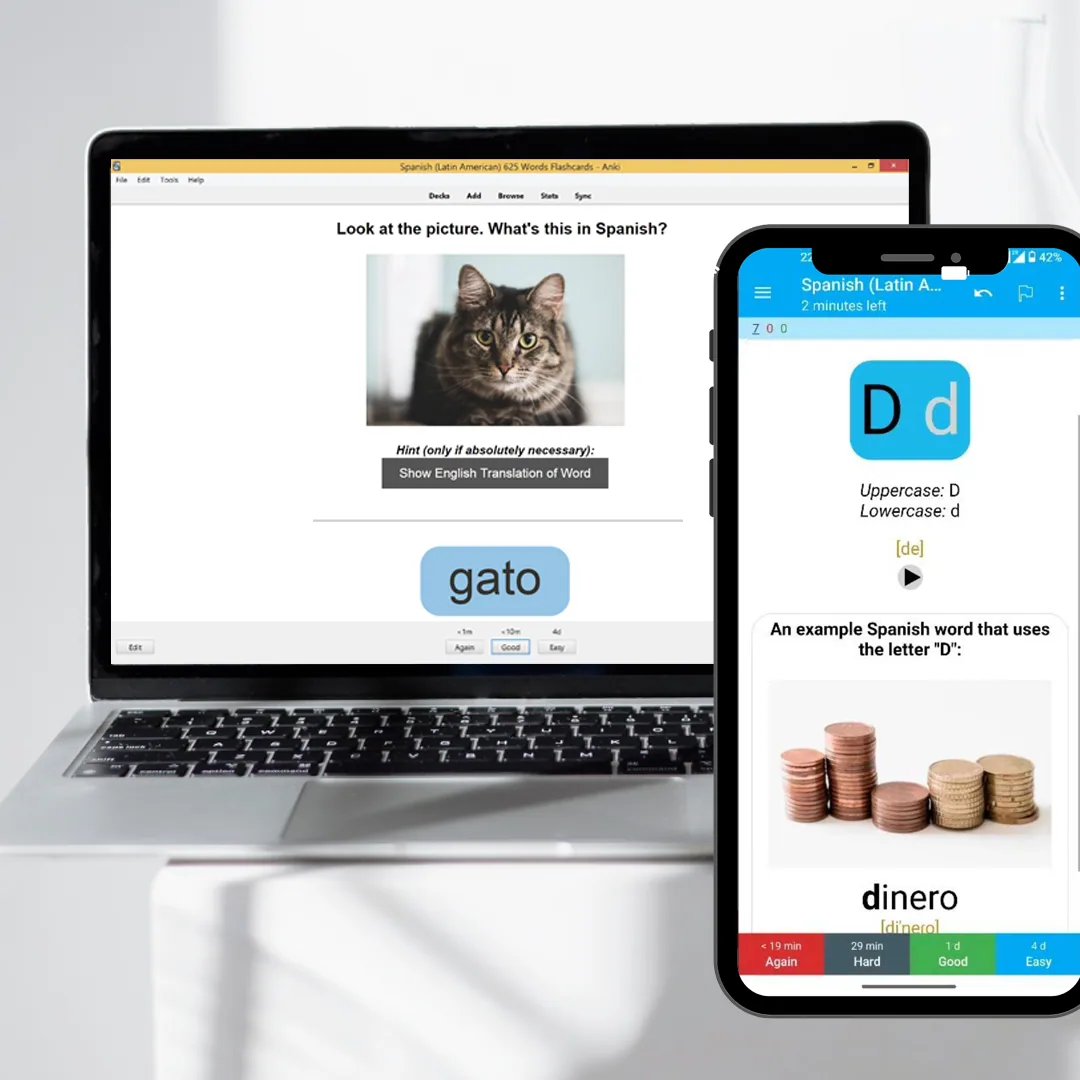
- A picture. If the card shows a dog, you can guess the word for dog even if you cannot guess how it is spelled.
- A cognate. Some words look like words you know. Universidad, hôpital and università are easy guesses for an English speaker.
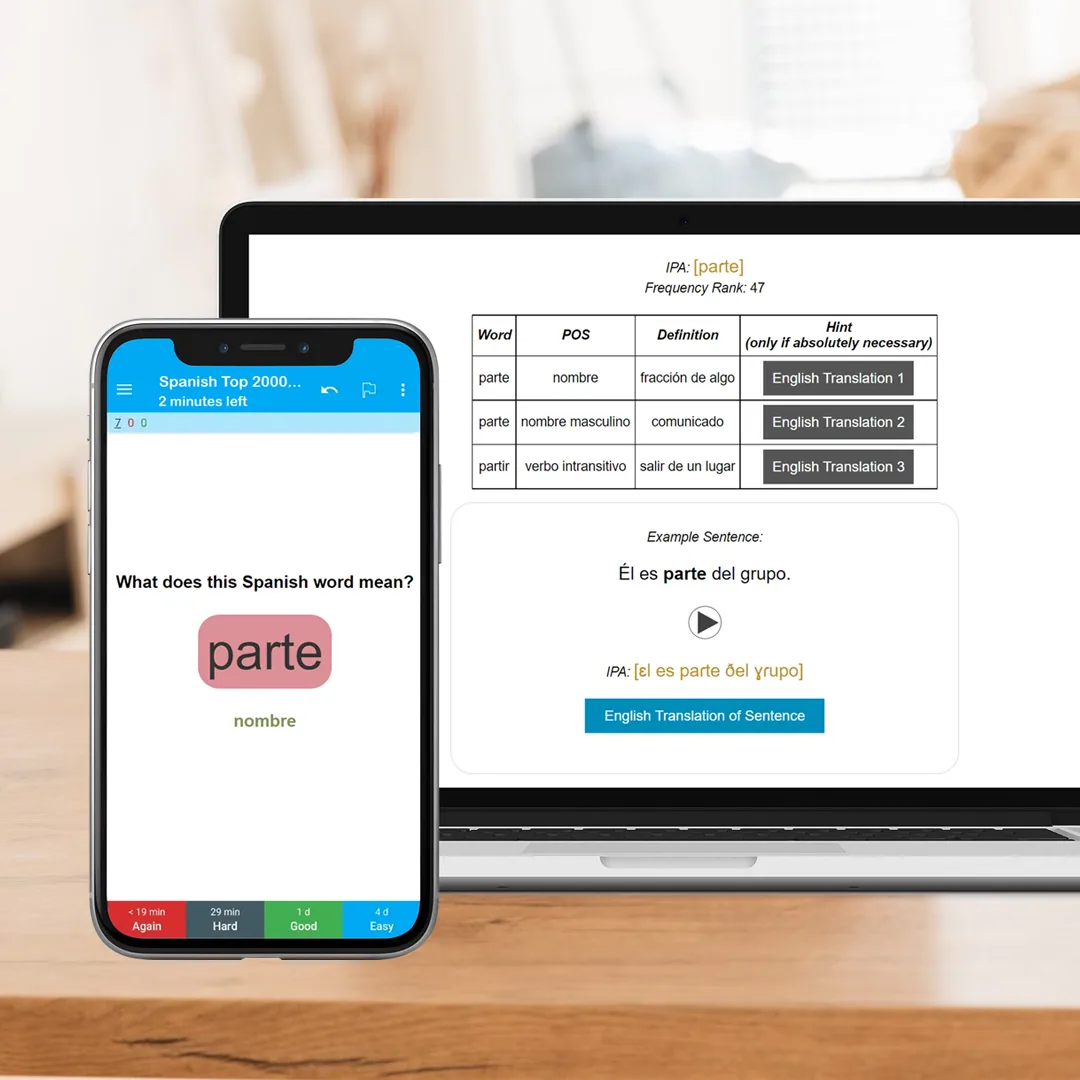
- A sentence. If the card gives context, the missing word often has only a few likely meanings.
- The sound. On a pronunciation card, you can guess how a letter or a pair of sounds will be spoken before you press play.
A guess does not have to be good. It only has to be an attempt.
What if there is nothing to guess from?
Then just flip the card. With no clue, there is nothing to retrieve and no attempt to make. Sitting for ten seconds in front of a word you have no way of knowing is not the habit we are describing.
The two-second guess is for cards where you have something to go on.
Will guessing slow down your reviews?
A little, on new cards only. You are adding about two seconds to each new card and nothing to the cards you already know.
That is a small cost, and you control it. If your sessions start to feel long, apply the habit only to the new cards you find most difficult. For how many new cards to add each day, see our guide to how many new Anki cards per day is right.
Should you say your guess out loud?
If you can, yes. Saying a guess aloud makes it a real attempt and not a vague feeling that you know. It also fits with the production effect, which we cover in should you say flashcards out loud.
Say the guess, then flip the card, then say the correct answer. You get two attempts in one pass.
How should you feel about a wrong guess?
Treat it as information, not failure. The guess did its job the moment you made it, and the study suggests the correct answer lands better because you tried first.
This also changes how you read your own results. If you are marking a lot of cards wrong in Anki, that is normal, especially on new material. We explain how to read those numbers in how well you are really remembering your flashcards.
Does this work in every language?
Yes. The habit applies to Spanish, French, Italian, German, Dutch, Polish and English alike. The details change, since cognates are plentiful in French and rarer in Polish, but the idea does not.
How do you try it for a week?
Pick your next ten new cards. For each one, spend two seconds guessing before you reveal it. If you can, say the guess aloud.
At the end of the week, ask yourself whether the cards you guessed wrong came back easier than the ones you only read. If they did, keep the habit. If not, you have lost very little.
The bottom line
A failed guess is not a wasted guess. In the study, trying before seeing the answer helped, even when every try was wrong.
Guess when you have something to guess from, flip when you do not, and treat the miss as part of the learning.
Want more practical, no-nonsense Anki and language-learning tips like this? Subscribe to Speakada Weekly for one useful email a week.