Should You Say Flashcards Out Loud? What the Production Effect Means for Language Learners
Short answer: yes, we recommend saying at least some of your flashcards out loud. Words you speak while studying are remembered better than words you only read silently, according to the production effect research. Our practical advice is to say the hard cards and new words aloud, and stay silent on the easy ones so you keep your pace.
What is the production effect?
The production effect is the finding that words you produce aloud at study are remembered better than words you read silently. Psychologists gave it that slightly awkward name.
MacLeod, Gopie, Hourihan, Neary and Ozubko (2010) studied it in “The production effect: Delineation of a phenomenon,” published in the Journal of Experimental Psychology: Learning, Memory, and Cognition 36(3):671-685 (https://pubmed.ncbi.nlm.nih.gov/20438265/).
Does saying words aloud help you remember them?
According to that research, yes. Words produced aloud at study were remembered better than words read silently.
The researchers’ explanation is that speaking a word makes it distinctive in memory. It becomes “the one I said out loud,” which gives your brain an extra thing to hang onto when it tries to retrieve it later.
Do you have to say every card out loud?
No, and this is the most useful detail for flashcard users. In the researchers’ experiments, the effect appeared in mixed lists where only some of the words were spoken.
That fits the distinctiveness idea. If you say every card aloud, that edge may shrink, because nothing stands out anymore. This last point is our reading of the idea, not a separate finding.
How strong is the evidence?
We are citing one study, and it was about remembering words in general, not about learning a language with Anki. We are applying it to flashcards as a reasonable step, not claiming it was tested on Anki users.
Treat the practical advice below as Speakada’s own reasoning, built on one finding.
Which flashcards should you say out loud?
Here is how we would use it:
- Say the hard cards aloud. These are the ones you keep missing.
- Say new words aloud the first time you see them. This gives each new word an early, distinctive memory.
- Stay silent on the easy ones. Keep your pace and save your voice.
This approach keeps your sessions fast. You are not reading a whole deck out loud, only the cards that need extra help.
Is there a benefit for language learners beyond memory?
Yes, and the study was not about it, but it is just as real. Saying the word is practice for actually speaking it.
Silent review trains recognition. Speaking trains the thing you are really after, which is being able to say the word in a conversation. Your mouth needs the reps too.
How do you use audio on your flashcards?
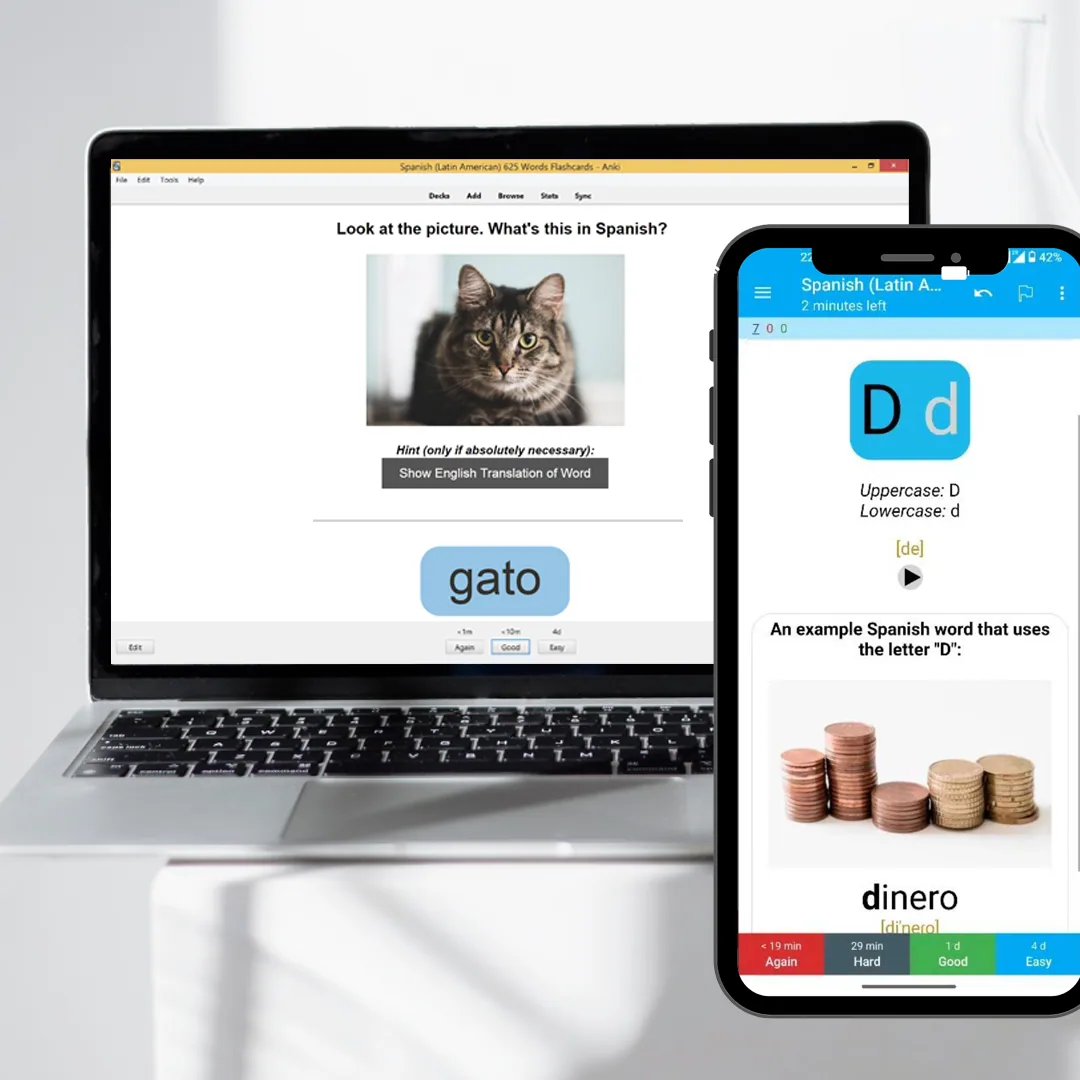
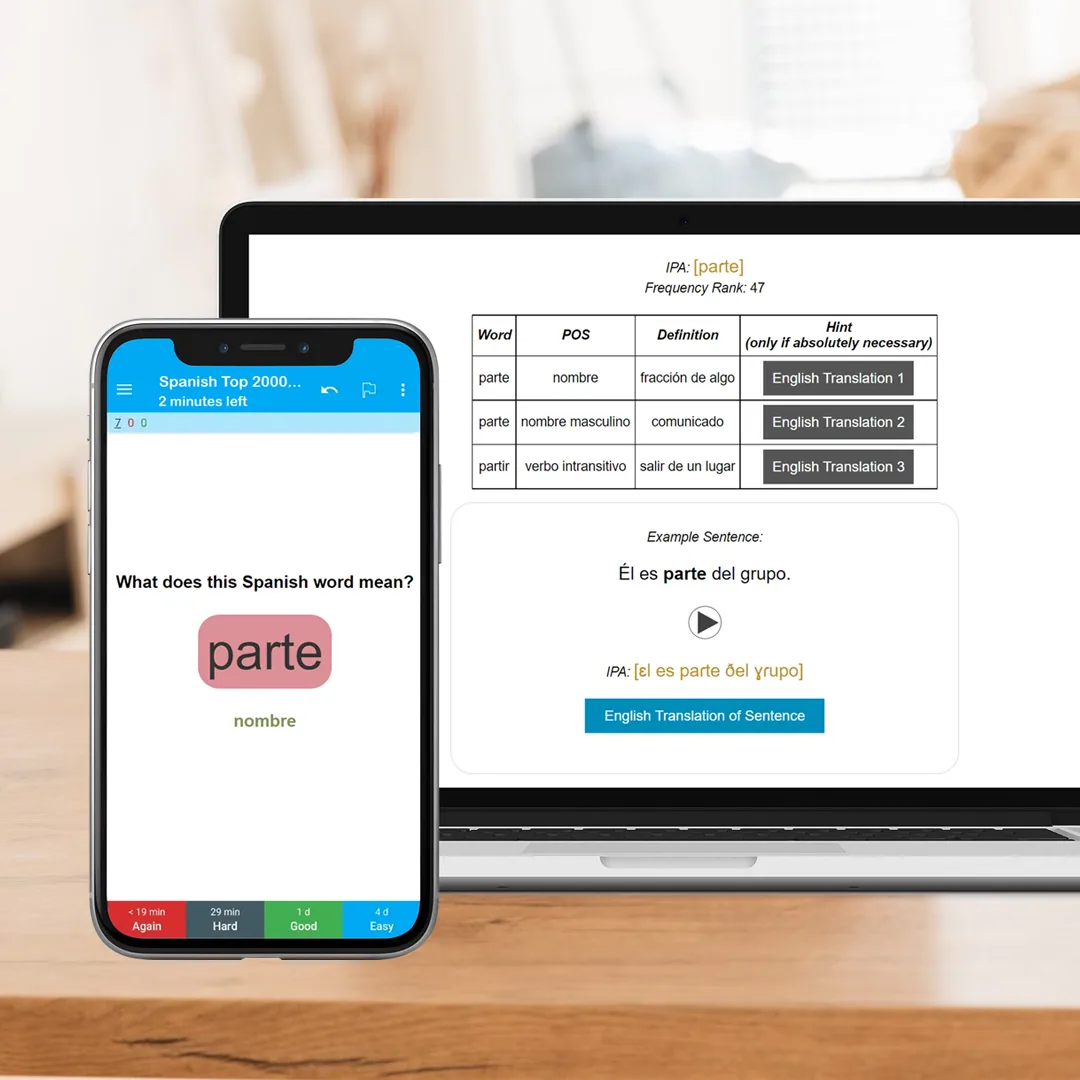
If your deck has audio, listen first, then say the word back before you flip the card. That way, your attempt is anchored to a clear sound, not to what you think the word sounds like.
This works well with pronunciation-focused decks. Our pronunciation flashcards hub explains how we build them, and the French Pronunciation Bundle is an example of a deck designed for exactly this listen-then-speak habit.
What if I cannot speak aloud where I study?
Mouthing the word without making a sound is a fair compromise, and the researchers tested it: in one of their experiments, words that were mouthed also showed the production effect. Whispering is our own extension of that, so treat it as a trial.
If you study on a train or in an office, save the out-loud practice for your hardest cards and do it when you have privacy. Even a whispered attempt counts for something.
Should you say the word or the whole sentence?
Say whichever the card is teaching. On a single-word card, say the word. On a sentence card, say the sentence, because the rhythm of a full phrase is part of what you are learning.
For a longer sentence, you can say only the part you keep getting wrong. This is our practical suggestion, and it keeps the habit short enough to repeat every day.
Will saying words aloud slow down my reviews?
A little, yes, if you do it on every card. That is another reason to say only the hard and new ones.
Speed is not the goal on the cards you keep missing. A few extra seconds on a stubborn card is a good trade if it finally sticks.
How does this relate to accent and pronunciation?
Saying words aloud is the first step, but it does not fix a pronunciation problem on its own. If you say a word wrong and never check it, you are practicing the wrong sound.
We cover the deeper issue in why you still have an accent and in our guide to minimal pairs for pronunciation.
Does this work in every language?
Yes. The habit applies to Spanish, French, Italian, German, Dutch, Polish and English alike. A word in your mouth is a word in your mouth.
Can I combine this with an evening routine?
You can. We suggest doing new cards in the evening, and saying the hard ones aloud during that same session. The reasoning for the evening timing is in our post on the best time of day to study Anki flashcards.
How do I try this for a week?
Pick only the cards you keep missing. Say each one aloud after you listen to it, before you flip.
At the end of the week, notice whether those stubborn cards started to stick. If they did, keep the habit. If not, you have lost very little.
The bottom line
Saying words aloud helps, and you do not need to say everything. Say the hard cards and the new words, stay silent on the easy ones, and whisper if you need to.
One small habit, tried for a week, is the cheapest experiment in language learning.
Want more practical, no-nonsense Anki and language-learning tips like this? Subscribe to Speakada Weekly for one useful email a week.