Hardest Spanish Sounds for English Speakers: What Our Deck Data Shows
Short answer: In our own Spanish deck data, the hardest sound contrasts for English speakers are the palatal sounds, mainly the ñ and the ll/y sounds, followed by Spanish’s five pure vowels. They involve 28 and 21 of the 173 pairs in our Latin American Spanish minimal-pairs deck.
The bigger surprise is how much of the deck is easy. Spanish is the gentlest of the four languages we analyzed.
What are the hardest sounds in Spanish for English speakers?
We sorted our Spanish minimal-pairs deck with a rules-based score built for a native English ear. A contrast scores high when English has no category for it, because you cannot reliably hear a difference your first language never trained you to notice.
This is our own ordering of the deck, not a lab result. The counts are simple to check.
Here is how the 173 pairs sort:
- 109 pairs: distinct consonants that English hears easily, such as tasa and pasa
- 28 pairs: palatal sounds, such as capa and caña
- 21 pairs: vowel quality, such as ruta and rota
- 9 pairs: a sound that appears or disappears, such as plancha and planta
- 3 pairs each: stop voicing, and trill versus tap
Is Spanish pronunciation easier than Italian, French, or German?
By our data, yes, for the ear at least. About 63 percent of the Spanish deck is made up of contrasts an English ear already hears, compared with roughly a quarter of the Italian deck.
That does not mean Spanish is effortless. It means the hard part is concentrated, so you know where to spend your time.
What is the palatal ñ, and why is it hard?
The ñ is a single sound made with the middle of the tongue against the roof of the mouth. English has no single-sound version of it, so learners often say n plus y, as in “canyon.”
That substitution is close, but it is a different rhythm. Here are three pairs from our deck where the palatal is the difference:
- capa (cape) and caña (cane)
- soñar (to dream) and sonar (to sound)
- sueño (dream) and suelo (ground)
The palatal category also covers the ll sound. In our Latin American deck, pollo (chicken meat) and poco (a little) is one such pair.
How do you say the Spanish ñ?
Try it on caña in four steps:
- Say “ah” and stop. Your tongue is low and relaxed.
- Press the middle of your tongue up against the roof of your mouth, behind the ridge where your teeth end.
- Let air flow through your nose while the tongue stays pressed there, as you would for an n.
- Release straight into the next vowel, without a separate “y” sound in between.
If you hear a distinct “yah” after the n, your tongue is releasing too slowly. Try the release again, faster.
Why do Spanish vowels trip up English speakers?
Spanish has five vowels, and each one stays steady. English vowels tend to glide or soften, especially in unstressed syllables.
So an English speaker often turns a Spanish o into a sliding “oh,” or an e into a sliding “ay.” Our deck has 21 pairs where vowel quality is the main difference:
- ruta (route) and rota (broken)
- cura (cure) and cara (face)
- doce (twelve) and dice (he/she says)
- causa (cause) and cosa (thing)
The fix is to keep the mouth still for the whole vowel. Say the vowel, hold your jaw and lips in place, and do not let it slide.
What about p, t, and k in Spanish?
Spanish p, t, and k are not followed by the puff of air English adds. To an English ear, that unpuffed sound can land closer to b, d, or g.
Our scoring gives this contrast a high rank, though only 3 pairs in the deck are ranked as stop voicing. Two of them are vez (time) and pez (fish), and pegado (stuck) and pecado (sin).
What about the Spanish rr and r?
Spanish has a tapped r, a single quick flick of the tongue, and a trilled rr, several flicks in a row. English has neither in the same form.
Our deck ranks trill versus tap as a contrast of its own, but with only 3 pairs, such as correa (strap) and corea (Korea). That is a small share of the deck, so it deserves practice without the panic it often gets.
How should you practice the hard Spanish sounds?
Pick the category that matches your trouble, then drill it as pairs rather than as isolated words.
- Choose one contrast. Start with ñ against n, using soñar and sonar.
- Say both slowly. Feel where your tongue is for each one.
- Listen and choose. Hear a word and decide which of the two you heard. If you cannot tell yet, you have found the gap.
- Repeat in short sessions. A few pairs a day keeps the contrast fresh, and spaced repetition brings the tricky ones back until they stick.
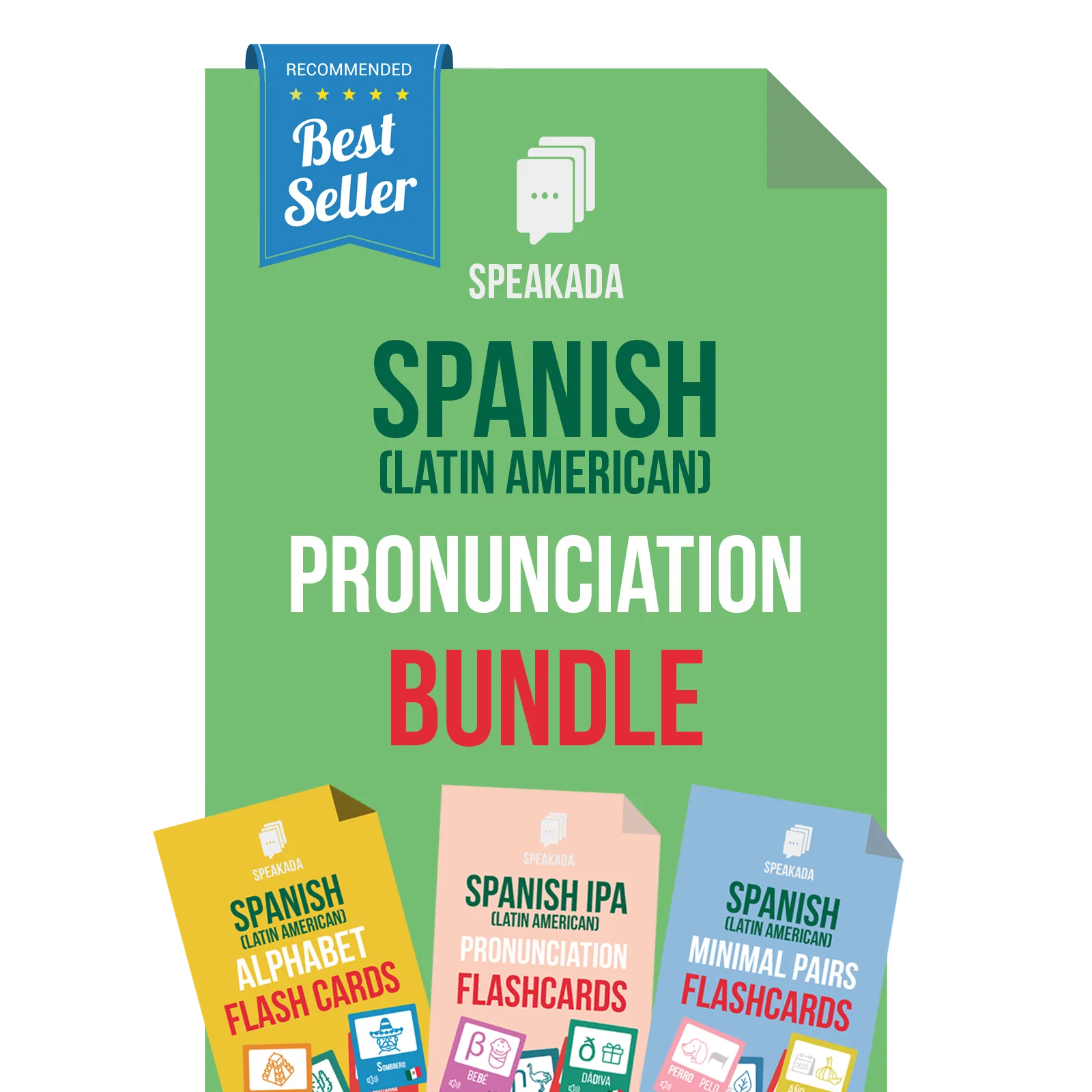
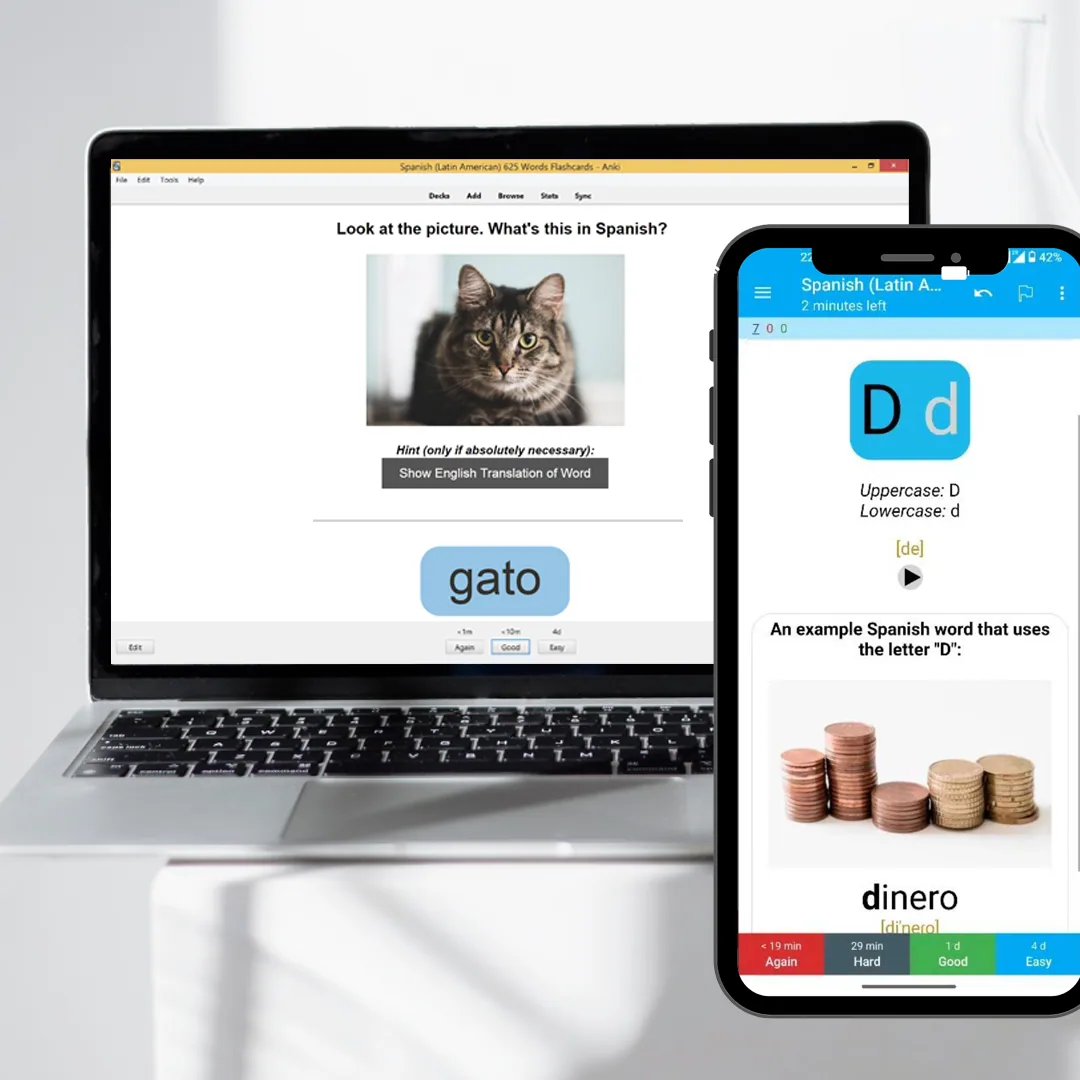
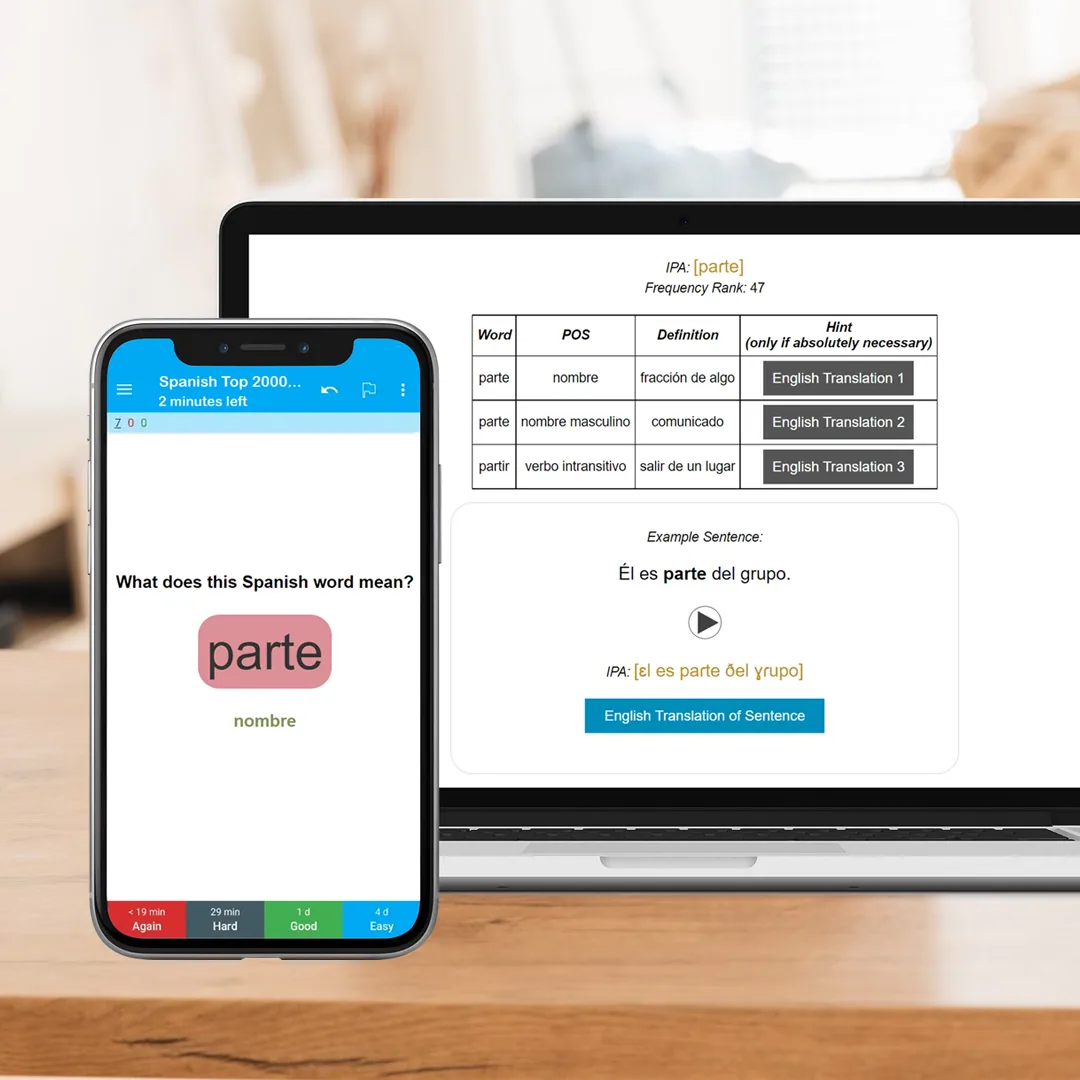
Our Spanish Minimal Pairs Flashcards work this way, and the Spanish Pronunciation Bundle adds the IPA and alphabet cards so you can see exactly which sound each word uses.
For the basics behind these sounds, see our guide to how to pronounce Spanish words.
Is this the same across languages?
No, and that is the point. We ran the same ranking on all four languages. Italian’s top contrast is consonant length, which involves 118 of 222 pairs; we cover it in detail in our post on the hardest Italian sounds for English speakers.
French leans on nasal and rounded vowels instead, which we break down in our post on the hardest French sounds for English speakers.
The bottom line
By our own deck data, Spanish asks less of an English ear than Italian, French, or German. The hard contrasts are the palatals and the pure vowels, and a small number of pairs cover them.
Drill those, and most of the deck will already sound clear to you.
Want more practical, no-nonsense language-learning tips like this? Subscribe to Speakada Weekly for one practical email a week.