How Far Ahead of a Trip Should You Start Learning the Language?
Short answer: start as early as you can, and keep the daily amount small. We suggest about six weeks before your trip, with around 10 new flashcards a day, then a review-only final week. A little each day beats a big push in the last few days, and the research on spaced study points the same way.
When should you start learning a language before a trip?
Start today, whatever the date. The earlier you begin, the smaller each day’s study can be.
Most people say “soon” and then start the week before. It feels efficient, but it puts all the work into one stretch, and that is the pattern the research found does worse than spreading study out.
What does the research say about cramming?
The best-known evidence is a large review of how study timing affects memory. Cepeda, Pashler, Vul, Wixted and Rohrer (2006) pulled together 839 assessments from 317 experiments in 184 articles. The paper is “Distributed practice in verbal recall tasks: A review and quantitative synthesis,” Psychological Bulletin 132(3):354-380 (https://pubmed.ncbi.nlm.nih.gov/16719566/).
Two findings matter for a trip:
- Spreading study over time beat massed study. Massed study is what most of us call cramming.
- The best gap between sessions grew as the test got further away. The longer you need to remember, the longer the best spacing.
Does this apply to travelers?
Not directly, and we want to be plain about that. Those were lab tasks in which people recalled words, not travelers ordering dinner in another country.
Vocabulary flashcards ask you to do something close to a verbal recall task, so we think the finding is a reasonable guide. We are treating it as a strong nudge, not a guarantee.
Why does this matter for a trip?
For a trip, the “test” is the day you land. If that day is six weeks away, the research points toward a slow, spread-out plan. A single burst in the last few days points the other way.
Everything below is Speakada’s own reasoning and arithmetic. It is built on that one finding, not tested on travelers.
How many weeks before a trip should you start?
Six weeks is a good target, but any head start helps. Here is the arithmetic:
- 10 new cards a day is 70 a week.
- That is about 300 cards in a month.
- It is 420 cards in six weeks.
Four hundred or so well-chosen cards is a real survival vocabulary. If you want to think through the daily number, our post on how many new Anki cards per day is right walks through the trade-offs.
Which words and phrases should you learn first?
Start with what you will actually use. That means:
- Greetings and polite phrases
- Numbers and prices
- Food and drink
- Directions and transport
- “How much is this?” and “I don’t understand”
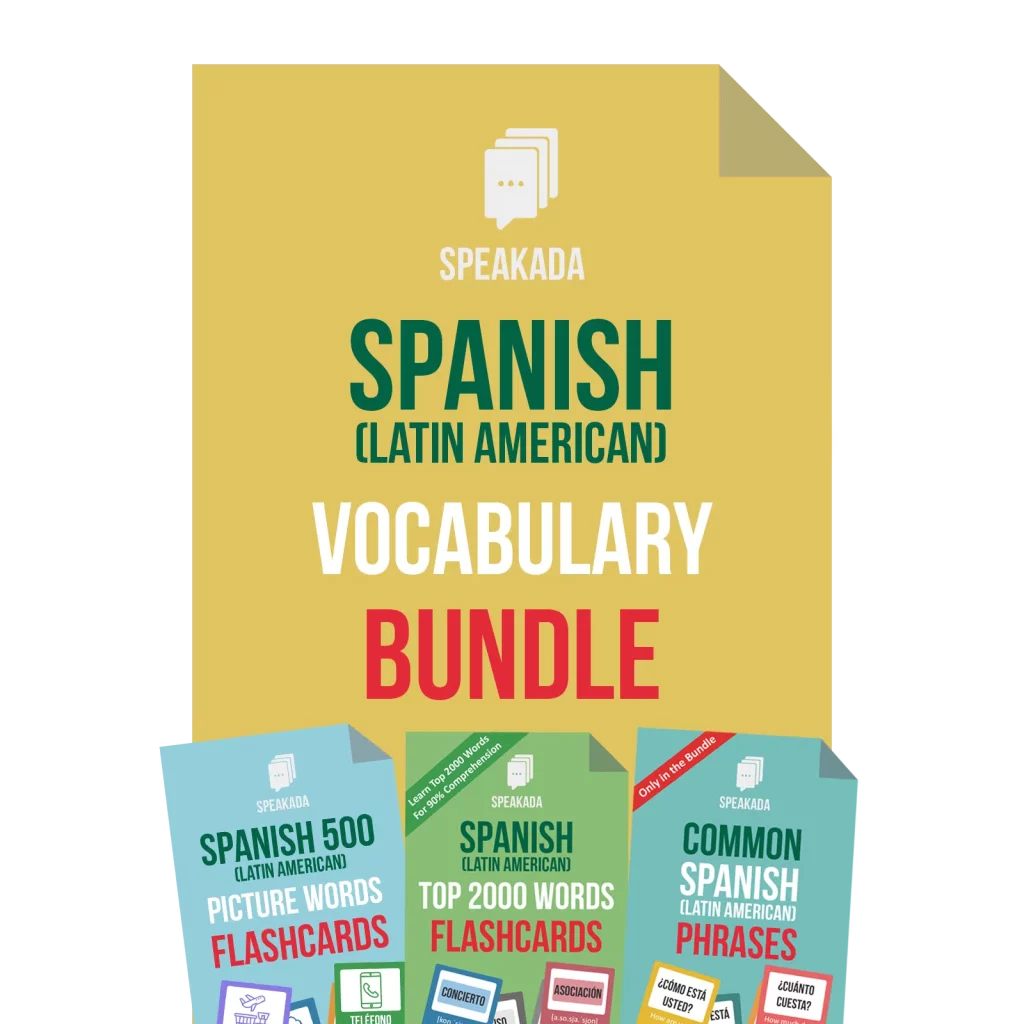
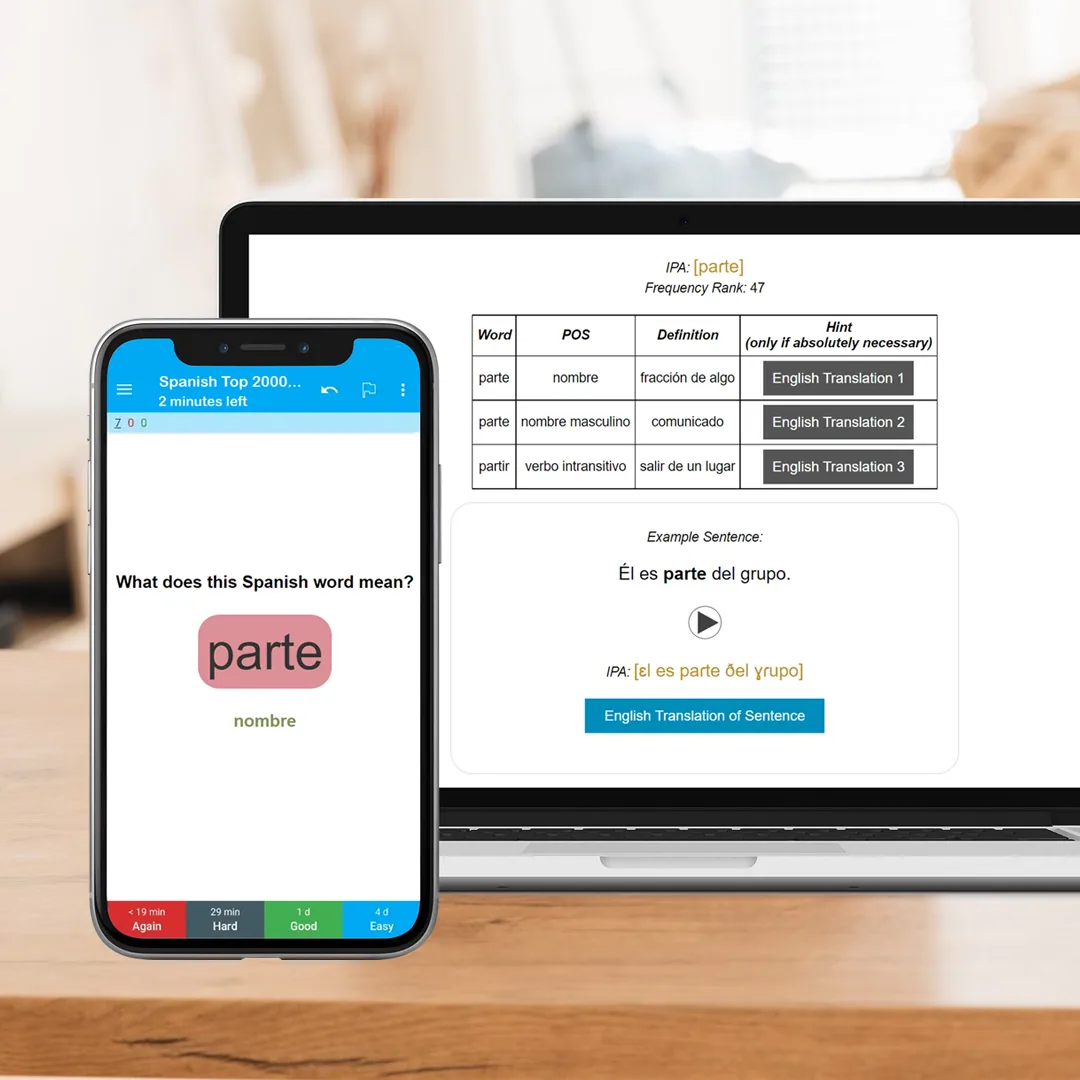
A ready-made phrase deck can save you the sorting. For example, our Spanish Common Phrases Flashcards include travel expressions for transport, accommodation, restaurants and directions, and the French Common Phrases Flashcards cover the same kind of situations in French.
What should you do in the last week before you go?
Make it review only. Stop adding new cards about a week out and let the ones you have settle.
Adding new words at the last minute mostly crowds out the ones you already learned. This is our reasoning, not something the study tested, but it keeps the final week calm.
Should you say the phrases out loud?
Yes, at least the important ones. On the trip you will be speaking, not tapping a screen, so your mouth needs practice too.
We cover how to do this without slowing your reviews in should you say flashcards out loud. We also suggest picking a consistent time of day, and our post on the best time of day to study Anki flashcards explains how to choose.
What does a six-week plan look like?
Here is the plan we would follow, in three steps. It is our own reasoning, so adjust it to your life.
- Weeks 1 to 5: add about 10 new cards a day, starting with the words you will use most. Do your reviews every day, because the reviews are what keep older cards from fading.
- Week 6: add nothing new. Review only, and say your key phrases aloud until they feel automatic.
- Trip day: you have seen every card several times, spread across weeks, not once in a rush.
Spreading things out also protects you from the biggest risk in any plan, which is quitting. Ten cards a day takes little time, so it is easy to keep up when life gets busy.
What if you miss a few days?
Pick up where you left off, and do not double up. Reviews pile up quickly when you skip days, and a giant pile is what makes people give up.
If you fall behind, pause new cards for a day or two and clear the reviews first. The new-card number is the setting to lower, and lowering it is better than abandoning the plan.
Is 10 new cards a day the right number?
It is a starting point, not a rule. Some people can handle more, and some need fewer.
The number matters less than keeping it steady. A daily amount you will still be doing in week five is better than a big number you drop in week two.
What if your trip is only two weeks away?
You can still do this. Start today, keep the number small, and stick to the most useful phrases.
Do not try to make up the missing weeks in one weekend. That is just cramming again. Fewer cards, done every day, is the better trade.
Does this work for any language?
Yes. The spacing idea does not depend on the language, so it applies to Spanish, French, Italian, German, Dutch, Polish and English alike.
The bottom line
Start earlier than feels necessary, keep each day small, learn the words you will really use, and make the last week review only. Say the key phrases aloud.
That is our plan, and the research on spreading study out is why we trust the first part of it.
Want more practical, no-nonsense Anki and language-learning tips like this? Subscribe to Speakada Weekly for one useful email a week.