Is Speakada's Spanish Audio Native Speaker or AI? The Honest Answer
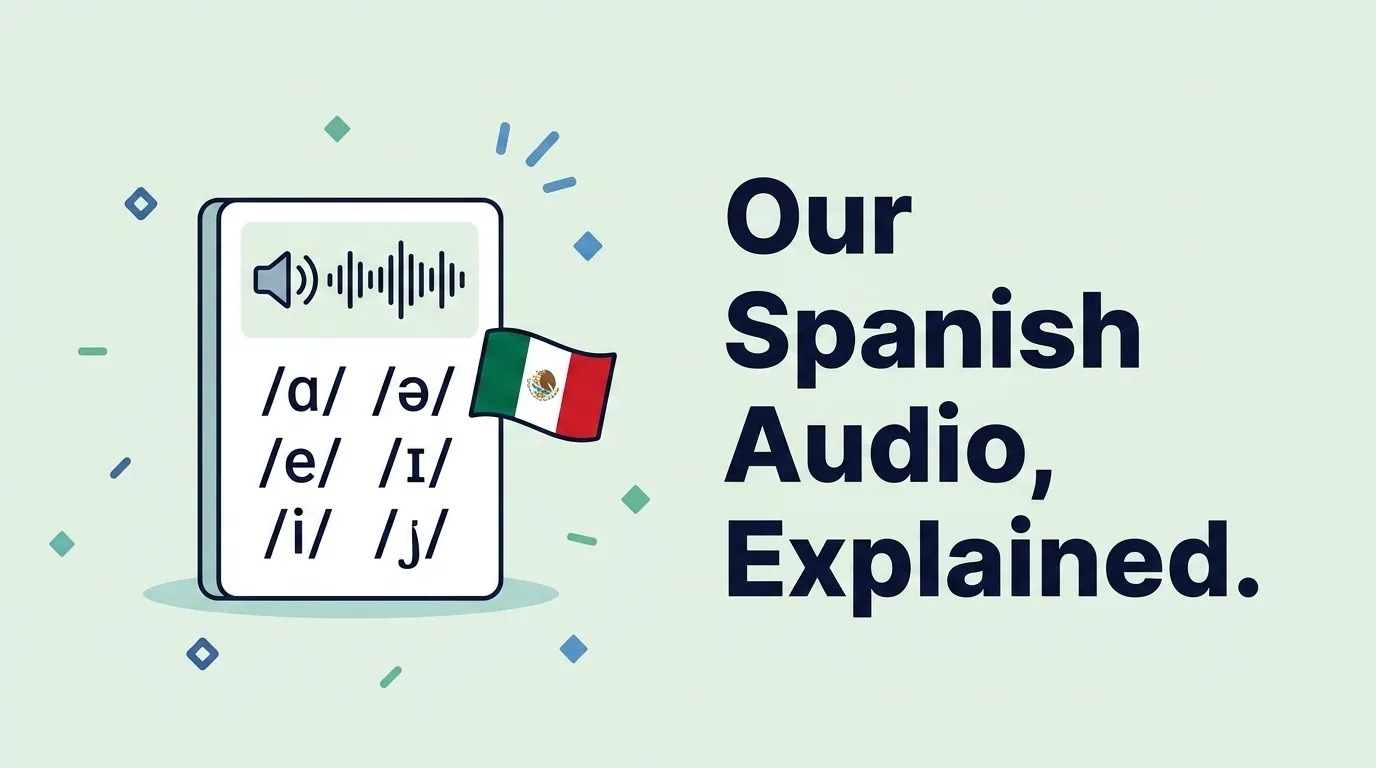
Short answer: Speakada’s Spanish flashcard audio is high-quality synthesized (AI-generated) audio in a Latin American Spanish accent, reviewed by native speakers for accuracy - not a live human recording on every card. Here is why that choice actually helps with some of Spanish’s trickiest sound contrasts, not just why it’s cheaper to produce.
Is Speakada’s Spanish audio a real native speaker or AI-generated?
It’s synthesized audio, checked by native Latin American Spanish speakers for pronunciation, stress, and naturalness before release. We used to describe our audio in a way that implied a native human recording on every card, and we’ve corrected that - if authenticity matters to you before you buy, and for a careful analytical learner it should, you deserve the direct answer.
Why does audio consistency matter so much for Spanish specifically?
Spanish has a handful of sound contrasts that are genuinely difficult for many learners to hear before they can produce them - the trilled “rr” versus the tapped “r” (the classic “pero” meaning “but” vs. “perro” meaning “dog”), or the “b/v” merger that doesn’t exist the same way in English.
Training your ear on these contrasts requires hearing the same two sounds, produced consistently, over and over - not natural human variation across dozens of recording sessions that could blur the exact distinction you’re trying to learn.
This is where synthesized audio has a real advantage over patchwork human recordings for a large deck: the same trilled “rr” sounds the same way every single time you review it, so you’re training against a stable contrast rather than incidental variation in how a human voice actor happened to roll it that day.
Does “synthesized” mean the accent isn’t real?
No - it means the accent is deliberately chosen and applied consistently, rather than varying recording to recording. Our Spanish decks use a Latin American Spanish accent throughout (not a mix of Latin American and Peninsular pronunciation), because mixing accents within a single deck would work against the exact consistency that makes a spaced-repetition system reliable. Every card’s audio is checked by native speakers to confirm it’s accurate before it ships.
What’s the more precise pronunciation tool, then?
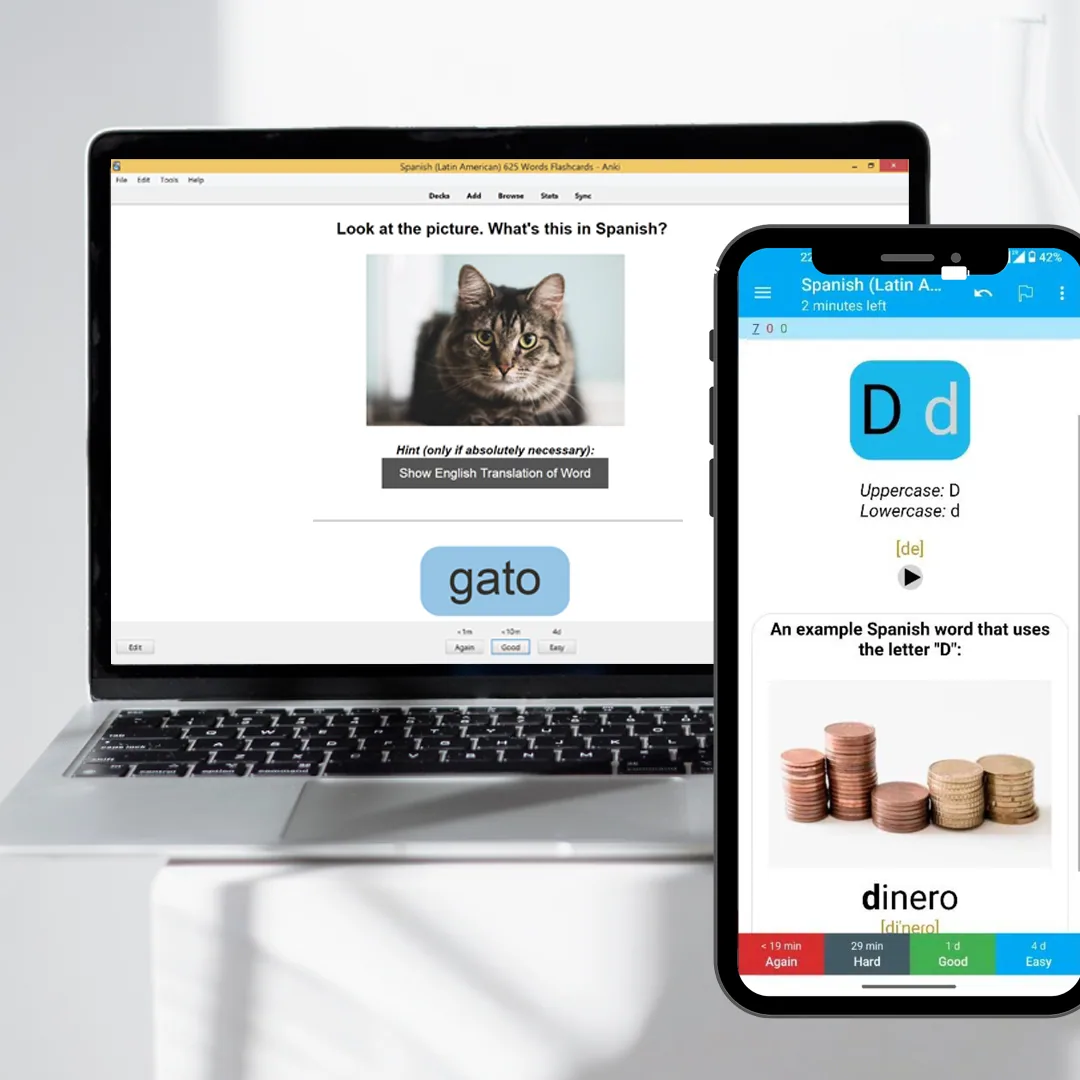
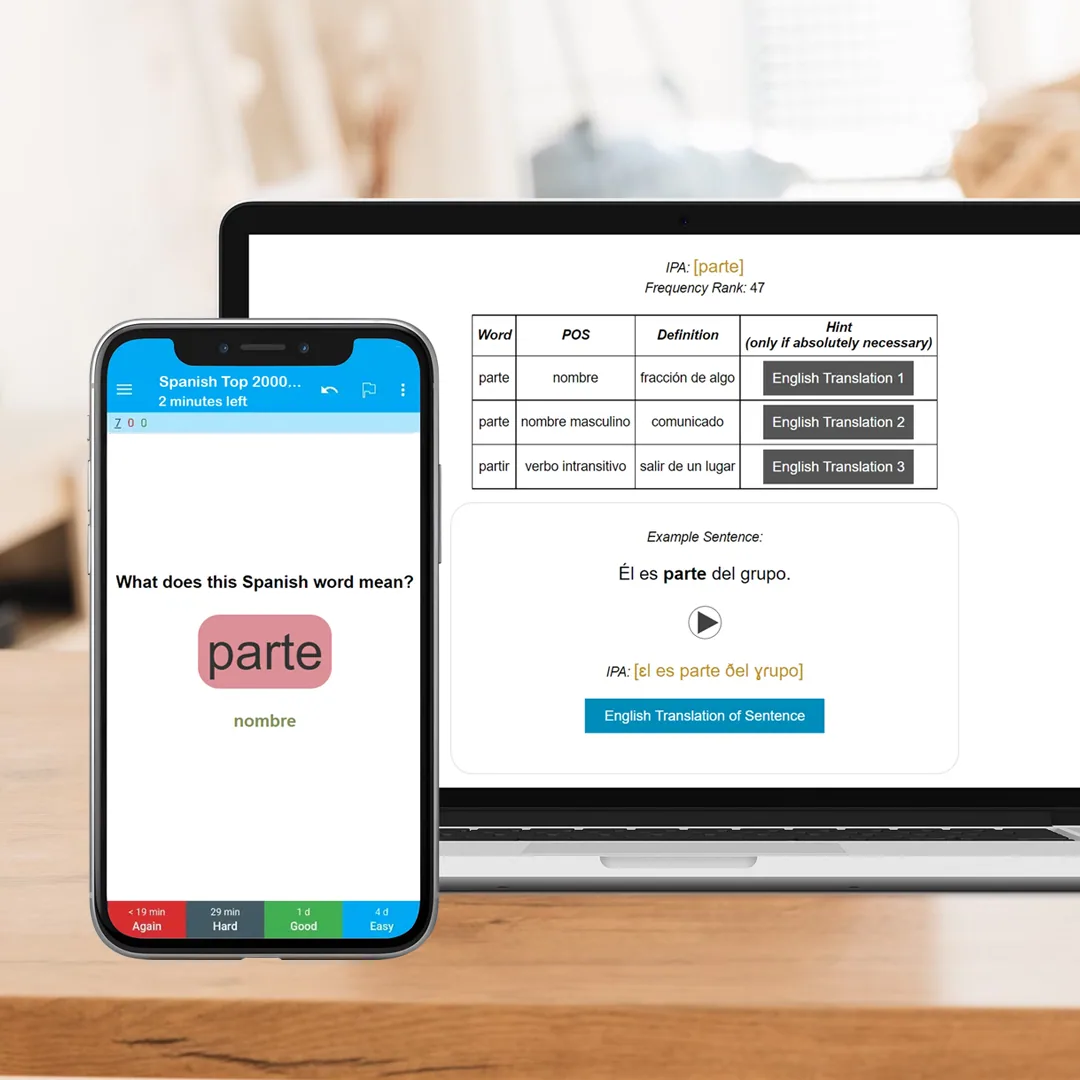
Audio - synthesized or human - only tells you what a word sounds like once, at the pace and accent of that one clip. The IPA (International Phonetic Alphabet) transcription on every Speakada Spanish card is the more precise anchor: it shows you exactly which sounds you’re supposed to produce, symbol by symbol, including the distinction between the tapped [ɾ] and trilled [r] that “pero” and “perro” hinge on. If a word isn’t landing for you by ear, look at the IPA and identify the specific symbol you’re missing rather than relistening to the audio on loop.
Does this affect Spanish minimal pairs training specifically?
Yes, directly. Minimal pairs like “pero/perro,” “casa/caza” (in accents where these are distinguished), or vowel-adjacent contrasts depend on hearing a precise, consistent difference between two sounds. Consistent synthesized audio, paired with IPA, gives you a stable target to train against - which matters more for a contrast your first language never taught you to hear than for words where you already have a rough sense of the sound.
The bottom line
If Spanish audio authenticity matters to you before you buy, here’s the direct answer: synthesized, native-Latin-American-Spanish-reviewed, and paired with IPA on every card as the real precision anchor for exactly the contrasts - trilled “rr,” the b/v merger - that trip learners up most.
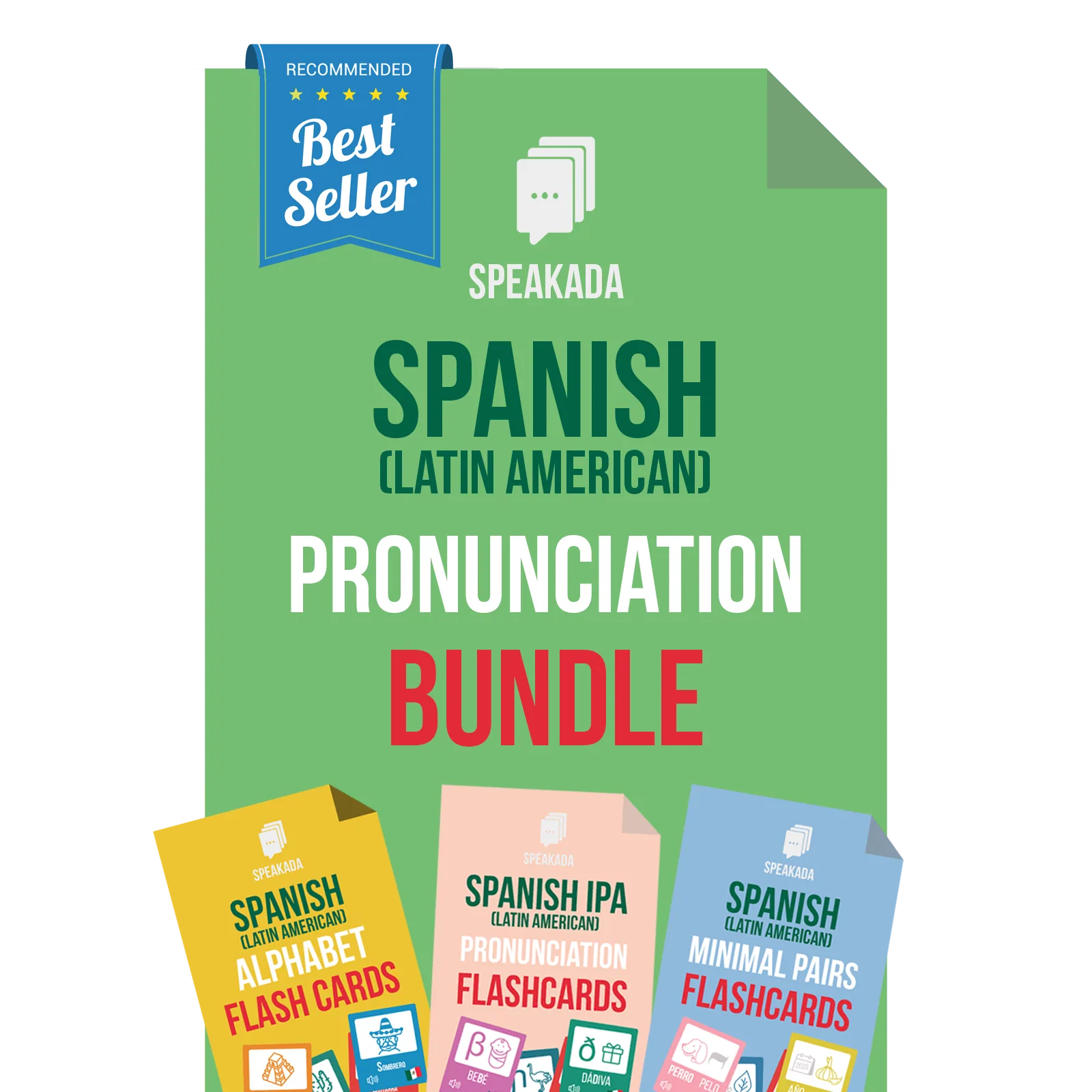
If pronunciation is where you’re stuck in Spanish, a Spanish Pronunciation Bundle pairs that consistent Latin American audio with IPA and minimal-pairs training in one place, rather than relying on your ear alone to catch a contrast English never taught you to hear.
Want more of this kind of direct, no-spin breakdown? Subscribe to Speakada Weekly for one practical email a week.