How to Organize Anki Flashcards for Faster Language Learning: The Strategic Method That Changed Everything
Learning a new language can feel overwhelming, especially when you’re staring at hundreds of flashcards in random order. If you’ve ever opened your Anki deck and wondered where to start, or felt frustrated by the scattered approach to your language studies, you’re not alone.
A few weeks ago, one of our Spanish learners, Jen, reached out to the Speakada team with a challenge that many language learners face. She had imported her Spanish Vocabulary cards into Anki but felt completely overwhelmed by the random order of cards appearing in her study sessions.
“I want to focus on verbs first,” she wrote in her message to us, “but I can’t figure out how to prioritize them.”
Sound familiar? Whether you’re tackling Spanish verbs like Jen, Italian grammar patterns, or French pronunciation, the ability to customize your study sequence can make the difference between scattered learning and focused progress. Today, we’re sharing the exact solution we provided to Jen, a game-changing flashcard organization method that transformed her entire approach to mastering Spanish, and how you can apply it to any language.
The Problem Every Language Learner Faces (Just Like Jen Did)
Jen’s situation perfectly illustrates what thousands of language learners experience daily. She had imported her Spanish vocabulary cards into Anki with the best intentions, but when she started her study sessions, the cards appeared completely randomly. One moment she was reviewing the verb “hablar” (to speak), the next she was trying to remember how to say “refrigerator,” followed by a complex grammar rule about the subjunctive mood.
As she explained to us, “I felt like I was spinning my wheels. I wanted to build a strong foundation with verbs first, but Anki kept throwing random vocabulary at me. I knew there had to be a better way, so I reached out to the Speakada team for guidance.”
Jen’s frustration resonated with us because we hear similar concerns from language learners regularly. This scattered approach isn’t just frustrating: it’s scientifically inefficient. Your brain struggles to build connections between related concepts when they’re presented in random order, making language acquisition slower and more difficult than it needs to be.
Why Strategic Flashcard Organization Matters for Language Learning
Research in cognitive psychology and spaced repetition learning reveals that learners retain information more effectively when they can build upon related concepts systematically. When you master foundational elements first, such as essential verbs in Spanish, core grammar structures in French, or high-frequency vocabulary in any target language, you create mental scaffolding that supports more complex language acquisition.
Think of it like building a house. You wouldn’t randomly install windows, lay the foundation, and build the roof in no particular order. The same principle applies to language learning with Anki flashcards. A strategic approach to card organization can dramatically improve your learning efficiency and retention rates.
The Speakada Solution: How We Helped Jen Transform Her Learning
When Jen reached out to our team, we knew exactly how to help her. The solution we provided lies in Anki’s powerful but often overlooked repositioning feature. This technique allows you to take control of your learning sequence and prioritize the language elements that matter most for your goals.
Here’s the exact step-by-step process we shared with Jen, the same method that transformed her scattered study sessions into focused, strategic learning:
For Desktop Users:
-
Open your Speakada deck and click “Browse” This opens your card collection where you can view and organize all your flashcards
-
Select your deck in the sidebar Choose the specific language deck you want to reorganize (Spanish, French, Italian, German, etc.)
-
Use the search bar strategically Search for specific card types using terms like “verb,” “adjective,” “grammar”
-
Try topic-based searches such as “food,” “travel,” “business,” or “family”
-
Use difficulty levels or frequency markers if your cards include them
-
Select all matching cards Use Ctrl+A (Windows) or Cmd+A (Mac) to select all cards that match your search
-
Right-click and choose “Reposition” This opens the repositioning dialog box
-
Set starting position to “1” and check “Shift position of existing cards” This moves your selected cards to the front of your deck while maintaining their relative order
For Mobile Users:
The process is nearly identical on mobile devices. Browse your deck, search for your target cards, select all matching results, and use the reposition option in the card menu. While the interface may look slightly different, the functionality remains the same.
The Results: Jen’s Success Story and What It Means for You
Three weeks after implementing our repositioning technique, Jen sent us an update that made our entire team smile:
“This changed everything! I’m now working through Spanish verbs systematically, and I can already feel how much more confident I am with conjugations. Instead of feeling scattered, every study session feels purposeful. Thank you for this game-changing advice!”
Jen’s transformation illustrates why strategic organization matters so much. By focusing on verbs first, she built the foundation she needed for Spanish sentence construction. Her confidence grew with each session because she was mastering related concepts together, rather than jumping randomly between unconnected vocabulary.
But Jen’s focus on verbs was just one approach. The beauty of this organization method is its flexibility; you can customize your learning sequence based on your specific goals and learning style:
Grammar-First Approach
Perfect for systematic learners who prefer understanding rules before exceptions. Prioritize:
-
Basic sentence structure cards
-
Present tense conjugations
-
Essential grammar patterns
-
Progressive complexity (conditional tenses, subjunctive moods)
Practical Communication Focus
Ideal for travelers or professionals who need immediate conversational skills:
-
Travel vocabulary (airport, hotel, restaurant)
-
Business terminology
-
Daily conversation phrases
-
Cultural context cards
Pronunciation Perfection Method
Essential for languages with challenging sound systems:
-
Phonetic cards for difficult sounds
-
Minimal pair exercises
-
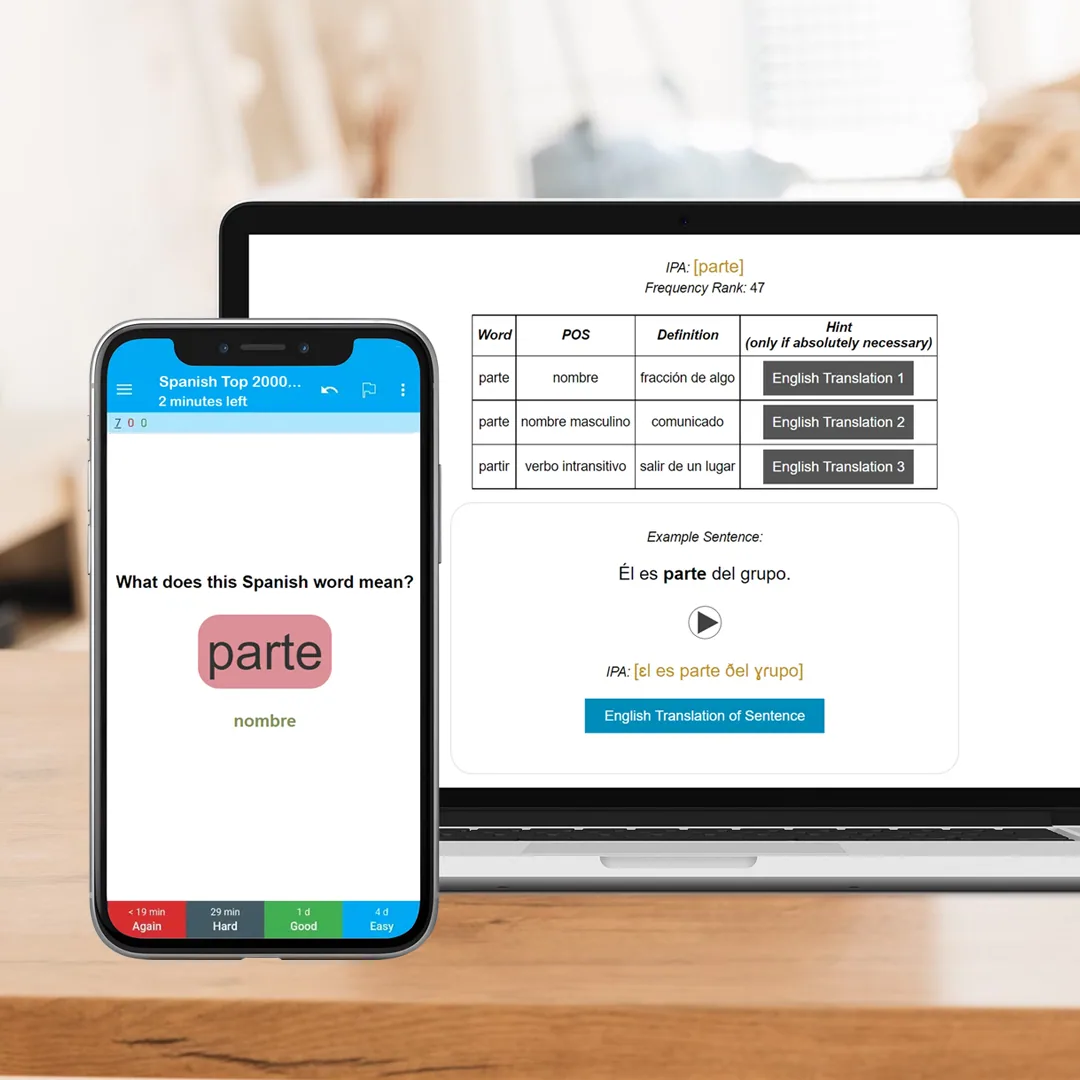
IPA (International Phonetic Alphabet) symbols
-
Audio-based pronunciation cards
Frequency-Based Learning
Based on linguistic research about the most commonly used words:
-
Top 100 most frequent words first
-
Core 500 vocabulary set
-
High-utility phrases and expressions
-
Progressive expansion to specialized vocabulary
Advanced Organization Techniques for Power Users
Once you’ve mastered basic repositioning, consider these advanced strategies:
Tag-Based Organization
Use Anki’s tagging system to create multiple organizational layers:
-
Difficulty tags (beginner, intermediate, advanced)
-
Topic tags (food, work, hobbies, emotions)
-
Grammar tags (present-tense, past-tense, subjunctive)
-
Priority tags (urgent, important, review)
Deck Subdivision
For extensive vocabulary collections, consider creating separate sub-decks:
-
Core vocabulary deck (500 most important words)
-
Grammar patterns deck
-
Pronunciation practice deck
-
Specialized vocabulary deck (business, academic, etc.)
Spaced Repetition Optimization
Combine organization with Anki’s spaced repetition algorithm:
-
Start with easier cards to build confidence
-
Gradually introduce more complex concepts
-
Use the “suspend” feature for cards that are too advanced
-
Regularly review and reorganize based on your progress
Real-World Success Stories: How Organization Transforms Learning (Beyond Jen)
The impact of strategic flashcard organization goes beyond theory, and Jen isn’t our only success story. After helping her, we’ve guided hundreds of language learners through similar transformations using the same repositioning technique.
One of our Italian learners used this method to prioritize grammar patterns and reported feeling significantly more confident in sentence construction within just two weeks. A French student organized her cards around pronunciation challenges and noticed immediate improvements in her speaking confidence.
Students focusing on business Spanish find they can have basic professional conversations within weeks when they prioritize workplace vocabulary using our technique. Travelers preparing for trips to Italy report feeling more confident in restaurants and hotels when they organize their cards around practical scenarios.
The key insight from Jen’s experience and others like hers is matching your organization strategy to your specific goals and timeline. A student preparing for a language exam will organize differently than someone planning a casual vacation abroad, but the core principle remains the same: strategic sequencing accelerates learning.
Common Mistakes to Avoid When Organizing Anki Cards
While flashcard organization is powerful, certain approaches can hinder your progress:
Over-Organization
Don’t spend more time organizing than studying. The goal is to create a logical sequence, not a perfect system. Start with broad categories and refine as needed.
Ignoring Spaced Repetition
Remember that Anki’s strength lies in its spaced repetition algorithm. Organization should enhance, not replace, this system.
Static Organization
Your learning priorities will evolve. Regularly review and adjust your card organization to match your current goals and proficiency level.
Perfectionism Paralysis
Don’t wait for the perfect organization system. Start with basic categories and improve over time.
Maximizing Your Language Learning Results
Strategic flashcard organization is just one piece of the language learning puzzle. To maximize your results:
Combine with Active Practice
Flashcards build recognition, but you need production practice. Use language exchange apps, speaking practice tools, or conversation groups to apply what you’ve learned.
Regular Review Sessions
Consistency beats intensity. Short daily sessions with organized cards are more effective than marathon weekend cramming sessions.
Track Your Progress
Monitor which organizational approaches work best for you. Keep notes on what sequences feel natural and which ones create confusion.
Stay Flexible
Be willing to reorganize as your skills develop. What works for a beginner may not suit an intermediate learner.
Tools and Resources to Enhance Your Anki Experience
Beyond basic organization, consider these additional resources:
Specialized Flashcard Decks
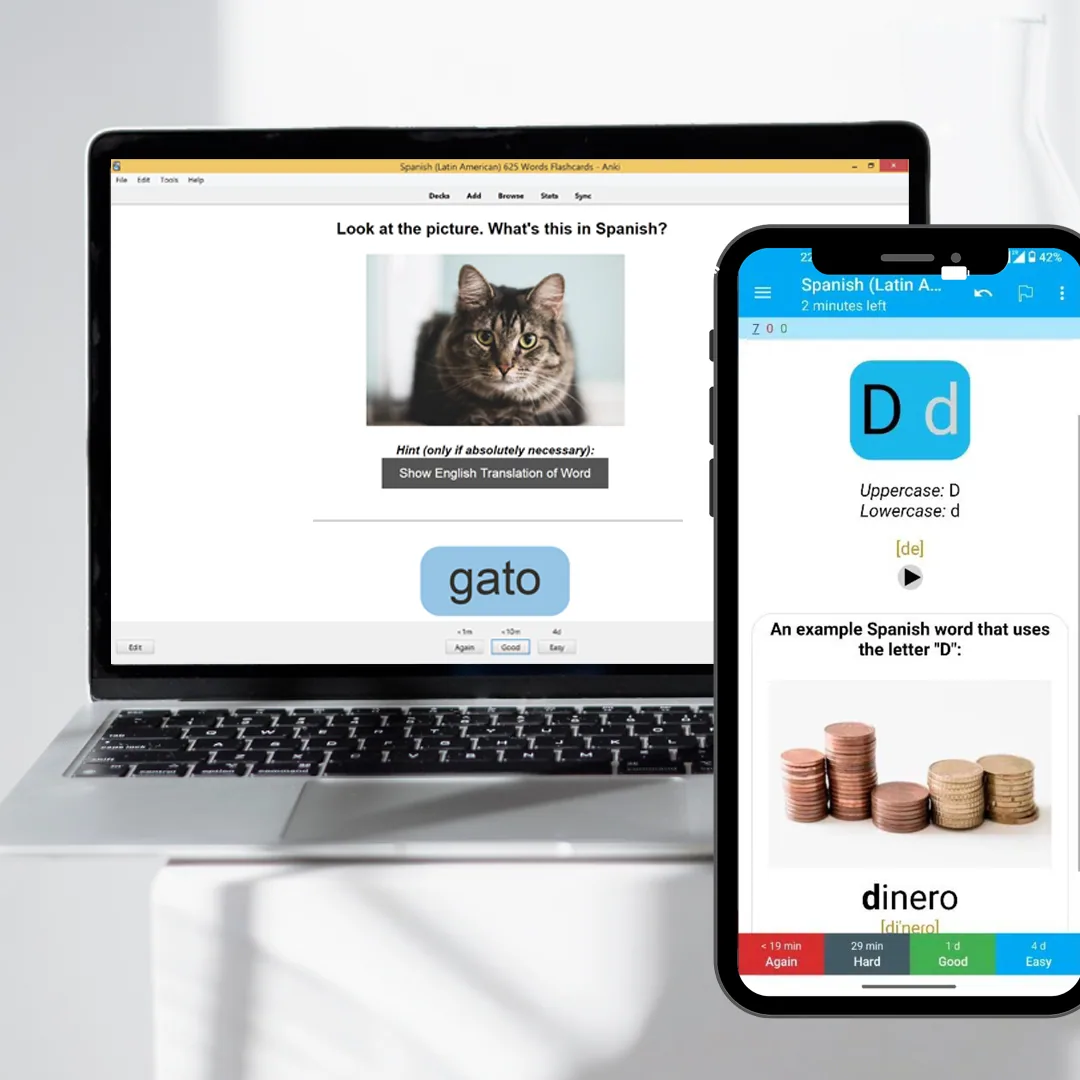
Pre-made decks designed with strategic organization in mind can save time and provide professional learning sequences. Look for decks that separate pronunciation, vocabulary, and grammar components.
Audio Integration
Pronunciation is crucial for language learning. Ensure your organized decks include audio components, especially for languages with challenging sound systems.
Visual Learning Support
Image-based cards can enhance memory retention. Organize visual vocabulary cards by themes (kitchen items, clothing, transportation) for better mental associations.
Taking Your Language Learning to the Next Level
Ready to transform your language learning experience like Jen did? Here’s your action plan based on the exact guidance we provided to her:
-
Assess Your Current Situation: Look at your existing Anki decks and identify what feels chaotic or inefficient.
-
Define Your Priorities: What do you need to learn first? Conversational basics? Professional vocabulary? Grammar foundations?
-
Implement the Repositioning Technique: Start with one category (like verbs or high-frequency words) and organize those cards first.
-
Test and Adjust: Study with your new organization for a week, then evaluate what’s working and what needs refinement.
-
Scale Gradually: Don’t reorganize everything at once. Focus on one category at a time.
Want to stay ahead of the latest language learning strategies and get more tips like this delivered straight to your inbox? Subscribe to the SPEAKADA WEEKLY newsletter for exclusive insights, advanced techniques, and proven methods that help language learners master their target languages faster and more efficiently. Our weekly tips go beyond basic flashcard use to provide you with cutting-edge strategies from polyglots, linguists, and language learning experts.
Conclusion: Your Organized Path to Language Mastery
The difference between scattered learning and systematic progress often comes down to organization. By taking control of your Anki flashcard sequence, you’re not just studying more efficiently; you’re building a foundation for long-term language mastery.
Remember, effective language learning isn’t about studying everything at once. It’s about creating strategic pathways that build upon each other, helping you develop confidence and competence systematically.
Start with one small organizational change today. Search for your most important card category, reposition them to the front of your deck, and experience the difference that strategic learning can make. Your future multilingual self will thank you for taking this crucial step toward more efficient, effective language acquisition.
The journey to fluency doesn’t have to be chaotic. With the right organization strategy, every flashcard session becomes a step forward in your carefully planned path to language mastery.