Why You Still Have an Accent (It's Not What You Think)
The short answer: your accent usually persists not because you started too late, but because you can’t reliably produce a sound you can’t reliably hear. Pronunciation is a perception problem first - and perception is trainable at any age. Training your ear on minimal pairs from many speakers improves both what you hear and what you say.
The myth: “accent is fixed after a certain age”
Lots of advanced learners have wide vocabulary and solid grammar, can read the news comfortably - and still get pegged as a non-native speaker the moment they talk. The usual explanation is “I started too late; accent is just permanent.” That’s mostly a myth, and the real reason is far more useful.
The real reason: you can’t say what you can’t hear
If two sounds in your target language map to a single sound category in your first language, your ears treat them as the same - so your mouth has no precise target to aim at. The accent isn’t a defect of your tongue; it’s that your perception never learned the contrast. Fix the hearing, and production has something to aim for.
What the research shows
A body of work on high-variability phonetic training (HVPT) - hearing a target sound from many different speakers, in many contexts, using minimal pairs - shows that perceptual training improves not just what learners hear but what they produce, and the gains hold regardless of the age you start (meta-analysis in Studies in Second Language Acquisition). Train the ear, and the mouth follows.
How to actually train your ear
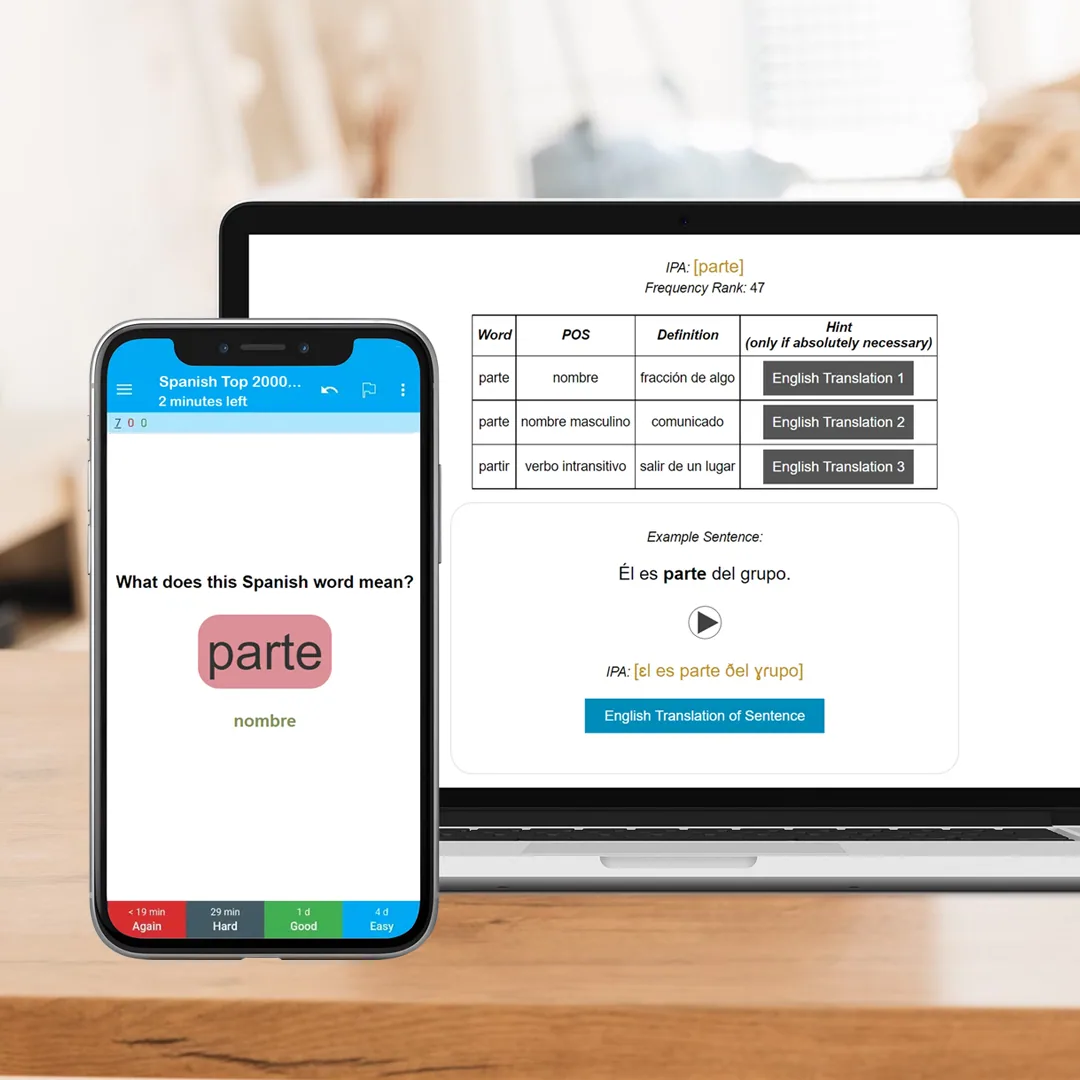
That’s exactly how good pronunciation decks are built:
- Minimal pairs - the near-identical sound contrasts that trip you up, drilled until you can hear them apart.
- IPA - so you know precisely which sound you’re aiming for, not a rough approximation.
- Audio from native speakers - varied input so your brain forms a robust category, not a narrow one.
Every language has its own traps: the Spanish r, the French u vs ou, Italian double consonants, the German u-umlaut, and the English vowels that collapse into one for many learners.
Common questions
Why do I still have an accent even though my grammar is good? Because accent depends on perception, not grammar. If your ear can’t separate two sounds, your mouth can’t reliably produce the difference - regardless of how strong your grammar is.
Can adults lose (or reduce) their accent? Yes. Research on perceptual training shows production gains at any starting age - it’s a trainable skill, not a fixed trait.
How do you actually improve pronunciation? Train perception first: drill minimal pairs from multiple speakers, use IPA as your target, and produce the sound aloud. Hearing the contrast is what lets you make it.
The takeaway
You’re not too old, and your accent isn’t permanent. It’s a perception skill you can train - start with minimal pairs and let your production catch up to your ear. This holds whatever you’re learning: Spanish, French, Italian, German, Dutch, Polish, or English.
Want practical, research-based learning tips each week? Join SPEAKADA WEEKLY.