Why AI Translation Tools Can Quietly Undermine Your Spanish Learning
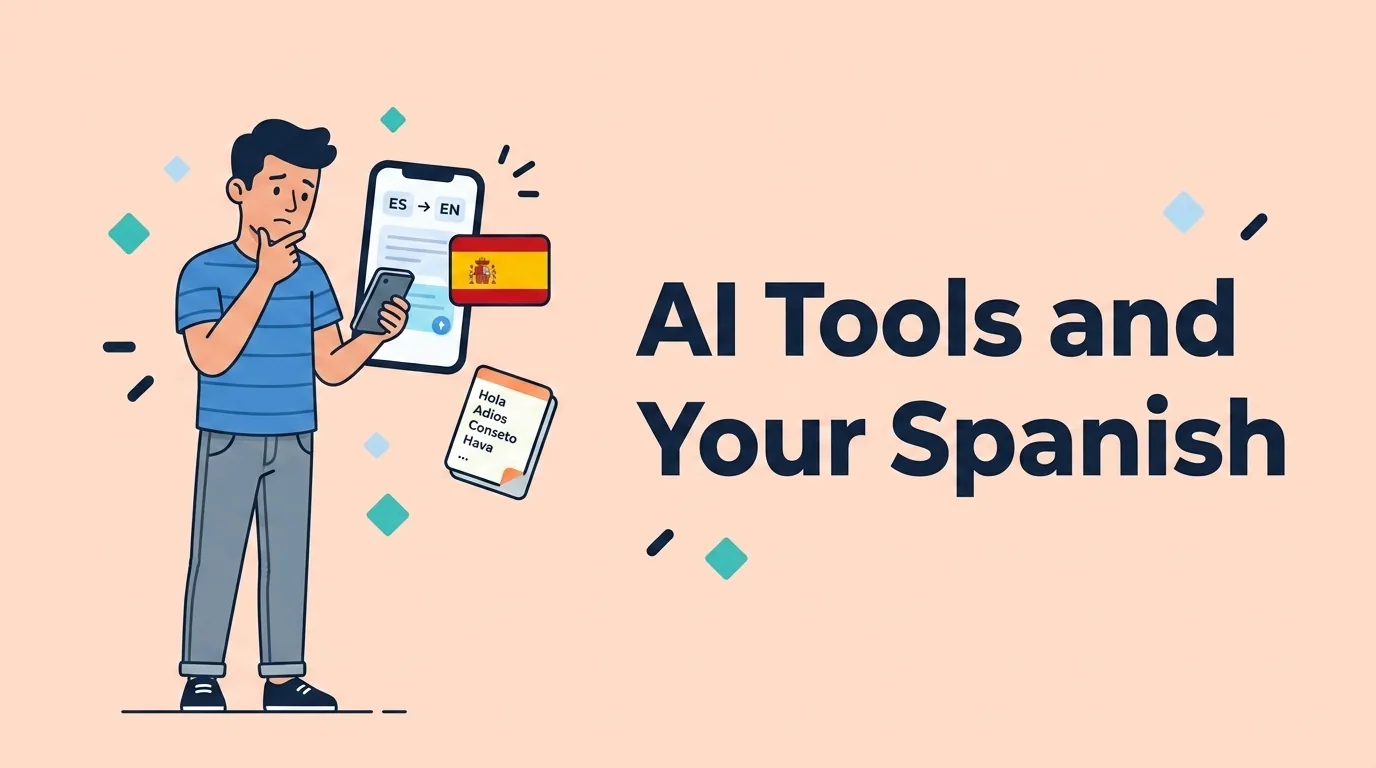
Short answer: AI translation and correction tools aren’t the problem for Spanish learners specifically - using them before you try to produce the sentence yourself is. Spanish has a few grammar points (ser/estar, the subjunctive, gender agreement) that AI tools fix instantly and invisibly, which makes this habit especially easy to fall into without noticing.
Why Spanish makes this AI-shortcut trap easy to fall into
A few things about Spanish grammar make instant AI correction unusually tempting to lean on:
- Ser vs. estar. Both map to a single English word, “be,” so an AI tool silently choosing the right one for you removes exactly the decision that actually teaches you the distinction.
- The subjunctive mood. English speakers often produce the indicative out of habit (“espero que vienes” instead of “espero que vengas”), and an AI correction fixes this instantly - but if you never noticed you needed the subjunctive, seeing it corrected doesn’t teach you to reach for it next time.
- Gender and adjective agreement. “La problema” becoming “el problema” (an exception to the usual -a-is-feminine pattern) is a one-character fix that’s easy to accept without registering why.
In each case, an AI tool can hand you a perfectly correct sentence in under a second - and if that’s the first thing you see, you never actually retrieved the correct form from your own memory.
The memory science behind why this matters
There isn’t yet a large body of long-term research specifically on AI tools and Spanish retention - that’s a genuinely new question. What is well established is the underlying memory mechanism: producing an answer yourself, under a bit of effortful uncertainty, builds durable memory in a way that simply seeing a correct answer doesn’t.
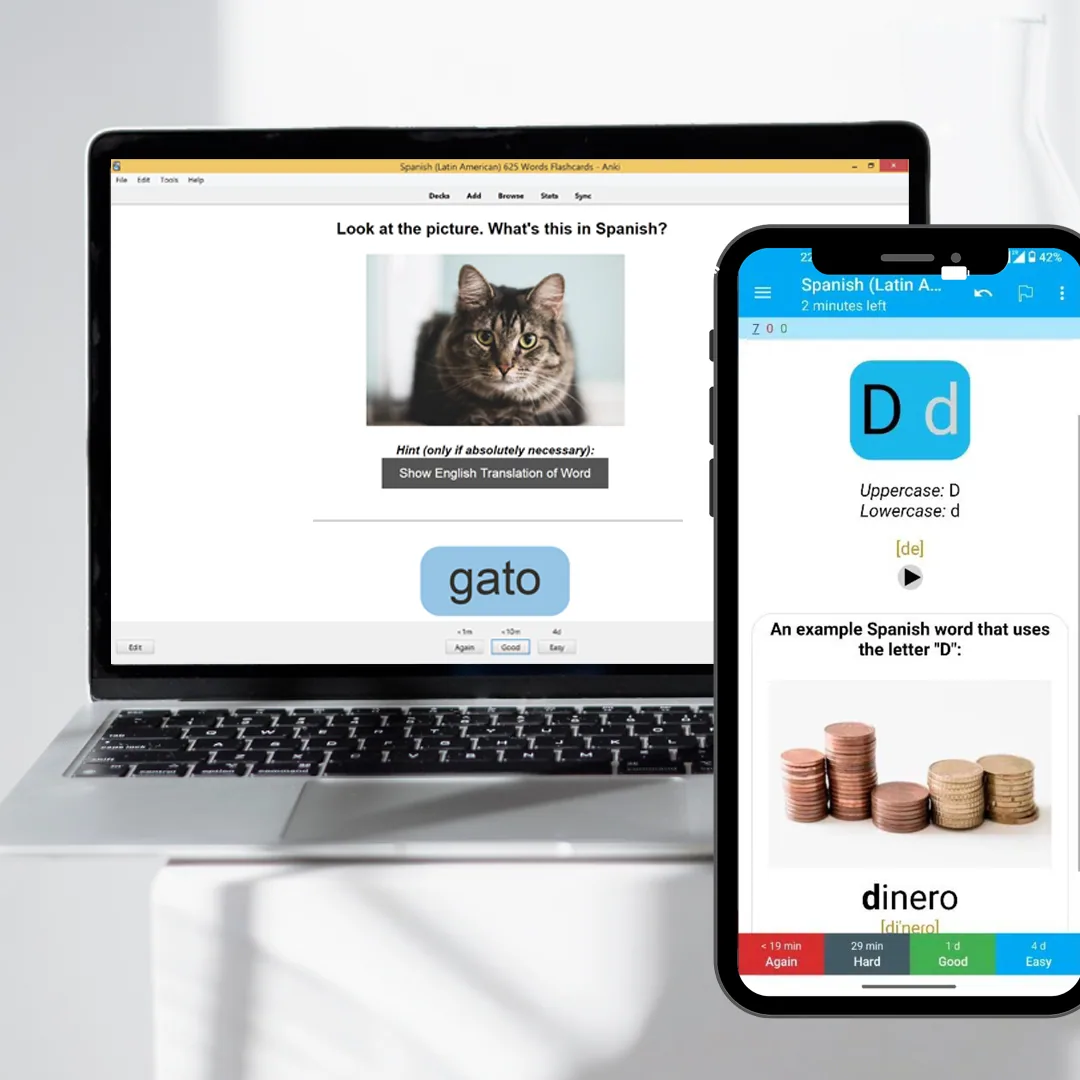
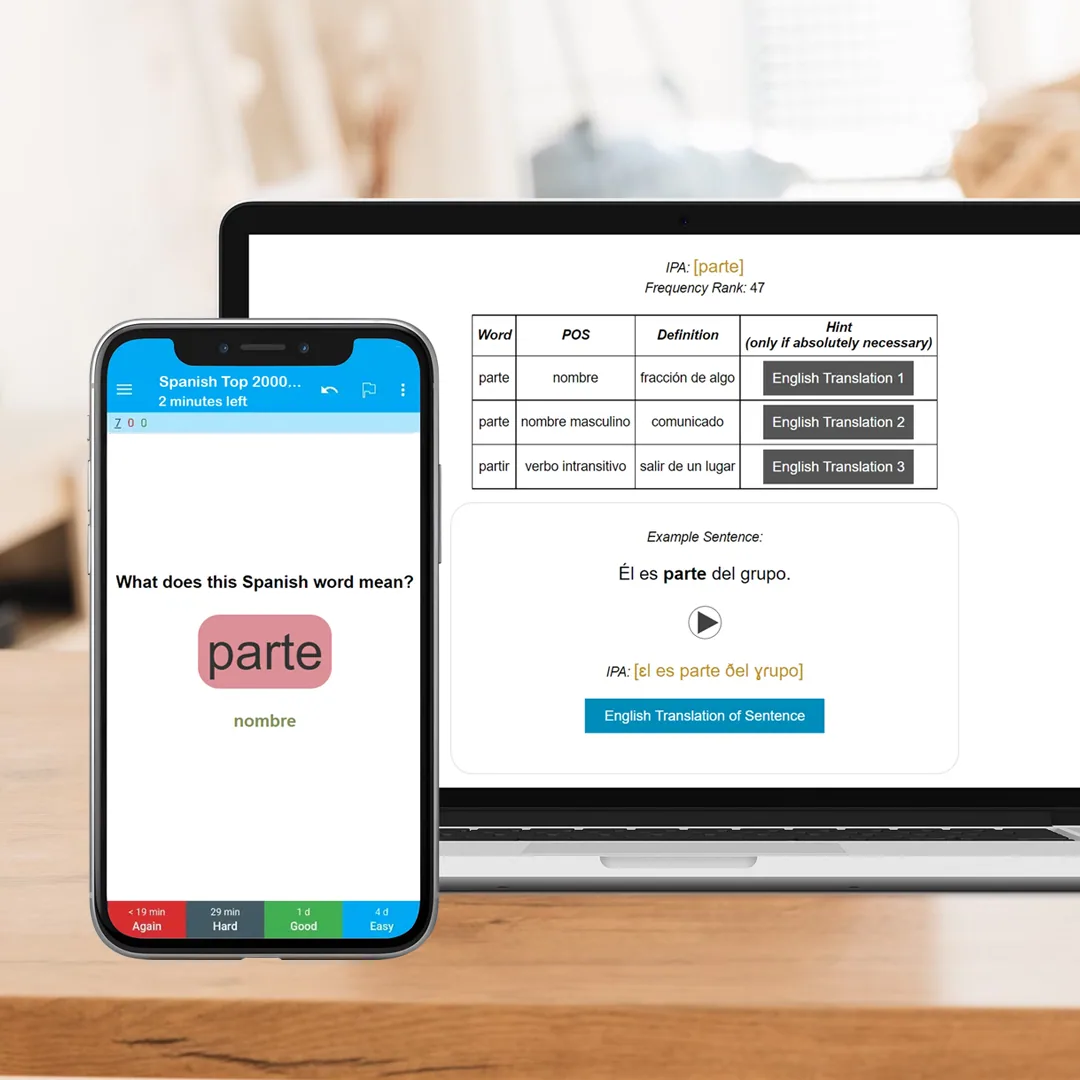
This is the same logic behind spaced repetition itself - a meta-analysis of 317 experiments by Cepeda and colleagues found that spacing your practice over time reliably beats cramming for long-term retention (Cepeda et al., 2006). Anki’s entire review engine, and by extension a Speakada Spanish deck, is built on that same principle: you have to try to recall the answer before you’re shown it.
An instant “estás” where you typed “eres” skips that retrieval step. You see the fix, it registers as obviously correct once you see it, and you move on - without the friction of noticing your own error, which is exactly the part that would have made the correct form stick.
How to use AI tools without losing your Spanish gains
- Attempt the sentence yourself first, ser/estar choice and all, before you open a translation or grammar-check tool. Let the AI be the answer key you check against, not the first draft.
- When a correction surprises you, come back to it later that day without looking, and try to produce the same sentence again from memory. That delayed second attempt is where the ser/estar or subjunctive distinction actually consolidates.
- Put your recurring mistakes into a spaced-repetition deck. If you keep defaulting to the indicative where Spanish needs the subjunctive, that’s a pattern worth drilling deliberately on a schedule, not something to keep re-discovering in a chat window.
- Use AI conversation partners for volume, not as your only rep. Try to produce the sentence - gender agreement, mood, and all - before the AI reformulates it for you.
The bottom line
AI tools are a genuine addition to how you can practice Spanish - more available feedback, more conversation practice than you’d otherwise get. The risk is narrow and specific: if the tool answers before you’ve tried, especially on ser/estar, the subjunctive, or gender agreement, you lose the exact retrieval step that would have made the correct form stick. Try first. Check second. Come back to it later.
If you want a system built around retrieval before exposure specifically for Spanish, a Spanish Vocabulary Bundle or Spanish Grammar Bundle is built to force you to produce the answer, on a spaced schedule, before you ever see it confirmed - the same principle, applied to exactly the patterns Spanish makes easy to skip.
Want more honest, no-hype breakdowns like this one for your Spanish learning? Subscribe to Speakada Weekly for one practical email a week.