Why Most Language Learners Quit at Intermediate (and How to Restart)
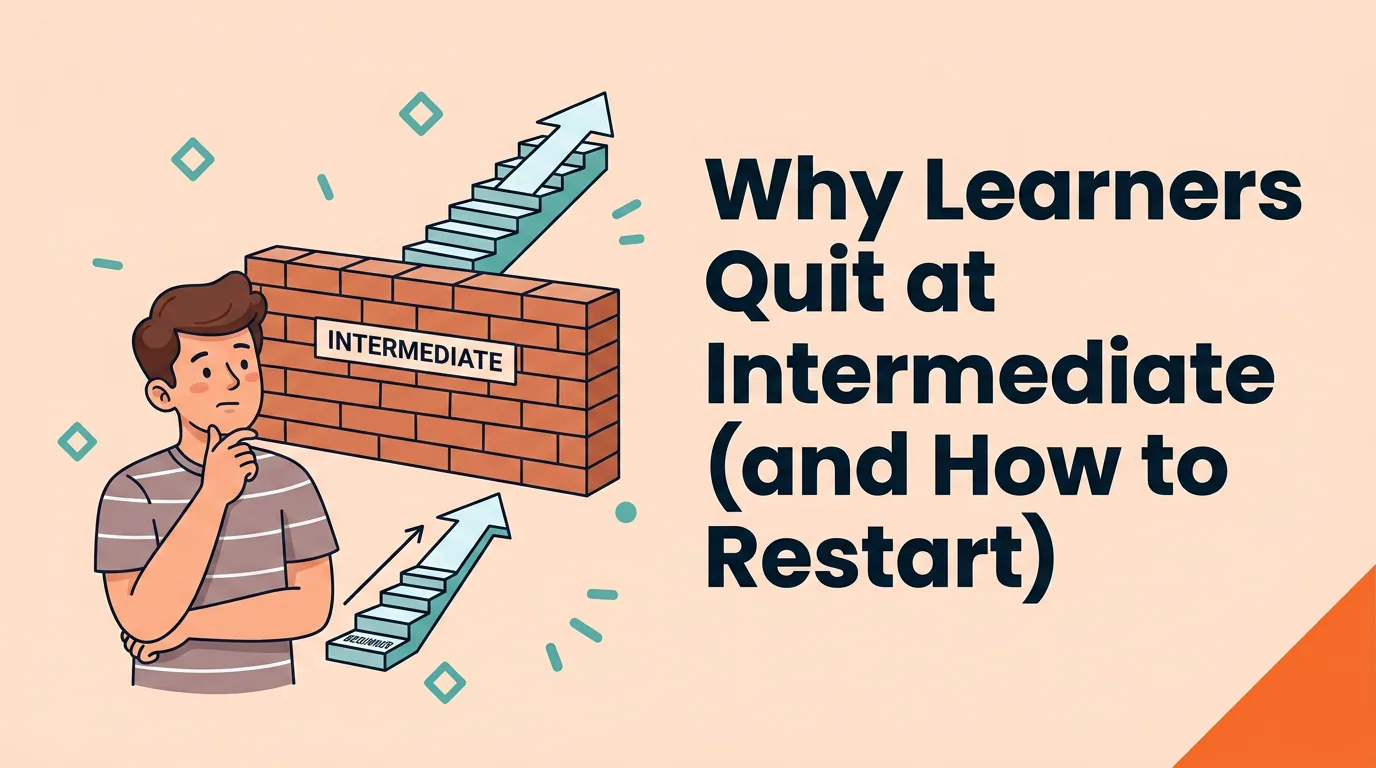
The short answer: most people stall at intermediate not because they can’t do it, but because a gap turns into guilt, and guilt keeps them from starting again. The fix isn’t willpower - it’s a temporal landmark (a new week, month, or birthday) plus a deliberately tiny first session. Your decks didn’t expire; you just need a clean line to step back over.
Why intermediate is where people quit
Beginners get fast, motivating wins. Advanced learners are already hooked. The intermediate stretch is where progress feels slow and life gets in the way - so a busy week becomes a missed month, the deck starts to feel like a source of guilt, and the guilt makes re-opening it harder than the studying ever was.
Take Willem, an Italian learner. He bought a vocabulary deck, life got busy, and it sat untouched for months. When he finally wrote back, he opened with “I’ve returned with newfound ambition.” Most people in his position never come back - not because they can’t, but because they think they have to atone for the gap first.
The research-backed way to restart
What actually gets people going again isn’t discipline - it’s a landmark. Researchers Hengchen Dai, Katherine Milkman, and Jason Riis documented the Fresh Start Effect: we’re far more likely to act on a goal at the start of a new week, month, year, or after a birthday, because the landmark draws a line - “that was the old me; this is the new me.” In their study, people were 33% more likely to start exercising at the start of a week (Dai, Milkman & Riis, 2014, Management Science).
You can use this on purpose.
How to come back (without “catching up”)
- Pick a restart line. Next Monday, the 1st of the month, or simply today - today counts as a landmark if you decide it does.
- Restart smaller than feels impressive. Ten cards. One short session. The goal is to re-open the deck, not to make up for lost time.
- Don’t try to catch up. Catching up is the trap that keeps people stuck. Begin from now.
- Trust that your progress is still there. Your decks and the work you put in haven’t gone anywhere.
Common questions
Why do language learners quit? Most often at the intermediate stage, when progress slows and a missed week snowballs into guilt. The barrier is usually emotional (restarting feels like admitting failure), not ability.
How do you get back into a language after a long break? Use a temporal landmark (a new week or month), restart with a deliberately small session, and don’t try to recover lost time - just resume from today.
Is it too late to restart? No. Spaced-repetition decks don’t expire, and a fresh start is more about a clean mental line than about how long you were away.
The takeaway
If you’ve drifted, you haven’t failed - you just need a landmark and a small first step. Pick a restart date, do ten cards, and let momentum rebuild. This works whatever you’re learning - Spanish, French, Italian, German, Dutch, Polish, or English.
Want a weekly nudge of practical, science-based learning tips? Join SPEAKADA WEEKLY.