How Speakada Builds Its Vocabulary Frequency Lists (An Honest Methodology Note)
Short answer: every Speakada vocabulary deck is ordered by frequency rank, built by expanding and re-ranking a small high-frequency core (the same idea behind Gabriel Wyner’s Fluent Forever 625-word list, which we’ve worked with directly) out to the Top 2,000 words using frequency data. For widely studied languages we cross-check multiple established frequency sources; for a few less-documented languages, ranking precision is our best synthesis of what’s published rather than one single definitive corpus - and we’d rather tell you that plainly than imply a false precision.
Why does word frequency matter for learning a language?
Word frequency is one of the best-studied predictors of how useful a given word actually is in real conversation. Paul Nation’s research on vocabulary size and text coverage found that the roughly 2,000 most frequent word families in a language give you approximately 96% comprehension of everyday spoken language (Nation, 2006). That’s a striking return on a relatively small, well-chosen set of words - which is exactly why “which 2,000 words” is a question worth answering carefully rather than guessing at.
Where does Speakada’s word list actually come from?
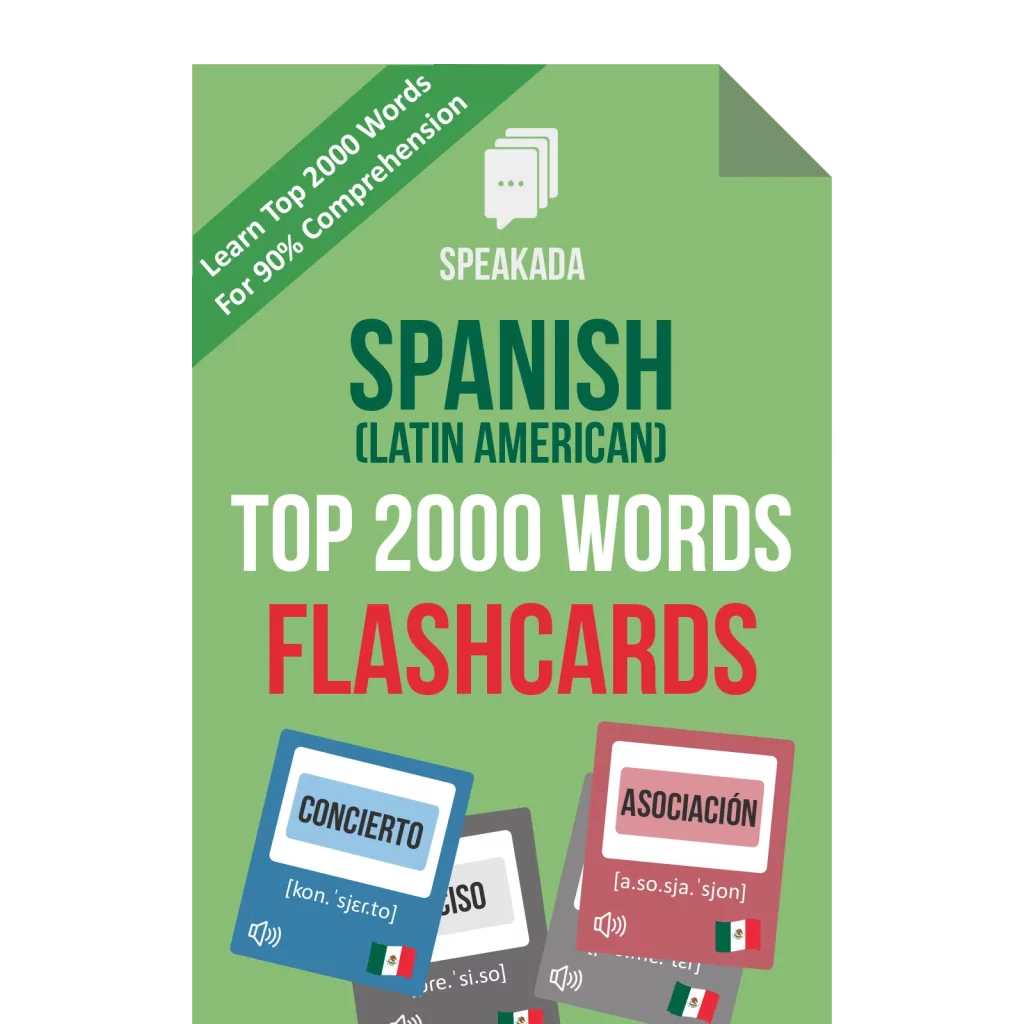
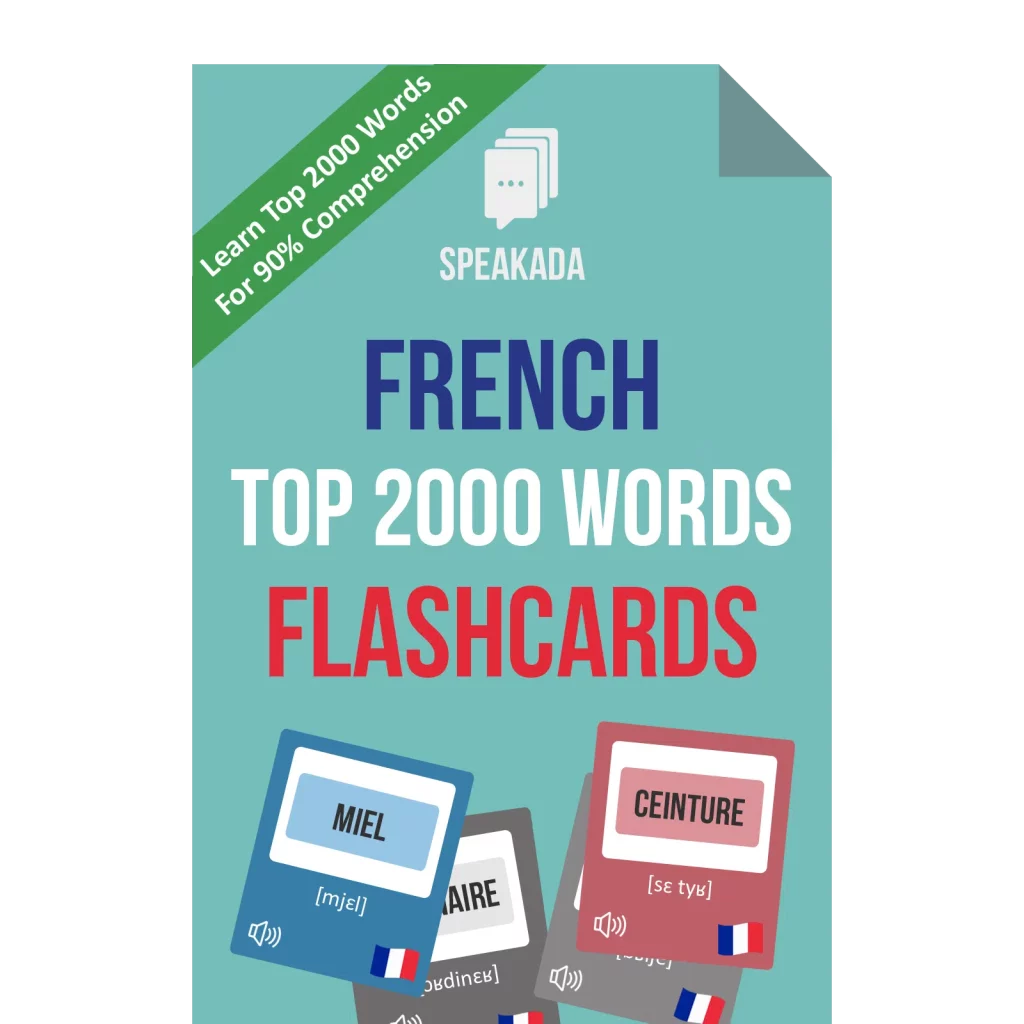
We didn’t build these lists from a blank page. The starting idea - a small, curated, high-frequency core rather than an arbitrary word list - comes from Gabriel Wyner’s Fluent Forever 625-word approach, which we’ve worked with directly. From that starting point, we expanded and re-ranked out to the Top 2,000 words using frequency data, correcting entries that didn’t hold up under closer review.
That’s a deliberately different answer from “we translated an English word list into seven other languages.” A frequency list has to be built or verified for each language, because word frequency doesn’t translate 1:1 - the 500th most common word in English isn’t necessarily the 500th most common word in Spanish, French, or Polish.
Is this the same for every language?
Being straightforward about this: no, not with equal certainty. For languages with mature, widely available corpora, we can cross-check frequency rank against multiple established, independent sources. For a handful of less-documented languages in our catalog, published frequency data is thinner, so our ranking is the best synthesis of what’s publicly available rather than a single, gold-standard corpus. [CITE NEEDED: the exact frequency source(s) used per language - pending Matthew's confirmation before this claim is presented with per-language specificity]. We’d rather flag that honestly than claim a precision we can’t fully back up.
How should I actually use a frequency-ranked deck?
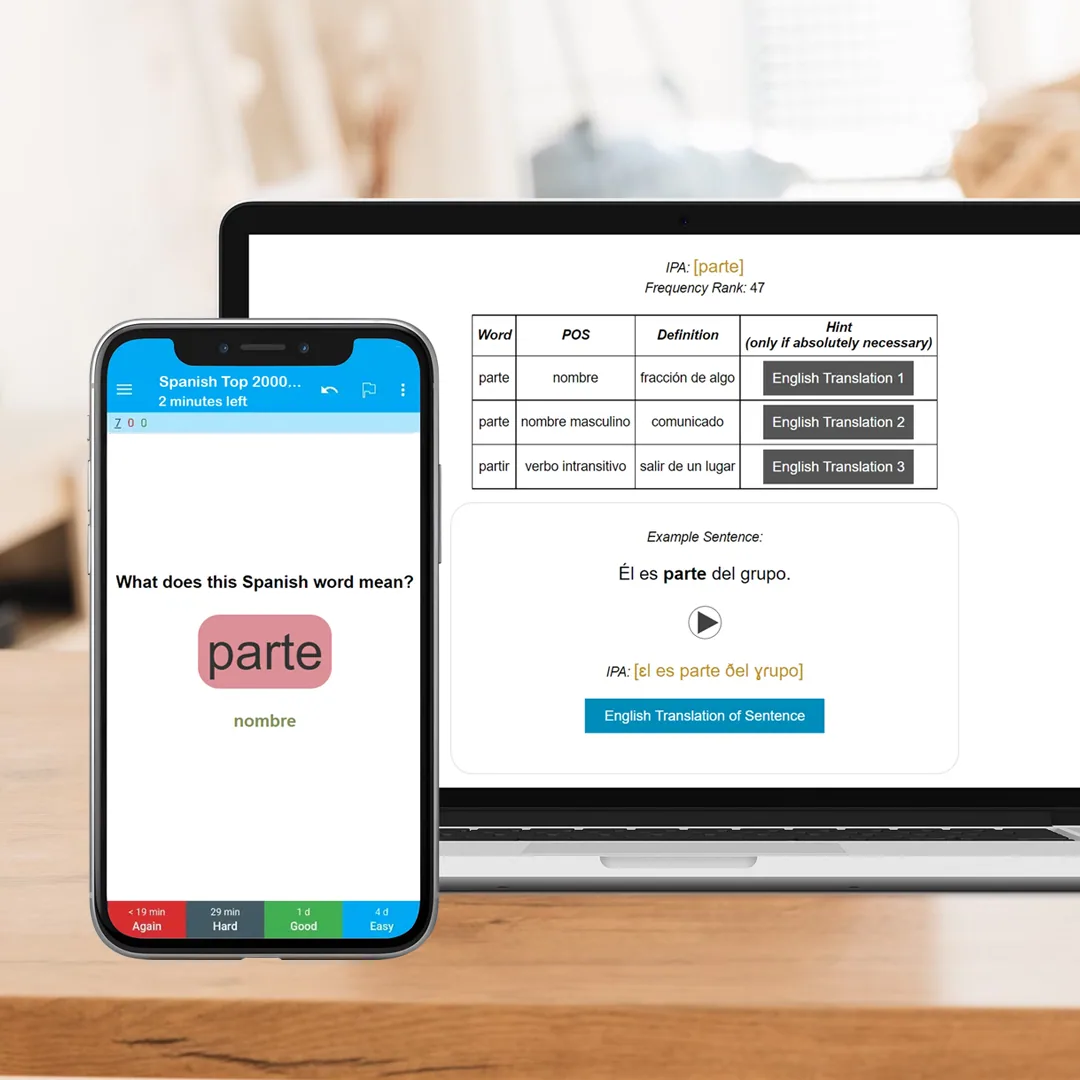
The rank number on each card isn’t decoration - it’s a study prioritization tool. If you only have ten minutes, don’t work through your deck top to bottom in whatever order it happens to load. Filter or reposition by frequency rank and study the lowest numbers first. That’s where your coverage-per-minute is highest: the 200th most common word will show up in far more conversations than the 1,800th, so if you have to choose, the lower rank wins.
This is also why we don’t recommend jumping straight to a niche or topic-specific word list (travel phrases, industry vocabulary) before you’ve covered the high-frequency core. Specialized vocabulary is genuinely useful once you can already handle the 80-90% of a conversation made up of common words - it’s a poor substitute for that core.
Does a bigger deck always mean better coverage?
Not linearly. Coverage gains shrink fast as you move past the highest-frequency words - this is exactly what Nation’s research shows: the first 1,000-2,000 words do most of the comprehension work, and each additional thousand words after that buys progressively less. That’s the honest argument for starting with a well-built Top 2,000 Words deck rather than assuming “more words” is automatically “more coverage.”
The bottom line
If you’ve ever wondered whether a flashcard deck’s word selection is rigorous or just convenient, that’s a fair thing to ask before you buy - we get asked it directly, and we’d rather answer it in public than field it one email at a time. Our decks are frequency-ordered, built on a real (if not perfectly uniform) methodology, and we’ll keep being upfront about where the data is strong and where it’s our best synthesis rather than a single flawless source.
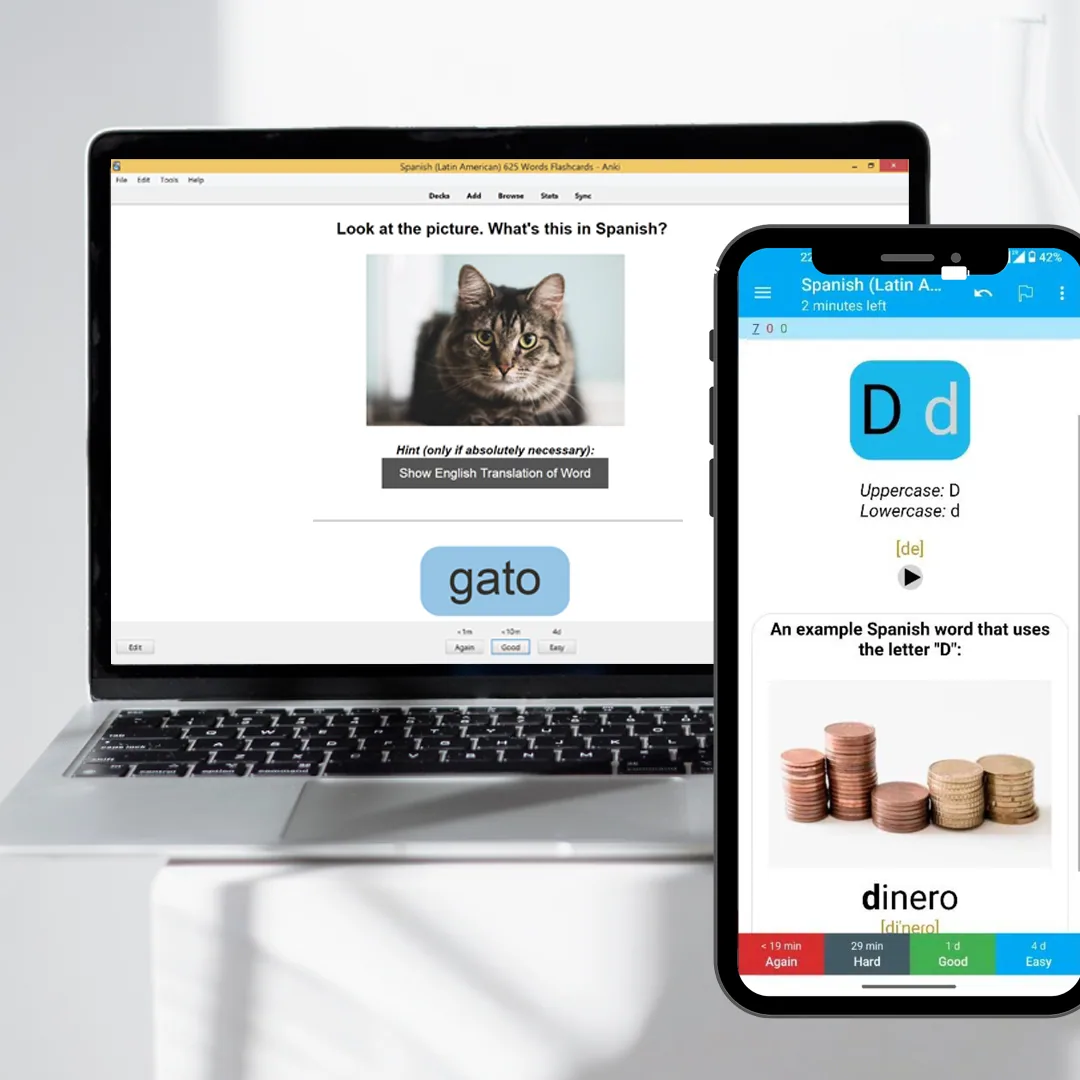
Curious what frequency rank you’re actually starting from? A Vocabulary Flashcards bundle shows you the rank on every card, so you always know exactly where a word sits in the frequency order - not just that it’s “common.”
Want more honest, no-hype breakdowns like this one? Subscribe to Speakada Weekly for one practical language-learning email a week.